If you want bigger arms, stronger pressing, and a rock solid lockout on your bench, you need to train the lateral head of your triceps.
The problem is that most lifters think they are hitting it when they are not. They end up working the long head, medial head, or letting other muscles like the rear delts and lats take over.
We are fixing that today. You will get a list of proven lateral head triceps movements, how to do them correctly, and how to program them for both size and strength.
To avoid targeting other muscle groups when you aim to isolate the lateral head, I’ve compiled a list of exercises you can include in your workouts.
Table of Contents
The 10 best lateral head tricep exercises are:
- Close Grip Bench Press
- Tricep Pressdowns
- Diamond Push ups
- EZ Bar Skull Crushers
- Dumbbell French Press
- Close Grip Dips
- Smith Machine Close Grip Bench Press
- Tricep Cable Kickbacks
- Overhead Press
- Barbell JM Press
In this article, I will discuss what the lateral head of the tricep is, the best exercises for lateral head of triceps, how to work the lateral head of the tricep, how it contributes to greater performance, and give you examples of workouts that include effective tricep lateral head exercises.
Furthermore, I have also included dumbbell, banded, bodyweight, barbell, and cable movements to allow you to build a well-rounded lateral head tricep program.
***This article was fact-checked by Jake Woodruff, MS in Sports Medicine, and certified strength and conditioning coach.
Why the Lateral Head Matters
The triceps have three heads: long, medial, and lateral. The lateral head is the thick outer portion you see from the side and the back. It is also the strongest. That means two big benefits:
Aesthetics: Build a rounder, fuller upper arm. When developed, the lateral head makes your arms look bigger from every angle.
Performance: It drives the final lockout in pressing lifts such as the bench press, overhead press, dips, and jerks. If you are weak at the top of a lift, your lateral head is underdeveloped.
How to Target the Lateral Head
You cannot isolate it completely, but you can bias your training toward the lateral head in your triceps muscles. The key is elbow extension with your arms by your sides or in certain overhead positions.
Think about:
- Close grip pressing variations
- Pressdowns and kickbacks
- Certain overhead extensions
10 Best Lateral Head Tricep Exercises
1. Close Grip Bench Press
Close Grip Bench Press
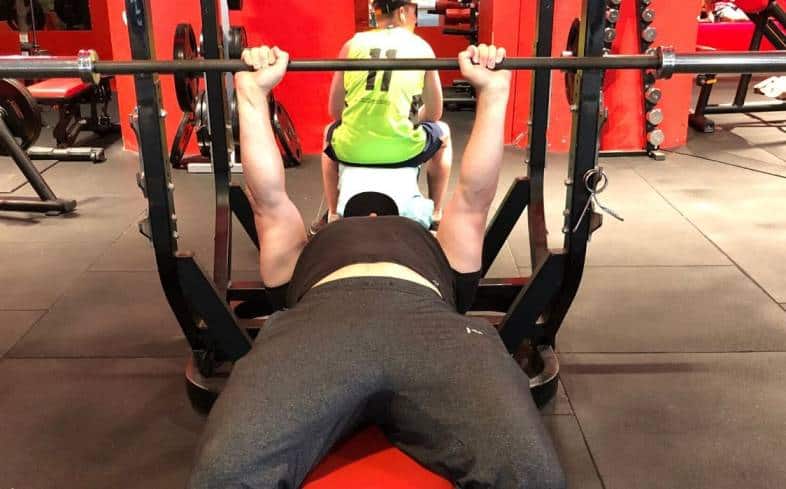
The close grip bench press is one of the best compound lifts for building lateral head triceps strength (and for engaging the long head of the triceps).
The narrower grip shifts more of the load to the triceps while still letting you move heavy weight. This carries over directly to your regular bench press and other pressing movements.
How to Do It
- Lie on the bench with your eyes under the bar to get in the starting position.
- Grip the bar about shoulder width apart or slightly closer.
- Drive your upper back into the bench and pull your shoulder blades down and back.
- Unrack the bar and bring it over your lower chest or upper abdomen.
- Lower the bar under control until it touches your chest.
- Press the bar back up until your elbows are fully locked out.
Benefits
There are many benefits to close grip bench. The two that matter most for building lateral head triceps are:
- Heavy loading potential: You can use a lot of weight to overload the triceps.
- Direct carryover to bench press: Improves strength in the lockout and mid-range.
Common Issues
- Elbow and shoulder stress: Narrow grip and heavy loading can irritate joints if form breaks down.
- Increased range of motion: This can be a benefit for strength but may reduce your max bench numbers temporarily.
Programming
Hypertrophy: 3 to 4 sets of 8 to 12 reps at 65 to 75 percent of 1RM
Strength: 4 to 5 sets of 3 to 5 reps at 75 to 85 percent of 1RM
Tricep Pressdowns
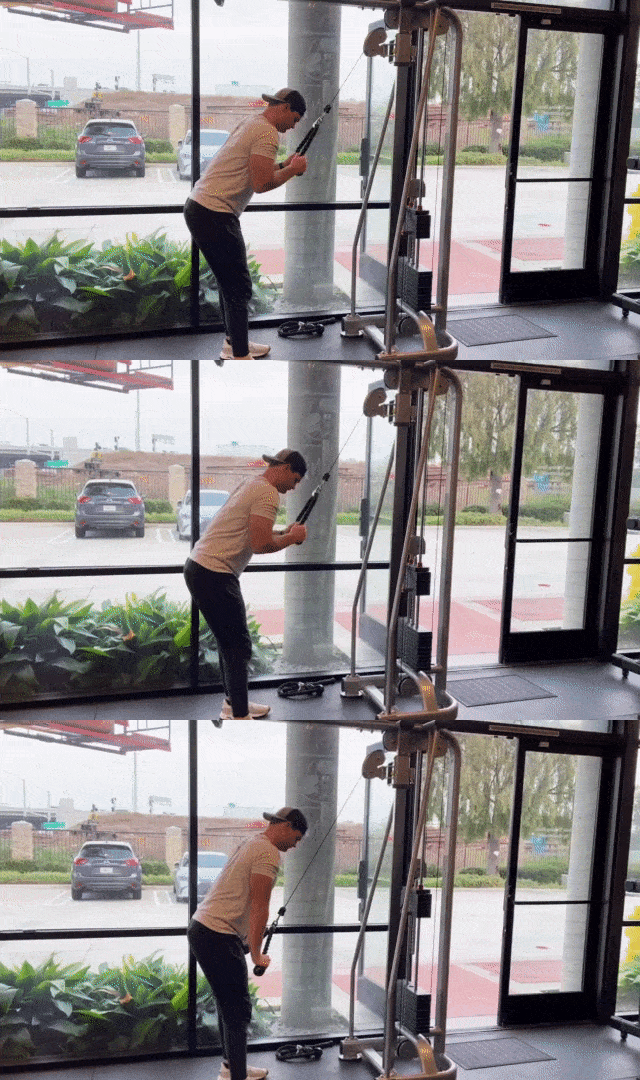
The pressdown is a simple but highly effective isolation movement for the lateral head. It focuses on pure elbow extension and is easy to recover from, making it perfect for high volume at the end of a session.
How to Do It
- Stand facing the cable machine with a straight bar, rope, or V-handle attached.
- Grip the handle and keep your chest up.
- Pull your elbows tight to your sides.
- Press the handle down until your elbows are fully extended.
- Return to the starting position under control.
Benefits
- Isolation: Keeps focus on the triceps without taxing other muscle groups.
- Easy recovery: Can be done often without affecting your main lifts.
Common Issues
- Lack of intensity: Many lifters go too light and never push close to fatigue.
- Boredom factor: Simple movement that can feel repetitive.
Programming
4 sets of 12 to 15 reps at RPE 7 to 8
Or perform as a burnout with multiple handle variations for 15 reps each
Diamond Push Ups
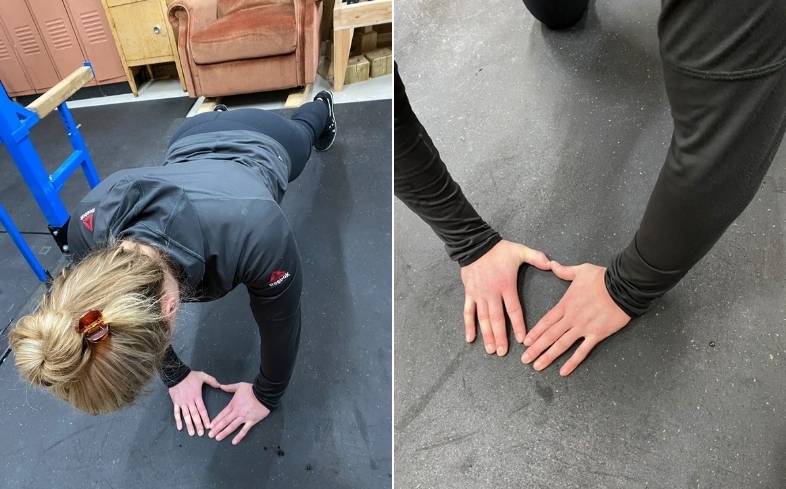
Diamond push ups are a bodyweight option that hits the triceps hard when done correctly. They are a good choice for home training or as a finisher.
How to Do It
- Get into a push up position and place your hands under your chest with your thumbs and index fingers forming a diamond shape.
- Keep your body in a straight line.
- Lower your chest toward your hands while keeping elbows close to your sides.
- Press back up to full elbow extension.
Benefits
- No equipment needed: Can be done anywhere.
- Easily scaled: Elevate hands for an easier version or add weight for more difficulty.
Common Issues
- Shoulder stress: The bottom position can put the shoulder in a compromised angle.
- Limited overload: May not provide enough stimulus for advanced lifters.
Programming
Hypertrophy: 4 to 5 sets of 15 to 20 reps
Burnout: 3 sets to failure at the end of a workout
EZ Bar Skull Crushers
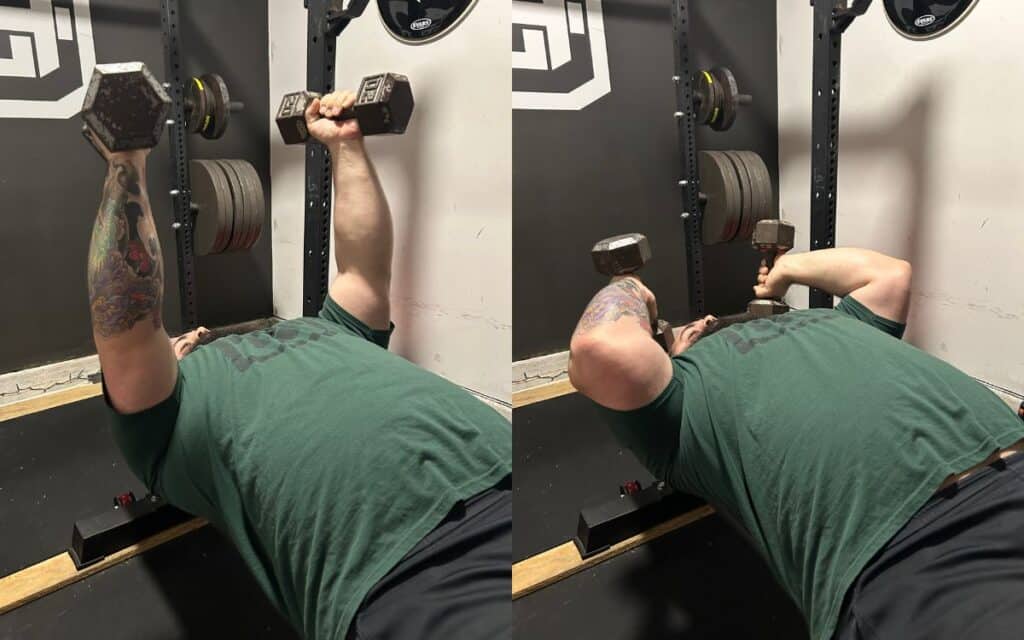
A classic triceps isolation lift that puts serious tension on the lateral head. The EZ bar reduces wrist strain compared to a straight bar. Otherwise, it's the same way you'd normally do skull crushers.
How to Do It
- Lie on a flat bench with the EZ bar held above your chest.
- Grip the inside bends of the bar with an overhand grip.
- Bend at the elbows to lower the bar toward your forehead.
- Stop just short of contact, then extend the elbows to return to the start.
Benefits
- Direct isolation: Focuses purely on elbow extension.
- Grip comfort: EZ bar position is easier on the wrists.
Common Issues
- Joint stress: Can irritate elbows or wrists if loaded too heavy.
- Progression limits: Wrist and elbow comfort often limit load increases.
Programming
3 sets of 10 to 12 reps at RPE 7 to 8
Dumbbell French Press
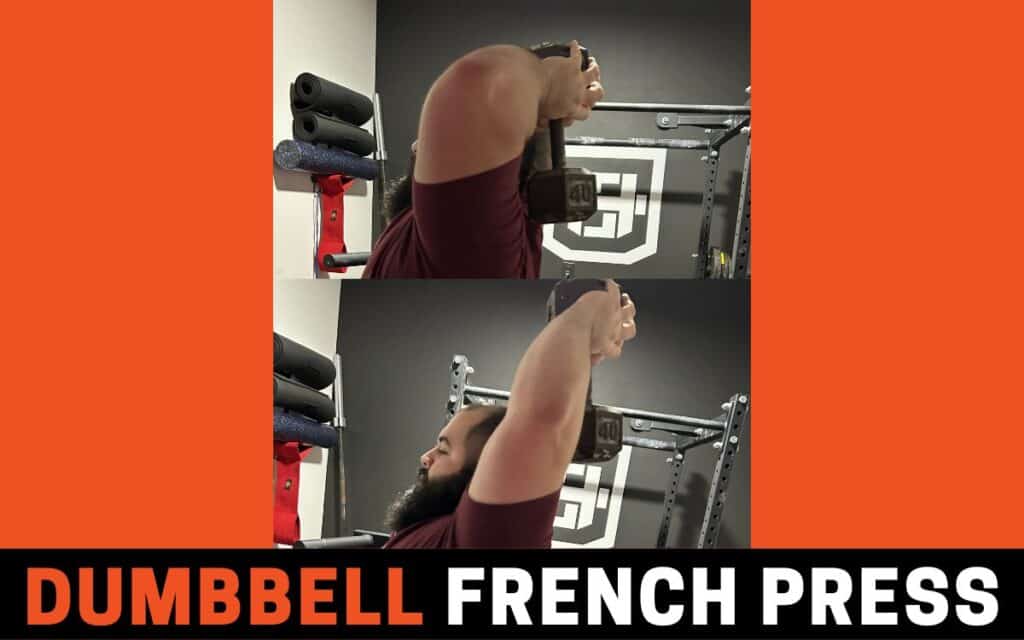
The dumbbell French press is an overhead triceps extension that works the lateral and long heads while allowing a neutral grip for comfort.
How to Do It
- Hold a single dumbbell vertically with both hands under the top plate.
- Press it overhead with elbows locked.
- Bend your elbows to lower the dumbbell behind your head.
- Extend back to the top position.
Benefits
- Versatile: Can be done with dumbbells, cables, or bands.
- Joint friendly: Neutral grip reduces wrist strain.
Common Issues
- Shoulder stress: Overhead position can irritate the shoulders for some lifters.
Programming
3 sets of 8 to 10 reps at RPE 8
Close Grip Dips

Dips done with a closer hand position shift more work to the triceps, especially the lateral head. They are great for heavy loading and strength gains.
How to Do It
- Use parallel bars slightly wider than shoulder width.
- Press to lockout.
- Lean forward slightly and lower until elbows are at 90 degrees.
- Press back up to full extension.
Benefits
- Heavy loading potential: Can be weighted with a dip belt.
- Bench press carryover: Strengthens the lockout range.
Common Issues
- Shoulder stress: Bottom position can be rough on the shoulders. Use partial reps if needed.
Programming
Weighted: 4 sets of 5 reps at RPE 7 to 8
Tempo: 5 sets of 5 with a 3 second lowering, 2 second pause, 1 second press
Smith Machine Close Grip Bench Press
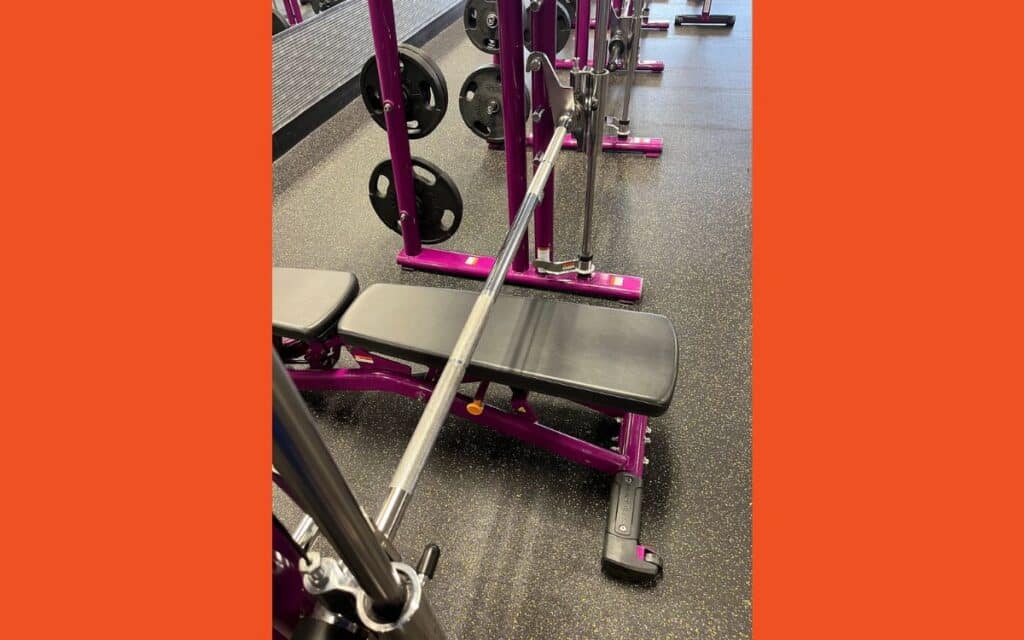
The Smith machine variation reduces stabilization demands so you can load the triceps heavily and safely.
How to Do It
- Set the bar to line up with your lower chest or upper abdomen when lying on the bench.
- Grip the bar at shoulder width or slightly narrower.
- Brace your upper back and chest.
- Lower the bar under control to your chest.
- Press to full elbow extension.
Benefits
- Safe heavy loading: Built-in safety stops make it easier to push sets.
- Constant tension: Bar path is fixed, keeping stress on the triceps.
Common Issues
- Lower carryover: Less transfer to free-weight bench pressing.
Programming
Hypertrophy: 3 sets of 12 to 15 reps at 60 to 70 percent 1RM
Strength: 4 to 5 sets of 5 to 6 reps at 70 to 80 percent 1RM
Tricep Cable Kickbacks
A high-rep finisher that isolates the triceps in the shortened position. And note that yes, you can train triceps two days in a row.
How to Do It
- Set a cable pulley low with no attachment or a single handle.
- Hold the cable handle and hinge forward at the hips until torso is almost parallel to the floor.
- Start with your elbow bent at 90 degrees and tucked to your side.
- Extend your arm straight back, then return to start.
Benefits
- Unilateral training: Corrects strength imbalances.
- High activation: Great burnout move for the lateral head.
Common Issues
- Limited overload: Not suited for heavy loading, better as accessory work.
Programming
4 sets of 15 to 20 reps at RPE 7
Overhead Press
A compound lift that primarily targets the shoulders but also works the triceps hard in the lockout. Useful when you want to train multiple muscle groups at once.
How to Do It
- Grip the bar just wider than shoulder width.
- Rest it on your upper chest or clavicles.
- Keep elbows slightly in front of the bar.
- Brace your core and press the bar overhead.
- Lock it out with the bar directly above your shoulders.
- Lower under control.
Benefits
- Pressing strength: Improves performance in vertical and horizontal presses.
- Shoulder mobility: Strengthens the overhead position.
Common Issues
- Not a direct triceps isolation: Good for overall pressing, not as focused as other lifts.
- Safety risk: Heavy loads overhead require strict form.
Programming
Strength: 4 to 5 sets of 3 to 5 reps at 75 to 85 percent 1RM
Hypertrophy: 3 sets of 8 reps at 65 to 75 percent 1RM
Barbell JM Press
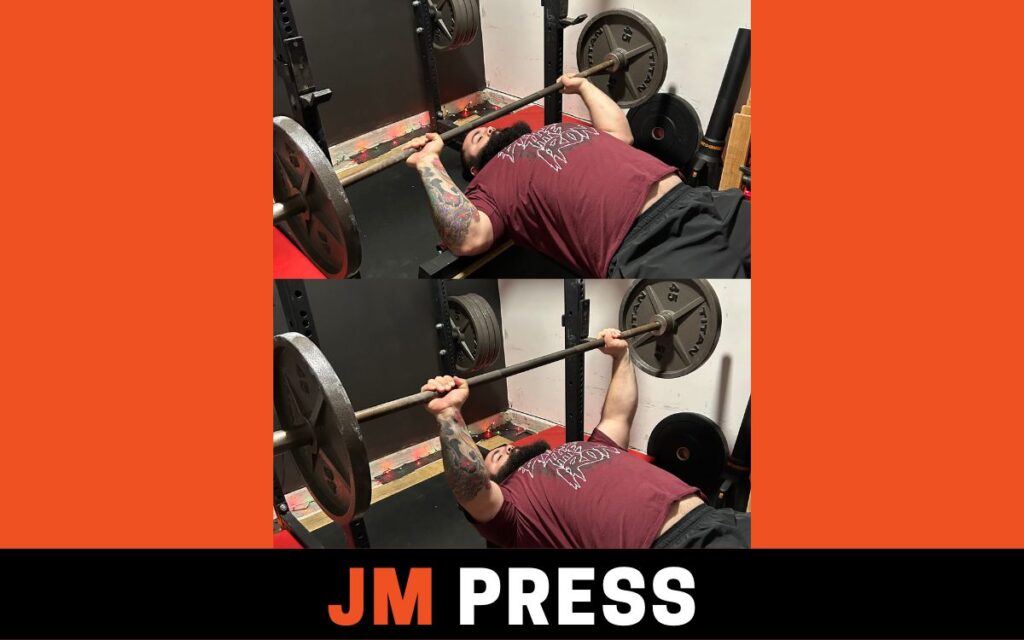
The JM press is a mix between a close grip bench press and a skull crusher. It is best for lifters who already have strong technique on both of those lifts. If you have not mastered them yet, focus on those first. Once you are ready, the JM press can be the next step for building lockout power and adding size to the triceps, especially the lateral head.
How to Do It
- Set up like a standard bench press.
- Grip the bar at shoulder width or slightly wider.
- Lock your elbows out over your shoulders before starting.
- Keep your shoulders externally rotated and upper back tight.
- Lower the bar toward your neck by bending at the elbows.
- When you hit the bottom, push the bar away from your body until the elbows are fully extended.
Benefits
- Strong carryover to the bench press: Overloads the triceps in the same range they work hardest in the bench press.
- Size and strength: Keeps constant tension on the triceps, which drives growth.
Common Issues
- Joint stress: Poor form or excessive weight can beat up the elbows and shoulders. Keep the shoulders externally rotated and the armpits closed to keep tension where it belongs.
Programming
3 sets of 8 reps at 50 to 60 percent of your one rep max bench press.
A Coach's Experience With Lateral Head Tricep Exercises
Once I started including more lateral triceps exercises into my training, I noticed my major compound lifts, like bench press and overhead press, got much stronger, and my arms looked more aesthetically pleasing with more muscle mass.
My weakest point, where I always fail my bench is the top lockout phase. Which muscle is largely activated during that top lockout position? You guessed it: the lateral head of the triceps.
Strengthening the lateral head, in particular, helped me add 20 lbs to my bench press max in a few months of training.
Plus, the lateral head accounts for most of the mass in your triceps, so my arms look much bigger, which is never bad!
Let’s study the tricep anatomy a bit more, then dive into the exercises.
Explore also our expert recommendations for tricep cable exercises that can help you achieve defined and toned arms.
Lateral Head Tricep Workout Examples
Now that you have the list of exercises that target the lateral head, let’s now discuss how to put these exercises into a workout program.
Here are two workout examples: one for strength and one for hypertrophy:
Lateral Head Tricep Strength Workout
- Close Grip Bench Press: 5 sets of 3 reps @80%
- Overhead Press: 4 sets of 3 reps @80%
- Close Grip Dips: 4 sets of 5 reps @RPE 7-8
- Tricep Extensions: 3 sets of 10 reps @RPE 8-9
Lateral Head Tricep Hypertrophy Workout
- Smith Machine Close Grip Bench Press: 3 sets of 12 reps @80%
- EZ Bar Skull Crushers: 3 sets of 10 reps @RPE 7-8
- Tricep Extensions: 3 sets of 10 reps @RPE 7-8
- Cable Kickbacks: 4 sets of 20 reps @RPE 8-9
Want a detailed time-tested program created by world-class lifters? Check out our hypertrophy program.
Best Rep Range and Load for Lateral Head Triceps Training
The triceps are built with a high percentage of fast twitch fibers. They thrive on heavy loads in the low to medium rep range. You can still train them with higher reps, but you will see the best growth when you spend most of your time pushing challenging weight for controlled sets.
Do not stick to the same range forever. Rotate your loads and reps over time to keep the muscle adapting.
General breakdown:
- 10 to 20 reps: 50 percent of your training (medium load)
- 5 to 10 reps: 25 percent of your training (heavy load)
- 20 to 30 reps: 25 percent of your training (light load)
The weight should be heavy enough to challenge you without forcing sloppy form or letting other muscles take over.
Good load targets:
- 10 to 20 reps: 60 to 75 percent of 1RM
- 5 to 10 reps: 75 to 85 percent of 1RM
- 20 to 30 reps: 40 to 60 percent of 1RM
Example: If your close grip bench press max is 100 pounds, working in the 75 to 85 pound range for 5 to 10 reps is one of the most effective ways to build triceps size and strength.
Quick Anatomy Check
The triceps brachii sits on the back of your upper arm and has three heads:
- Long head: Helps stabilize the shoulder and assists in arm adduction and extension due to its attachment to the scapula.
- Medial head: Active in forearm extension regardless of grip position.
- Lateral head: Originates just above the radial groove of the humerus, is the strongest of the three, and contains the highest number of explosive Type IIb fibers.
The lateral head responds best to moderate and heavy loads.
Training Tips to Focus on the Lateral Head
1. Pick the right movements
The lateral head works hardest when your arms are by your sides or in certain overhead positions. Pressdowns, bench dips, cable pulldowns, and overhead triceps pulldowns are staples. Close grip bench presses, skull crushers, and cable kickbacks also put a strong bias on the lateral head.
You still need to train the long and medial heads for balance, but if your goal is to grow the lateral head, prioritize these movements.
2. Train them early
Place your heavy lateral head work near the start of your session when you have the most energy. This is when you can move the most weight with the best form.
If you train upper body multiple times per week, try hitting triceps after a rest day so you are fresh.
3. Use multi-angle targeting
Exercises like skull crushers and French presses work both the lateral and long heads. Combining angles gives you more complete development than only doing isolation from one position.
4. Manage training volume
If you are only training triceps once a week, add a second focused day. Keep at least 48 hours between sessions to recover. Use one day to hit all three heads and the other to put the main emphasis on the lateral head.
How the Lateral Head Boosts Performance
A strong lateral head is the key to locking out heavy bench presses and overhead lifts. It takes over in the final phase of these movements. Weak lateral head strength often shows up as a failed lockout.
Can You Isolate the Lateral Head?
Not completely. All three heads share the same insertion point on the elbow, so they work together. You can, however, shift more load to the lateral head by adjusting grip width, wrist position, and arm angle.
Research shows the lateral head is most active when extending the elbows with the shoulders elevated to 180 degrees. Overhead extensions with full elbow lockout take advantage of this.
FAQ
Do triceps respond better to high reps?
They can handle higher reps, but they grow best with a mix of heavy, medium, and light loading.
What if I have a triceps imbalance?
Stick to compound movements like the close grip bench press and JM press to work all heads evenly.
What if my lateral head is not growing?
Mix up your rep ranges, add tempo work, and use paused reps to create more tension where you are weakest.
If you train with the right mix of reps, loads, and angles, the lateral head will get stronger and thicker. Your arms will look bigger, your lockout will feel stronger, and your pressing numbers will climb.
About The Author
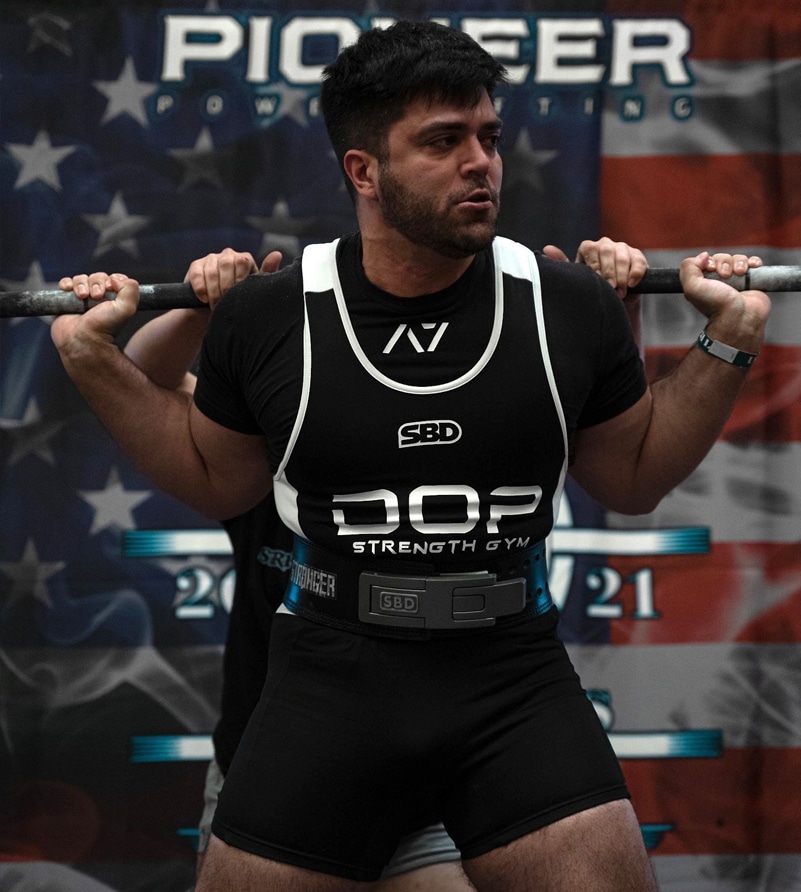
Javad Bakhshined was born and raised in the Washington Area. Currently, he is a student at Seattle University where he’s been pursuing an MS in Kinesiology, and has been a Strength Coach in the athletic department. He was a competitive bodybuilder for 8 years where he later transitioned to competitive powerlifting for 4 years. Currently, He has his own personal coaching business, where he works with powerlifters and bodybuilders.