

As a personal trainer, I’ve noticed that the triceps are often undertrained on my clients. Most people know one or two cable movements, but if you want all three heads to grow, you need more than a single cable pushdown and a prayer. This guide is built for resistance training, simple setups, clean reps, and repeatable progressive overload.
At a glance, pick 3–4 moves from this list, prioritize at least one overhead cable triceps extension, then finish with a pushdown variation. Keep the starting position consistent, control the eccentric, and earn the lockout on every rep. That combination is one of the most efficient way to build sleeve-busting arms while supporting long-term upper-body strength.
Here are the 8 best exercises for your tricep cable workout:
- Cable Rope Overhead Tricep Extension
- Bent-Over Cable Rope Tricep Pressdown
- Single Arm Overhead Cable Tricep Extension
- Single-Arm Cable Tricep Pushdown
- Straight Bar Cable Overhead Tricep Extension
- Cable Skullcrushers
- Standing Dual Rope Cable Tricep Pressdown
- Single Arm Cable Cross-Body Tricep Extension
When people think about big arms, they usually think about biceps. But your triceps, directly opposite the biceps, make up roughly 60% of the upper arm. If your pressing stalls at the top of a dumbbell chest press, or you struggle to finish the lockout on bench, your triceps are playing a major role in that bottleneck.
Cables are one of the best tools for isolated exercises because they keep more consistent tension, let you adjust angles quickly, and make it easier to manage intensity without cheating reps. In other words, you can get the stimulus without the setup friction.
I use each of these variations with lifters of all experience levels. Include a mix of overhead and pressdown work, and you’ll cover the long head, medial head, and the lateral head of the triceps with fewer gaps in your program.
Table of Contents
8 Best Cable Tricep Exercises
1. Cable Rope Overhead Tricep Extension
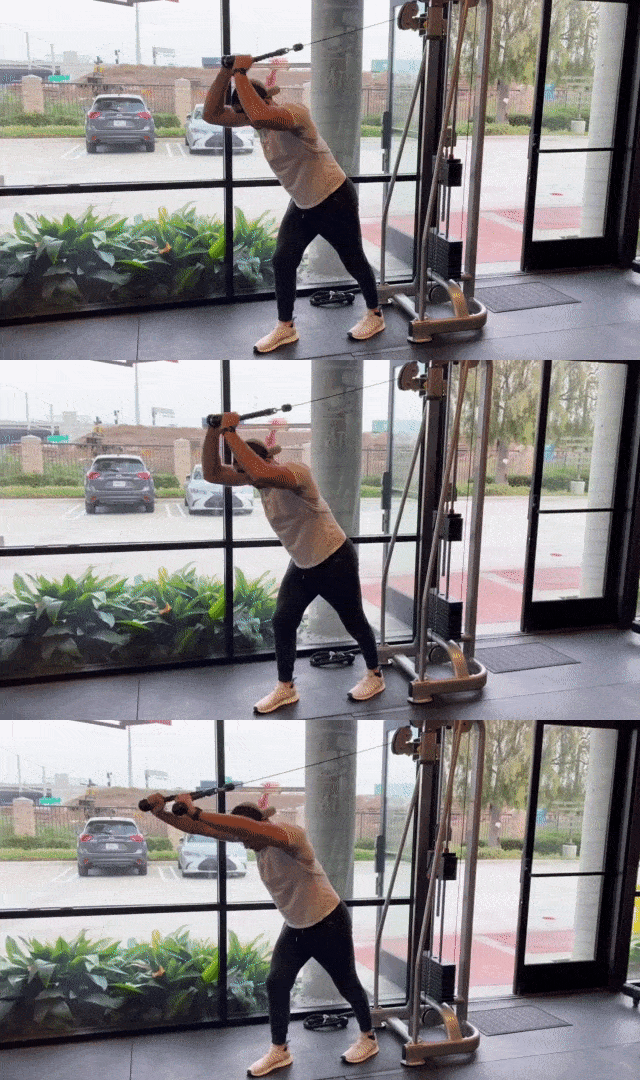
The cable rope overhead tricep extension should be a staple in your cable tricep training regimen. A 2022 European Journal of Sport Science paper reported greater triceps hypertrophy when elbow extension work was performed in an overhead arm position versus a neutral arm position. That does not make neutral-grip work worthless, it just means an overhead cable triceps extension belongs in the mix if you want complete development.
How to:
- Grab a rope attachment and set the pulley higher than your head.
- Face away from the cable and take a staggered stance for balance.
- Set your elbows slightly in front of your ears, that’s your starting position.
- Brace your core, keep your ribs down, and keep the shoulder joint quiet.
- Extend your elbows forward and slightly up, then separate the rope at the finish.
Pro Tip
When fatigue hits, people reach the shoulders back and turn it into a messy press. Keep the elbows stable and let the elbow joint do the work. Done correctly, the cable gives you a mecahnical advantage because the line of pull keeps tension where you want it through more of the range.
Programming Recommendations
I like 2–4 sets of 12–20 reps with moderate weight here. If you go too heavy, it’s hard to stay locked in. Track reps and load, then add a small increase over time for progressive overload without sacrificing form or intensity for muscle growth.
2. Bent-Over Cable Rope Tricep Pressdown

This is a staple exercise in gyms worldwide, and for good reason. It works. It is a must-do to overload the medial and lateral heads, and many lifters feel the lateral head of the tricep light up when they finish each rep with a clean lockout.
It also pairs well with the overhead work above because you can transition quickly, keep the setup simple, and accumulate quality volume.
How to:
- Face the rope with feet about shoulder-width.
- Hinge slightly, brace, and pin your elbows to your torso in the starting position.
- Press down and slightly out, then spread the rope at the bottom.
- On the way up, control the return and do not let the elbows drift forward.
Pro Tip
Do not rush. Separate the rope at the bottom and pause for a beat. That small pause keeps the rep honest and improves the stimulus without needing much weight.
Programming Recommendations
3 sets of 12–20 reps will torch the triceps. Occasionally I’ll add a lighterload burnout set of 25–30 reps at the end, especially if the goal is hypertrophy and joint-friendly volume.
3. Single Arm Overhead Cable Tricep Extension
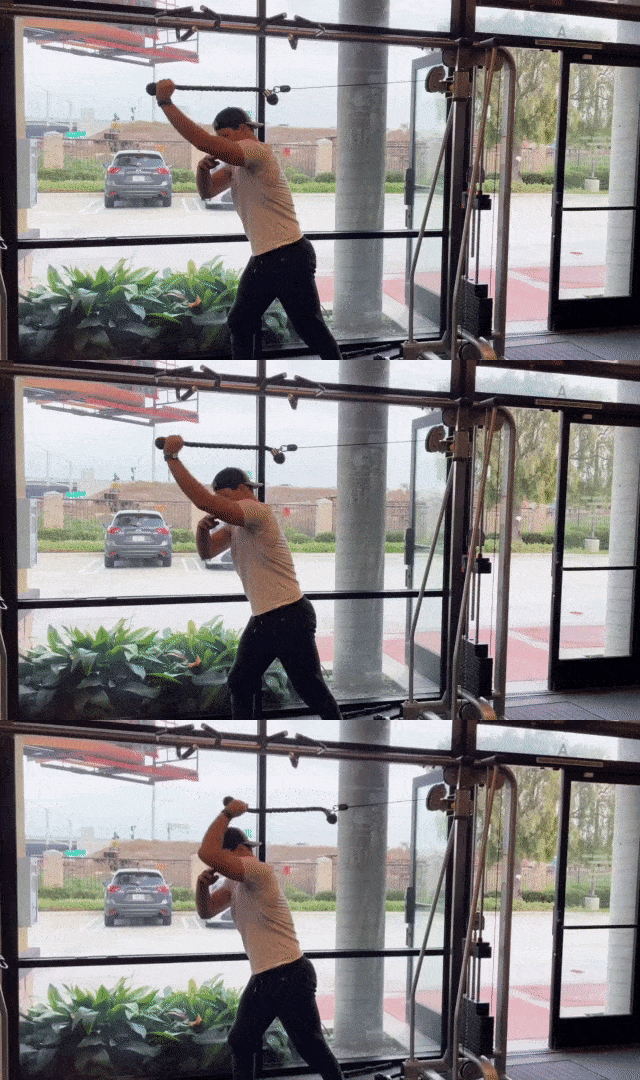
This is similar to the rope overhead variation, but it lets you isolate one arm at a time and clean up side-to-side differences. If your shoulder joint gets cranky overhead, reduce range slightly and keep the ribcage stacked, the long head still gets plenty of work.
How to:
- Set the cable above shoulder height.
- Use a rope, a single handle, or no attachment if needed.
- Face away from the cable and use your non-working hand to stabilize the elbow.
- Extend forward under control, then return slowly for a full stretch.
Pro Tip
Stabilize the elbow, then move only at the elbow joint. More stability usually means more output, which is why this feels so “targeted” compared to sloppier reps.
Programming Recommendations
10–15 reps per arm works well. Pair it after a bilateral movement to finish the long head without needing to chase heavy loads.
4. Single-Arm Cable Tricep Pushdown

This is the single-arm version of the classic pressdown, and it is one of the easiest ways to keep a cable pushdown strict. Use a d-handle if you want the cleanest setup and a more natural wrist position.
How to:
- Attach a single handle, a d-handle, or grab the pulley directly.
- Stand tall, brace, and lock your elbow into your torso.
- Press down until you hit a controlled lockout, then return without losing elbow position.
- Match reps on both arms.
Pro Tip
Most form breakdown here is elbow drift. Keep the elbow pinned and let the forearm move like a hinge. That is the difference between triceps work and accidental shoulder work.
Programming Recommendations
Moderate to high reps work best, 10–15 per arm. I like this as a late-session movement when you want quality volume without stressing the joints.
5. Straight Bar Cable Overhead Tricep Extension
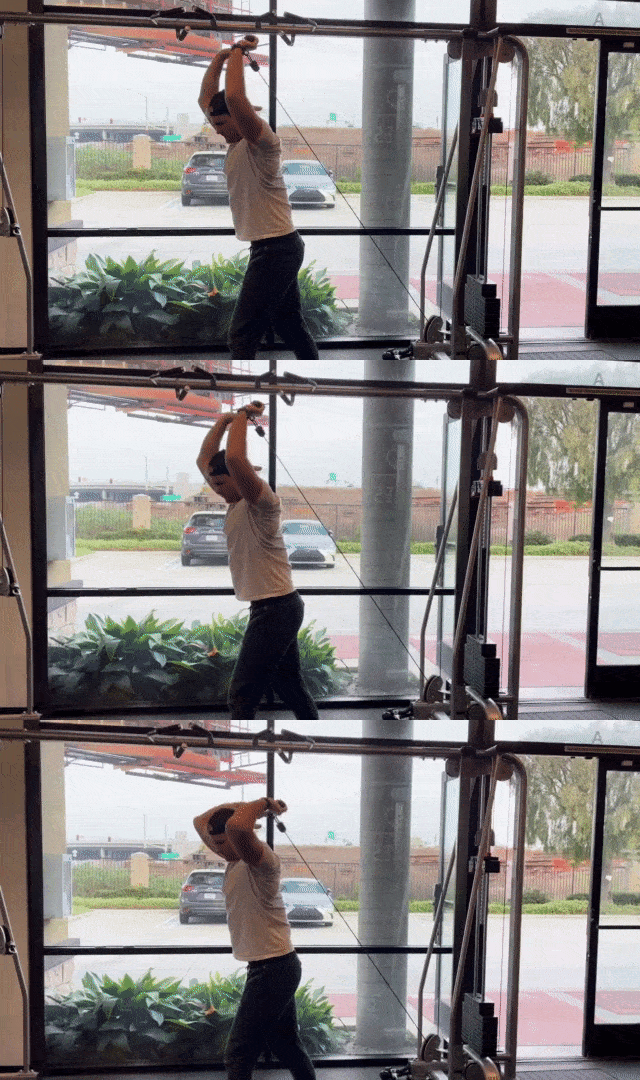
Any time you go overhead, you bias the long head of the triceps. Using a bar attachment can feel more stable than a rope for some lifters, and it can help you keep the elbows closer together.
This is strong for hypertrophy because you’re loading the triceps in a lengthened position. Keep the shoulder joint stacked and avoid turning it into a sloppy pullover.
How to:
- Set the cable low and attach a straight bar.
- Turn around and take a staggered stance.
- Reach the bar behind your head, then extend overhead.
- Keep your elbows relatively close as you press up.
Pro Tip
Do not cut reps short. Let the bar come back to a comfortable stretch, then drive to a clean lockout. If you cannot control the bottom, lower the load.
Programming Recommendations
10–15 reps works well. You can pair this with a bicep curl on the same bar attachment to build the entire arm without wasting time swapping setups.
6. Cable Skullcrushers
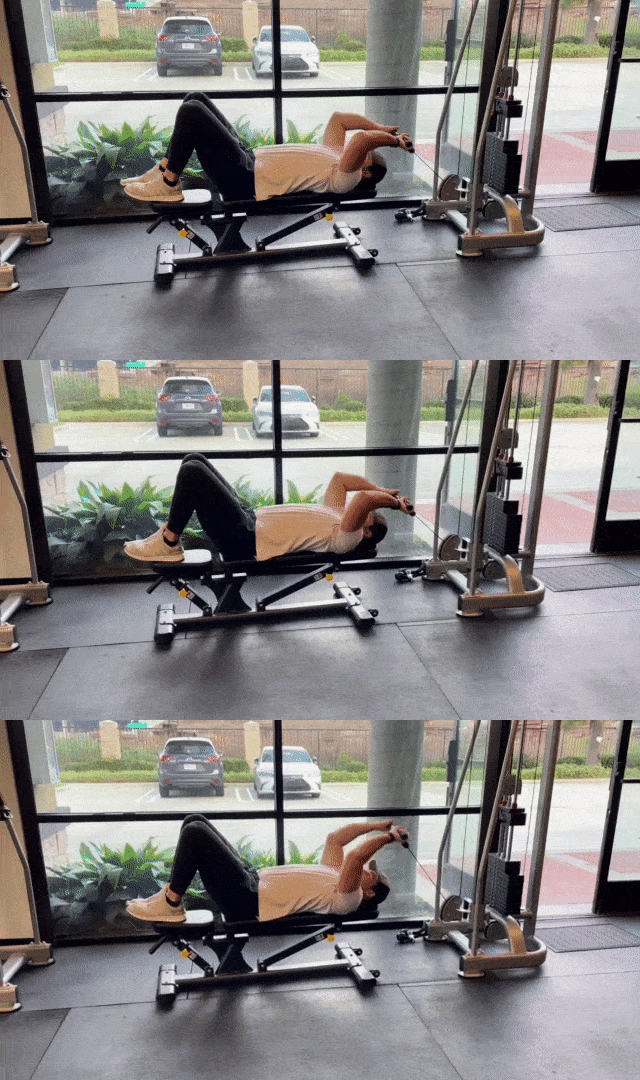
Most people have done skull crushers with dumbbells or an EZ bar. Cables make this feel different because the tension stays more constant through the range, and you can keep the elbows honest without relying on gravity.
How to:
- Place a bench close to the cable station and set the pulley below bench height.
- Lie back, set your upper back, and keep your thighs stable so the torso does not shift.
- Lower the handle toward the forehead or slightly behind, then extend to a controlled lockout.
Pro Tip
If the cable is too high, it will not feel like a true skullcrusher. Keep the line of pull low and let the elbow extension do the work.
Programming Recommendations
Higher reps tend to feel best here, 15–20 is a reliable target. If elbows feel irritated, reduce range slightly and keep the tempo slow.
For a refresher on skull crushers, plus other isolated exercises, see: Best Tricep Isolation Exercises
7. Standing Dual Rope Cable Tricep Pressdown
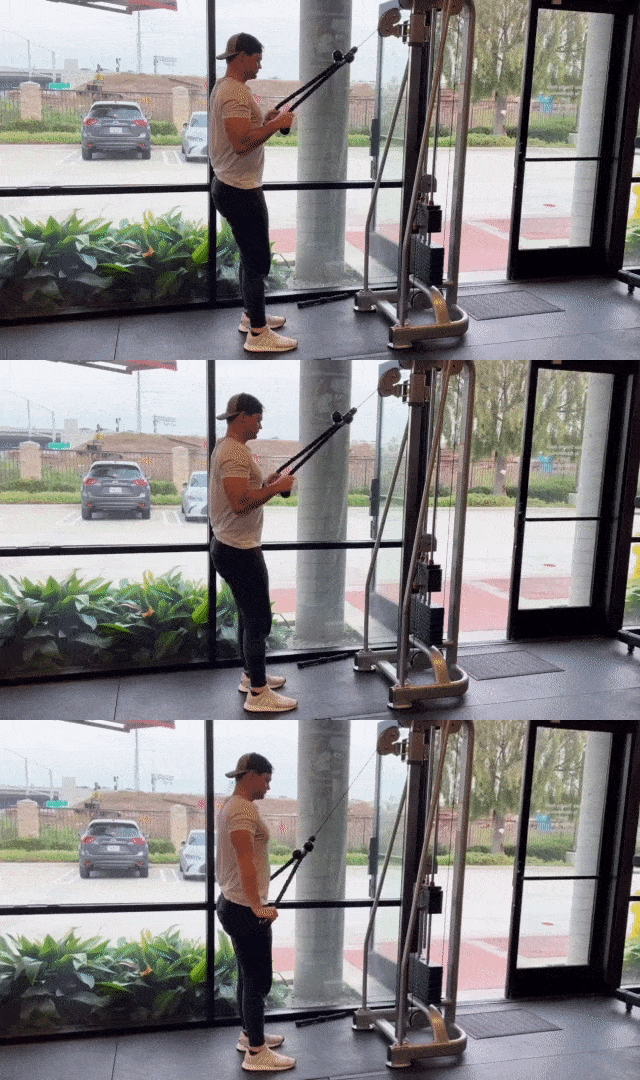
This looks similar to the bent-over pressdown, but staying more upright and using two ropes changes the angle. That small tweak can help you find different fibers, which matters if you want the triceps to look complete from multiple angles.
How to:
- Attach two rope handles.
- Stay mostly upright, brace, and keep elbows glued to your torso.
- Press down and slightly out, leaving space between your hands and your hips.
Pro Tip
Do not let your hands touch your body at the bottom. That slight outward finish improves the feel for many lifters, especially on the lateral side.
Programming Recommendations
Stick in the 12–20 rep range. It starts to burn around rep 12, which is usually the sweet spot for hypertrophy-focused work without joint drama.
8. Single Arm Cable Cross-Body Tricep Extension
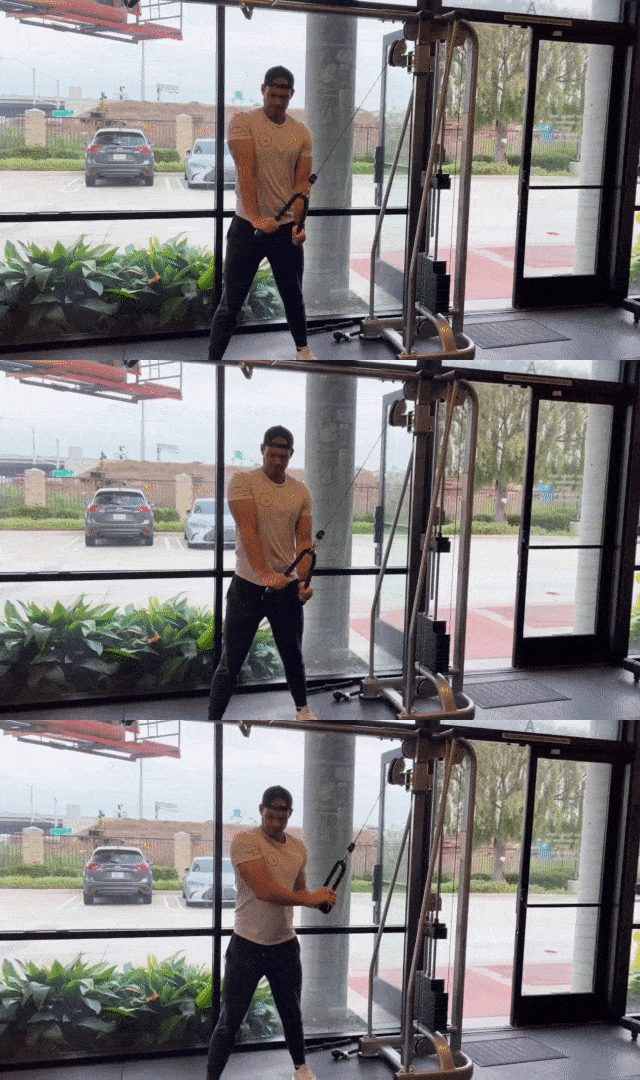
This is an angle many people skip, but it is excellent for hitting the triceps slightly differently than a straight pressdown. Set it up cleanly and keep the elbow pinned so the triceps stay responsible for the rep.
How to:
- Attach a rope and grab it with both hands, then position your body adjacent to the stack.
- Lock the elbow in, then extend across the body with control.
- Emphasize one arm at a time, the arm furthest from the cable will do most of the work.
Pro Tip
Focus on the working side and keep the non-working hand supportive, not dominant. If the rep gets sloppy, reduce the load and rebuild the pattern.
Programming Recommendations
10–15 reps per arm works well. This pairs nicely as a superset with an overhead movement when you want an efficient finisher.
Sample Cable Tricep Workouts for Strength & Size
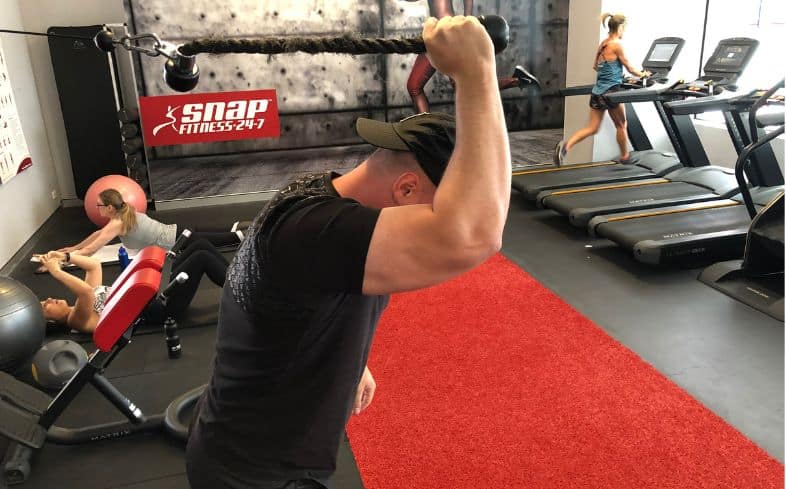
Tricep Cable Size Workout
Here’s a superset you can use to finish your next upper body or arm day. There are 3 exercises. Go through each with minimal rest. Rest 1–2 minutes after the third exercise. 3 rounds total. Choose loads you can control, then increase slowly over time for progressive overload.
- Cable Rope Overhead Tricep Extension x 12–15 reps
- Bent-Over Cable Rope Tricep Pressdown x 12–15 reps
- Single Arm Cross-Body Tricep Extension x 12–15 reps per arm
Tricep Cable Strength Workout
For this superset, focus on heavier work with crisp reps. Rest longer if needed so you can add weight across rounds without losing form. Your goal is to increase the weight each round on both exercises while keeping a clean lockout and stable elbows.
- Single Arm Overhead Cable Tricep Extension x 15/12/8–10 reps per arm
- Bent-Over Cable Rope Tricep Pressdown x 15/12/8–10 reps
Make sure you take adequate rest between rounds so you’re able to increase the weight.
No cable? No problem. Start with these bodyweight moves: Best Bodyweight Tricep Exercises (At Home & No Equipment)
How To Prepare for a Tricep Cable Workout
The triceps are a smaller muscle group, but you still want a quick warm-up so the elbows and shoulder joint feel ready. Start with arm swings, then use light resistance bands to get blood moving before you load up the cable stack.
Here are two of my favorite upper body warm-up exercises. You’ll just need resistance bands:
1. Banded Around The Worlds
2. Band Pullaparts
Hydrate and eat something beforehand if you train better with fuel in you. Your performance and intensity will be more consistent when you are not running on empty.
What Are The Triceps, And What Do They Do?
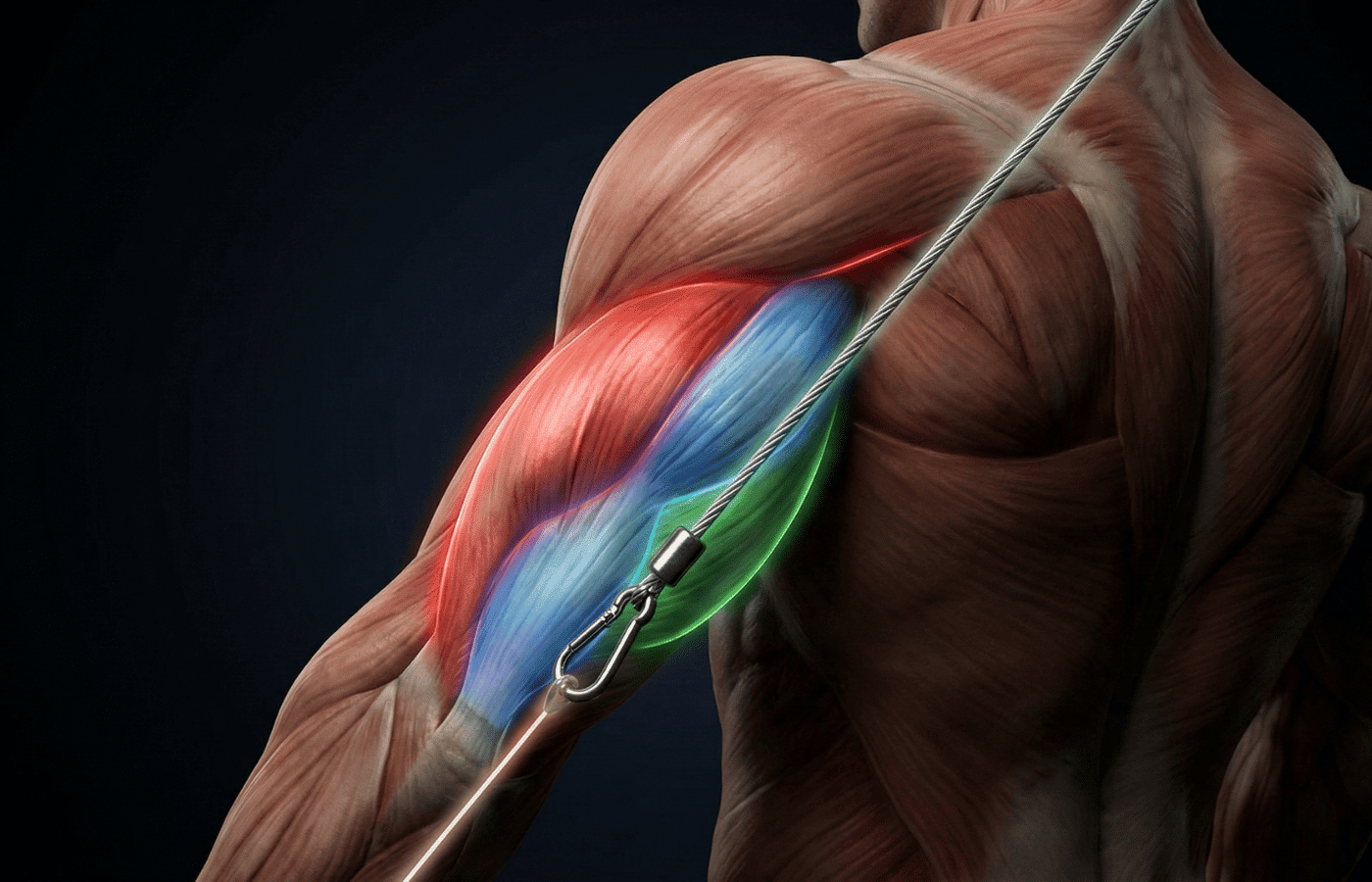
The triceps sit on the back of the upper arm and extend the elbow. They help you finish pressing movements, from push-ups to bench, and they matter in the top half of a dumbbell chest press when you are driving to lockout.
The key to growing your triceps is making sure you’re training all three heads across different angles, not just repeating one pressdown variation.
Want to build your bench press? Start here: Best Tricep Exercises to Increase Bench Press Strength
Anatomy of The Triceps
The triceps consist of three heads, lateral, medial, and long. They converge at the elbow but start in different places, which is why different angles and setups matter.
The Long Head
The long head of the triceps attaches to the scapula and the elbow. That means it extends the elbow and also plays a major role in supporting the shoulder joint during overhead work.
Medial Head
The medial head helps extend the elbow and tends to contribute heavily during controlled, higher-rep work where you keep the elbow position strict.
Lateral Head
The lateral head is often the most noticeable on the outer upper arm. Many lifters feel it strongly during strict pressdowns and cross-body cable work when they keep the elbow pinned and finish with a clean lockout.
The Function of the Triceps
The triceps’ primary function is extending the forearm at the elbow joint. They also help stabilize the elbow when the forearm and hand perform fine motor tasks like writing. Learn more here: NCBI overview
Benefits of Cable Machine Exercises to Train Triceps
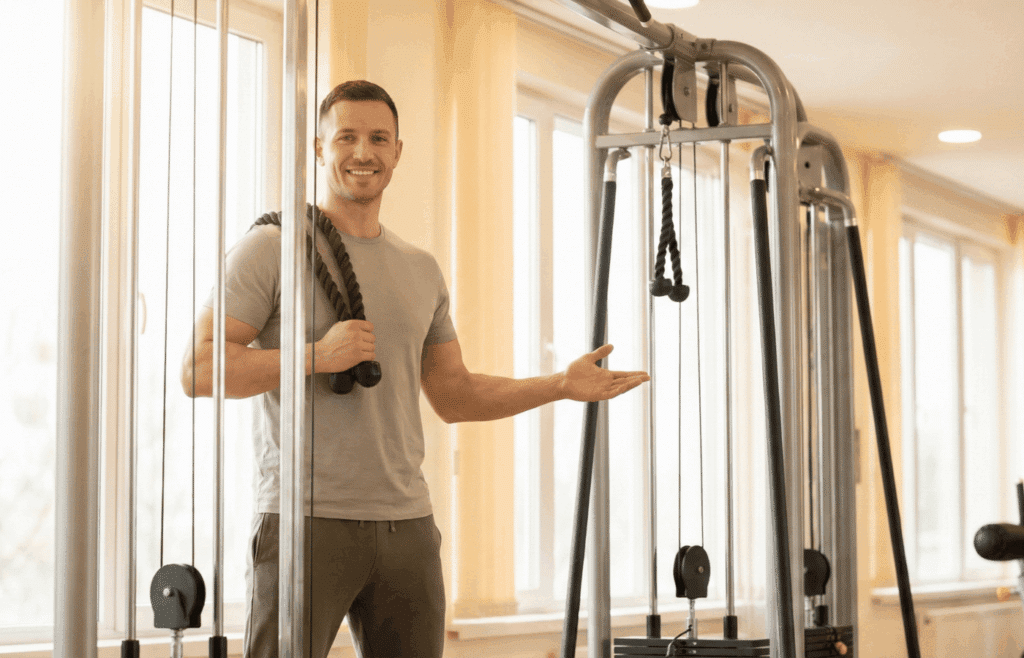
There are three main benefits to using the cable machine for triceps work.
Time Under Tension
Cables increase time under tension because the resistance stays more consistent across the range. That consistency helps you get a better stimulus from isolated exercises without having to throw around much weight.
High Volume
Cables make it easier to add volume to lagging body parts. That is valuable for hypertrophy, especially when your elbows do not love heavy free-weight extensions.
Often Easier to Scale and Recover From
The cable station makes angle adjustments fast, and it can be easier on joints when you want quality reps without fighting awkward setups. That is one reason cables are a practical choice for lifters managing nagging elbow or shoulder joint irritation.
Only have dumbbells? Try: 8 Tricep Workouts With Dumbbells
Frequently Asked Questions
What are the best cable exercises for triceps?
The best cable triceps exercises cover all three heads across multiple angles. My go-to list is an overhead cable triceps extension (rope or bar attachment), a strict cable pushdown (rope, straight bar, or d-handle), a single-arm cable pushdown to clean up imbalances, and either cable skullcrushers or cross-body extensions to change the line of pull. If you only do one pattern, you usually miss the long head or undertrain the lateral head of the tricep.
Why are cables so effective for building triceps size?
Cables keep more consistent tension through the range and make it easy to adjust your starting position and line of resistance. That helps you keep intensity high without relying on momentum. They also let you pile on productive volume with isolated exercises while often being a bit kinder to joints than heavy free-weight extensions.
Do overhead cable triceps extensions really build the long head better?
Overhead work puts the long head in a more stretched position, which is one reason it tends to respond well to overhead variations. I still keep pressdowns in the plan, but if you want complete development, an overhead cable triceps extension belongs in the rotation. Keep the shoulder joint stable and let the elbow do the work, do not turn it into a loose shoulder-driven rep.
What’s the difference between a rope pressdown, straight bar pressdown, and d-handle pushdown?
A rope pressdown lets you separate the ends at the bottom, which many lifters feel as a stronger contraction. A straight bar attachment can feel more stable and makes it easier to standardize technique for progressive overload. A d-handle is excellent for single-arm work because it usually feels more natural on the wrist and helps you keep the elbow pinned. All three work, pick the one you can do strict and repeatable.
How do I set the starting position for cable triceps exercises?
Brace your torso first, then lock the elbow where you want it to stay. For pressdowns, that usually means elbows pinned to your sides, ribs down, shoulders relaxed, and no sway. For overhead cable triceps extension variations, keep the ribs stacked, keep the shoulder joint quiet, and set your elbows slightly forward so you can extend without flaring. If your starting position changes every set, your stimulus changes every set.
How heavy should I go on cable triceps exercises?
Most lifters do better with moderate loads and clean reps than chasing max weight. If you have to swing, lean back aggressively, or lose the lockout, the weight is too heavy for the goal. Use a load that lets you control the eccentric, hit a full lockout, and keep the elbow position stable, then build progressive overload by adding reps first and weight second.
What rep range is best for triceps on cables?
For most people, 10 to 20 reps is the sweet spot on cables, with occasional higher-rep sets (20 to 30) when you want a lighterload pump that is easier on joints. Overhead variations often feel best in the 12 to 20 range, pressdowns can live in 10 to 20, and skullcrushers usually respond well to 15 to 20 when you keep them strict.
How do I train the lateral head of the tricep with cables?
The lateral head of the tricep tends to respond well to strict pressdowns and variations where you can finish hard into lockout without the elbow drifting. Rope pressdowns, straight bar pressdowns, and single-arm d-handle cable pushdown sets are all strong choices. Keep the elbow pinned, avoid shoulder movement, and pause briefly at lockout so the triceps do the work.
How do I keep cable pushdowns from turning into a shoulder exercise?
If your elbows drift forward, your shoulders start helping. Set your stance, brace, pin the elbows, and keep the upper arm quiet. Think of the forearm as the only moving lever. If you use a rope, spread it at the bottom, but do not let that spread pull your elbows out of position.
Are cable skullcrushers better than dumbbell skullcrushers?
Neither is universally better, but cables give you more consistent tension and a smoother resistance curve for many lifters. Dumbbells depend more on gravity and can feel easier at certain points. If your elbows get cranky, cables are often easier to fine-tune by adjusting the angle and load. The best option is the one you can repeat with strict form and steady progressive overload.
How often should I train triceps if I want bigger arms?
Most people grow well with 2 to 3 direct triceps sessions per week, especially if they also do pressing for upper-body strength. Keep total weekly sets reasonable, often 8 to 16 hard sets per week depending on recovery. If your joints start complaining, reduce intensity, tighten technique, and lean into higher reps for a week or two.
Can I do a full triceps workout with just one cable station?
Yes. You can build an entire session with (1) an overhead cable triceps extension, (2) a cable pushdown variation, and (3) a single-arm movement like a d-handle pushdown or cross-body extension. That gives you different angles, clean isolation, and a straightforward way to track progressive overload.
What if I don’t have cables, what are the best alternatives?
If you do not have a cable station, you can still hit triceps well with bodyweight moves like close-grip push-ups and bench dips, and with dumbbells using overhead extensions and skullcrushers. Resistance bands can also mimic pressdowns and overhead extensions if you can anchor them securely. The goal stays the same: stable elbow position, controlled reps, and progression over time.
Should I train triceps before or after chest and shoulders?
If triceps size is the priority, put triceps earlier in the session once or twice per week so you can train with higher quality and intensity. If your priority is pressing performance, train chest and shoulders first and then use cables for triceps after. Either way, do not let fatigue destroy your elbow position and lockout quality.
How do I avoid elbow pain during cable triceps training?
First, clean up technique, pinned elbows, controlled tempo, and no violent lockout. Second, adjust the angle, many lifters feel better switching from a straight bar attachment to a rope or to a d-handle. Third, manage load and volume, higher reps with a lighterload often help. If pain persists, reduce aggravating movements and consider getting it assessed by a qualified clinician.
What’s a simple cable triceps finisher for arm day?
Keep it simple: 3 rounds with minimal rest of (1) overhead cable triceps extension x 12 to 15, (2) rope pressdown x 12 to 15, (3) single-arm cross-body extension x 12 to 15 per side. Focus on a clean starting position, controlled eccentrics, and a full lockout. You will get a big pump without needing to chase much weight.
Reference
- Maeo S, Wu Y, Huang M, Sakurai H, Kusagawa Y, Sugiyama T, et al. Triceps brachii hypertrophy is substantially greater after elbow extension training performed in the overhead versus neutral arm position. European Journal of Sport Science. 2022 Jul 12;1–26. DOI: 10.1080/17461391.2022.2100279
Final Thoughts
The cable station is one of the best ways to build triceps size and reinforce upper-body strength. You get consistent tension, quick angle changes, and easy scaling for progressive overload. Start with an overhead cable triceps extension, follow with a pressdown, then finish with a single-arm variation, and your triceps will have fewer weak links.
These are all movements I use with clients in different capacities. Try each of these 8 exercises, keep the setup consistent, and stick with the ones that feel the most stimulating for your triceps while staying friendly to your joints.
About The Author

Kurtis Ackerman is a personal trainer residing in Southern California. He is the owner and head trainer of KB Fitness. He competed in powerlifting and Strongman in his younger years. Now he trains a wide variety of clientele but specializes in working around injuries. You can connect with him on Instagram or LinkedIn.