
If your squat bottoms out too fast or your deadlift lockout is weak, your hamstrings might be the problem. Nordic leg curls are one of the most challenging and effective ways to target this weakness.
In this article, we’ll explain what makes the Nordic curl so unique, how to do it even without a gym setup, and why it belongs in every serious training plan.
What Is the Nordic Leg Curl?
The Nordic leg curl is a bodyweight hamstring exercise that emphasizes eccentric strength. You kneel with your feet anchored, keep your body straight, and control the descent as your hamstrings fight gravity. It’s brutal. It’s humbling. But it’s also incredibly effective.
Don’t have a fancy machine? No problem. As we show in this home setup, all you need is creativity, some padding, and a way to lock your ankles in place, like a barbell in a squat rack or a bench with safety pins.
Why Nordic Leg Curls Work for Serious Hamstring Strength
Most people do not realize that a lot of squat problems come from weak hamstrings. If you are dropping too fast into your squat or struggling to stay tight at the bottom, chances are your hamstrings are not doing their job. Same with deadlifts.
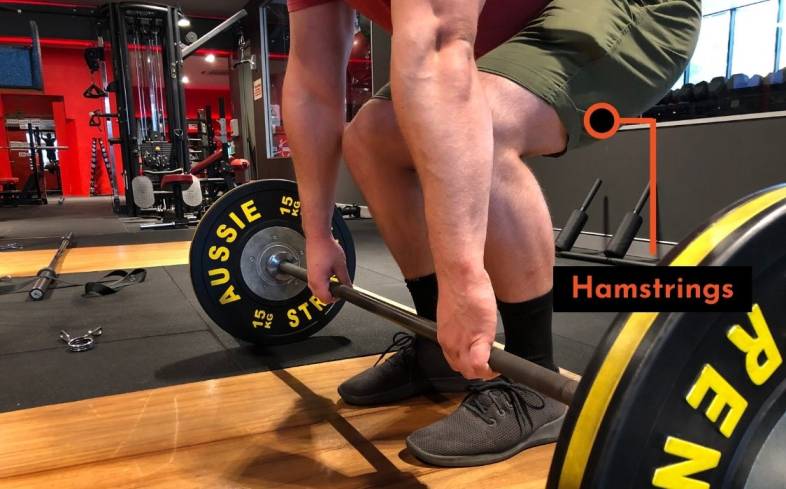
If you are stalling at lockout or not getting your hips through, it is usually not just your glutes. It is a hamstring issue. Nordic curls fix that. They train your hamstrings to stay tight and strong while lengthening, and that is the key to more control and more power.
But it is not just about strength either. This movement makes your knees feel more stable and builds the kind of durability that keeps you lifting longer.
Muscles Targeted by Nordic Hamstring Curls:
- Primary Group: Hamstrings (Biceps Femoris, Semitendinosus, Semimembranosus)
- Glutes (Gluteus Maximus)
- Calves (Gastrocnemius and Soleus)
- Erector Spinae (Lower Back)
- Core (Rectus Abdominis, Obliques, Transverse Abdominis)
Most of us train quads way more than hamstrings, so this helps balance things out and prevent injuries.
Bottom line, if you are serious about your lifts, get Nordic curls in your program. They are tough, but they work.
How to Perform Them Safely
Start by kneeling on a padded surface to protect your knees. Anchor your feet securely. You can use any immovable object. Choose any sturdy object like a smith machine or loaded barbell in a rack, with a training partner holding your ankles, or using a bench and safety pins. You can see these in action on our YouTube channel.

Flex your toes into the floor or pad; do not let the tops of your feet lie flat. This gives you more leverage and helps engage the calves and ankle joint for stability. From here, brace your core and glutes.
Your body should form a straight line from your knees to your shoulders with no arching and no bending at the hips. Note that this is the full movement, and it uses the full range of motion. If you want progression, start by limiting that first.
Avoid hamstring strains or pain by using an attachment (like these resistance bands) when you're first getting started. I'll show an image that shows how to use resistance bands below.
Top Position: At the top, you are completely upright with knees bent at 90 degrees and everything stacked: hips, shoulders, and head. This is your ready position.
Keep your arms close to your body or extended in front of you to help with balance if needed. If you are using assistance bands, they should be slightly taut at the top but not pulling you yet. Take a breath, brace, and prepare to lower under control.

Bottom Position: Now the real work begins. Slowly lower your torso toward the floor while keeping that straight-line posture intact. You will feel your hamstrings engage immediately as they resist the fall.
If done correctly, your hips remain extended throughout, and the movement comes from the knee joint. Go as far as your hamstrings will allow under control. Do not just fall.
If needed, use your hands to catch yourself at the bottom or use resistance bands to lighten the load. In an ideal repetition, you would reverse the motion and pull yourself back up using only your hamstrings, but most people, including strong lifters, need assistance for that part at first.
And if you're looking for more of a challenge, try single leg versions, double leg weighted nordic curls, or even single leg weighted nordic curls.
Nordic Curl Programming Tips
Short version: Begin with 3 sets of 6 to 10 reps, once or twice per week. Use bands to help early on and reduce assistance over time. Slot this exercise in on squat or deadlift days, especially in the off-season or as an accessory movement.
Longer version: You can work Nordic curls into a powerlifting program as a powerful accessory lift to build hamstring strength, protect the knees, and improve squat and deadlift performance. The best time to include them is after your main lift on squat or deadlift days.
They fit well as part of your hamstring accessory work and can be done once or twice a week. Nordic curls are especially valuable during the off-season or in hypertrophy blocks but can still be useful in strength phases if you control the volume.
On a related note, check out these TRX alternatives for more accessory lifts.
For beginners to intermediate lifters, start with 2 to 3 sets of 5 to 8 reps using resistance bands or working within a partial range of motion. Advanced lifters can do 3 to 4 sets of 6 to 10 reps with minimal assistance, focusing on slow and controlled lowering.
The key is to maintain good form, even if that means using assistance or doing only eccentric reps. Lower yourself slowly, then push off the floor to return to the top if you cannot complete a full rep.
When programming Nordic curls, make sure each rep is deliberate and controlled. Do not rush through them or let your hips break during the movement. Train close to technical failure but avoid letting the quality of the rep fall apart. As you get stronger, reduce your reliance on assistance or add tempo to increase difficulty.
And check out this guide on glute ham raise vs. nordic curl. It goes into more detail about which to use and when.
And yes, this is a knee flexion exercise. That's just any movement that involves bending the knee. And you can see how crucial that is for Nordic ham curls.
Final Thoughts
The Nordic leg curl is hard, but it's also effective. For lifters serious about progress, adding this bodyweight hamstring drill can bridge the gap between weak pulls and powerful lifts. Don’t wait until a hamstring injury forces you to train smarter. Start now.
Key Takeaways
- Nordic curls develop eccentric hamstring strength crucial for squats and deadlifts
- No machine? Use a home setup with a barbell or bench to anchor your feet
- Start light, use bands, and focus on slow, controlled reps for best results