
Most powerlifters can tell you exactly what their bench press max is. They can walk you through their squat programming, their deadlift accessories, their hip mobility work. But ask them what they do for biceps and the answer is usually some version of nothing. So many lifters genuinely believe bicep training has no place in a strength sport built around the squat, bench, and deadlift.
That belief is costing them on the bench press, specifically at the bottom of the lift where control matters most. If you have ever felt shaky bringing the bar to your chest, lost tension at the touch point, or found yourself grinding through the first inch off the chest with no real confidence, weak biceps are a likely contributor. And the fix is simpler than most people expect.
Table of Contents
Why Powerlifters Avoid Bicep Work (And Why That Logic Falls Apart)
The case against bicep training in powerlifting goes something like this: the biceps aren't a prime mover in any of the three competition lifts, so direct work is wasted training time that could go toward the movements that actually matter on the platform.
That reasoning is partially correct. The biceps aren't driving the bench press in the way the pectorals, anterior deltoid, and triceps are. But dismissing them entirely misunderstands what they are actually doing during the lift. The biceps function as dynamic stabilizers in the bench press, keeping the head of the humerus seated in the shoulder socket and controlling elbow flexion as the bar descends toward the chest. They're part of the stability system that lets you stay tight under a heavy load.
The descent phase of the bench press requires controlled elbow flexion under load. That is literally what the biceps do. When they are underdeveloped relative to everything else you are pressing, that phase becomes the weak link. The bar drifts, tension leaks out, and you lose the spring off the chest that makes big singles possible.
The Brachialis: The Muscle Most Lifters Have Never Trained Intentionally
There is a muscle sitting underneath the bicep that most people have never thought about. The brachialis. It attaches from the lower portion of the humerus directly to the ulna, which means it contributes to elbow flexion regardless of forearm position. You can't rotate it out of the movement the way you can shift emphasis on the bicep by changing your grip.
What makes the brachialis important for powerlifters specifically is that it is actually stronger than the bicep fibers themselves. When the brachialis is well developed, it physically pushes the bicep upward, adding thickness to the upper arm, but more relevantly, it adds genuine elbow flexion strength that transfers directly to your ability to control the bar on the way down. A powerlifter with a strong brachialis has a more stable elbow under load. That matters at 90 percent of your max and it matters even more at competition attempts.
The catch is that standard dumbbell curls, performed with a supinated grip, don't effectively train the brachialis. The brachialis responds best to a neutral grip, where the thumb points toward the ceiling and the forearm stays in a hammer position throughout the movement.
Why the Hammer Curl Is the Right Choice for This Goal
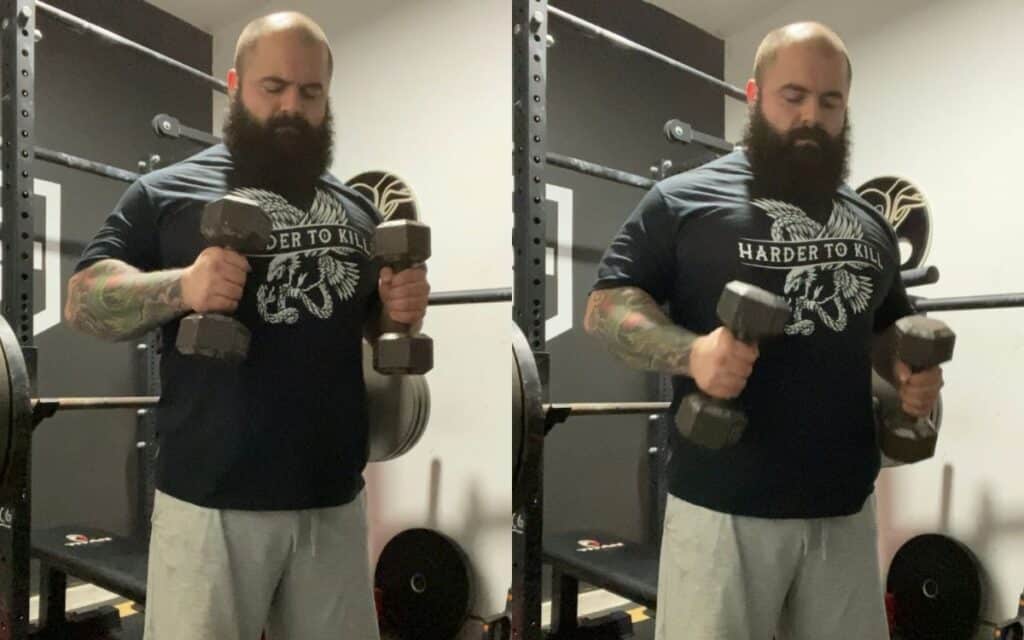
The dumbbell hammer curl is the exercise that trains both the short and long head of the bicep and the brachialis simultaneously, using the neutral grip position that maximizes brachialis recruitment. For a powerlifter who wants the functional benefit without adding a lot of isolation volume to their program, it is the most efficient option available.
It is also a relatively low-fatigue movement. You aren't loading your shoulders, your lower back, or anything that needs to be fresh for your next squat or bench session. You can train it twice a week without meaningful interference, which isn't something you can say about many accessories.
Compare this to a standard supinated dumbbell curl, which does hit the bicep effectively but underloads the brachialis. Or the incline dumbbell curl, which lengthens the bicep at the bottom and creates more stretch-mediated tension, but again does little for the brachialis in the way a neutral grip does. For general arm development, all three have a place. For the specific goal of improving bench press stability and descent control, the hammer curl addresses the muscle that actually needs the work.
If you are already doing bench press accessory work and not seeing the bottom-end control you want, this is the gap that is likely being missed.
The Biomechanics of the Bench Press Descent
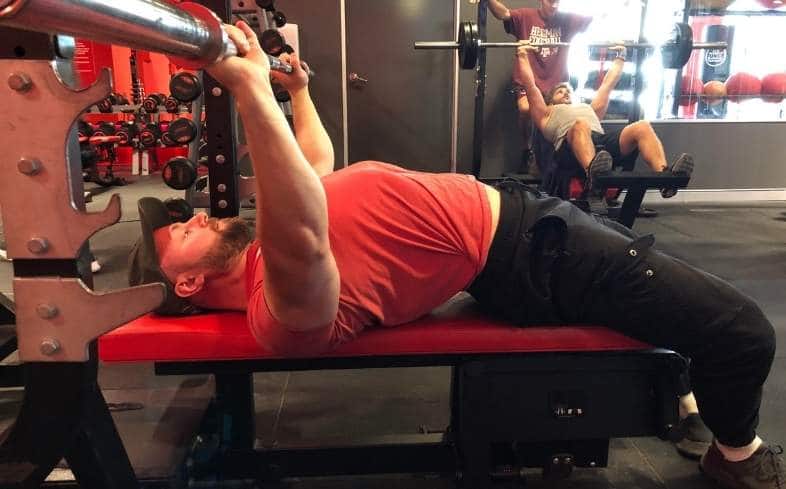
When you unrack the bar and begin lowering it toward your chest, several things need to happen at once. Your shoulder blades have to stay retracted and depressed. Your lats have to stay engaged to create a shelf for the bar to land on. Your elbows need to track at the correct angle relative to your torso. And the whole system has to remain under tension so you can use the stretch reflex off the chest rather than bleeding energy at the touch point.
The biceps are part of that system. They are working alongside the lats and the rotator cuff to keep the upper arm stable in the socket as the bar descends. When you apply the cue of breaking the bar or externally rotating against the knurling, you are creating forearm supination force, which directly activates the biceps as stabilizers.
A lifter with underdeveloped biceps and brachialis will often show this in one of two ways: the bar drifts toward the face or the belly during the descent because the elbow position isn't being held, or the touch point feels unpredictable because tension is leaking somewhere between the shoulder and the wrist. Building the arm flexors directly reduces both of these problems.
Understanding how the biceps are actually recruited during the bench press makes it easier to see why skipping direct work is a mistake for anyone who wants to improve their descent mechanics.
Elbow Health For Lifters
Elbow and bicep tendon problems are common in lifters who bench press heavy and frequently. The long head of the biceps tendon runs through the shoulder and gets stressed every time the bar descends and the tendon is stretched under load. Over time, high pressing volume with no direct bicep work to strengthen the surrounding tissue can lead to tendon irritation that sidelines a lifter for weeks.
Bicep pain during bench pressing is often the result of high pressing volume running through a tendon that has never been trained directly. The hammer curl, performed with controlled eccentrics and appropriate loading, is one of the most effective ways to build tendon resilience in this area. The best part? It builds connective tissue tolerance that protects you across a long training career.
For a powerlifter who plans to compete for years, that's major. Staying healthy is the foundation of long-term progress, and the bicep tendon is one of the structures that breaks down quietly until it announces itself loudly.
How to Program Hammer Curls in a Powerlifting Block
The good news is that this is pretty easy to incorporate. Hammer curls belong at the end of a pressing session, after your main bench work and your primary accessories are done. They're a finisher.
Three to four sets of ten to fifteen reps with a weight that challenges you in the final few reps without breaking form is the target. The eccentric portion of each rep, the lowering phase, deserves deliberate control. Lower the dumbbell over two to three seconds. This is where the tendon work happens and where the brachialis is most loaded.
Running this once or twice a week is sufficient. If you bench twice a week, add hammer curls to both sessions. If you bench more frequently, choose the two sessions where you have the most energy remaining after the main work and add them there. The volume doesn't need to be high. Consistency across several months is what produces the structural changes you are looking for.
You don't even need to go heavy. A controlled set of fifteen reps at a moderate weight will do more for your bench press than a grinding set of five reps where your torso is swinging and your elbows are drifting forward. Keep the elbows fixed at your sides throughout the movement and let the forearm do the work.
What to Expect When You Add This In
Structural adaptations in muscle tissue and tendons take longer than strength gains in compound lifts. Most lifters notice a difference in how the bar feels on the descent somewhere between four and eight weeks of consistent hammer curl work. The bar feels more connected to the body. The touch point becomes more predictable. The first inch off the chest, which is where a lot of lifters leak energy, starts to feel more explosive because the eccentric phase was actually controlled rather than barely survived.
The longer-term benefit is a bench press that holds up under fatigue. At a meet, when you have already squatted and you are going into bench on legs that aren't fresh and a nervous system that has already been taxed, the stability of your descent is one of the first things to deteriorate. A strong brachialis and well-trained biceps give you more margin. That is what accessory work is supposed to do.
If you are looking at the broader picture of exercises that directly improve bench press strength, bicep work through the hammer curl fills a gap that most accessories leave open. Tricep work handles lockout. Lat work handles tightness and bar path. Hammer curls handle the descent, which is the phase that determines how much energy you have to press with in the first place.
Frequently Asked Questions
Why do powerlifters avoid training biceps?
The common reasoning is that the biceps aren't a prime mover in the squat, bench press, or deadlift, so direct arm work feels like wasted training time. While the biceps aren't the main driver in any competition lift, they function as critical stabilizers in the bench press descent, and neglecting them directly undermines control and tension at the bottom of the lift.
What is the brachialis and why does it matter for bench press?
The brachialis is a muscle that sits beneath the bicep and attaches from the humerus directly to the ulna. Because of this attachment, it contributes to elbow flexion regardless of forearm position, making it stronger than the bicep fibers themselves. A well-developed brachialis adds elbow flexion strength and stability under load, which transfers directly to a more controlled and powerful bench press descent.
Why is the hammer curl better than a regular dumbbell curl for powerlifters?
The neutral grip used in the hammer curl maximizes brachialis recruitment, which a standard supinated curl doesn't. Since the brachialis is the muscle most directly responsible for elbow stability under load in the bench press, the hammer curl is the more targeted choice for powerlifters trying to improve descent control rather than bicep size alone.
When should I do hammer curls in my training week?
Hammer curls belong at the end of a pressing session after your main bench work and primary accessories are complete. Three to four sets of ten to fifteen reps once or twice a week is sufficient. Keep the eccentric portion slow and controlled, and prioritize consistency over weeks and months rather than high weekly volume.
Can weak biceps cause bicep pain during bench pressing?
Underdeveloped bicep tendons are a contributing factor to bicep pain in pressing movements. High bench press volume without any direct bicep work can stress the long head of the biceps tendon over time. Bicep pain during bench press is often a sign that the tendon lacks the conditioning to handle pressing volume, and controlled hammer curl work helps build that resilience before pain becomes a problem.
How long before I notice a difference in my bench press from doing hammer curls?
Most lifters notice improved descent control and a more predictable touch point somewhere between four and eight weeks of consistent work. Structural changes in muscle and connective tissue take longer than strength adaptations in compound lifts, so patience and consistency matter more than adding volume quickly.
Do hammer curls interfere with bench press recovery?
When programmed correctly at the end of a pressing session with moderate loading and controlled technique, hammer curls add minimal fatigue and don't meaningfully interfere with recovery for the next training session. They are a low-demand isolation movement, which is one reason they work well as a finisher rather than a primary accessory.