We don't need to get too into anatomy here, but if you want to stimulate your entire bicep and add massive thickness to your arms, you'll need to include these exercises that target the short head of the biceps.
Here are my top 12 exercises for the best short-head bicep workout:
- Single Arm Dumbbell Concentration Curl
- Dumbbell Spider Curls
- Dumbbell Preacher Curl
- Straight Bar Elevated Cable Curl
- Hercules Curl
- Cable Squatting Bicep Curl
- Barbell Curls
- Wide Grip EZ Bar Curls
- EZ Bar Preacher Curls
- Chin Ups
- Supinated Lat Pulldowns
- Inverted Rows
If you don't activate your short head bicep properly, you won't get the biceps you're shooting for.
That's why I've included a mixture of dumbbell, cable, barbell, and compound exercises, so no matter the equipment you have access to, you'll be able to target the short head and get a great bicep pump.
With that being said, read on to learn:
- Where the short head of the bicep is
- Why it's necessary to train the short head of the bicep
- 12 best short-head bicep exercises
- A sample short-head bicep workout
Make sure to check out the ‘pro tips' section of each exercise to maximize the benefit!
Table of Contents
Short Head Bicep Exercises at a Glance
| Exercise | Short Head Emphasis |
|---|---|
| Concentration Curl | High |
| Spider Curl | High |
| Dumbbell Preacher Curl | High |
| Straight Bar Cable Curl | Very High |
| Hercules Curl | Very High |
| Cable Squatting Bicep Curl | Very High |
| Barbell Curl | Moderate–High |
| Wide Grip EZ Bar Curl | High |
| EZ Bar Preacher Curl | High |
| Chin Ups | Moderate |
| Supinated Lat Pulldown | Moderate |
| Inverted Rows | Moderate |
What Is the Short Head of the Bicep?
Without getting too technical, your bicep has two long muscle bellies that run up the front of your arm. Most people think this is one muscle, and technically it is, but there are 2 heads (attachment points), and they are stimulated slightly differently.
The short head is the inner part of the bicep and is less prominent, while the long head is on the outside and larger.
The short head of the bicep works with the long head to flex the elbow joint, but both heads work together to provide strength and stability to the elbow joint and contribute to overall arm function.
While it's impossible to completely isolate the short head from the long head, a general rule of thumb to stimulate the short head is to do your curls with your palms facing up, use a wide grip, and keep your elbows far from your body.
Why Is It Necessary to Train the Short Head of the Biceps?
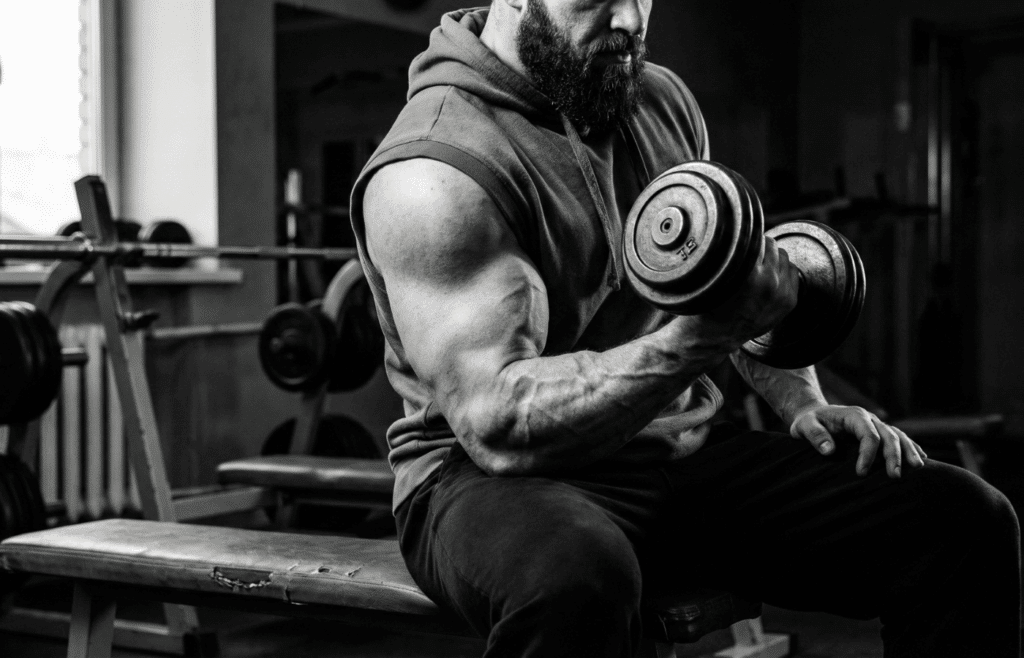
Training the short head of the biceps is necessary to completely train the bicep for several reasons:
- Aesthetics
- Strength
- Injury prevention
- Balance
Aesthetics
The short head of the bicep is primarily responsible for the bicep ‘peak' when the arm is flexed and makes the arm look fuller and more aesthetically pleasing.
Strength
The short head of the biceps plays a crucial role in elbow flexion, which is important for many everyday activities like picking up objects or lifting weights. Focusing on working the short head can help add mass to your arms, and you create a more full and defined bicep.
Injury Prevention
Strengthening the biceps' short head can help prevent injuries, particularly to the elbow joint. A strong biceps muscle can help to stabilize the elbow joint during movements that involve gripping or pulling.
Balance
Focusing on both the short and long heads of the biceps can create a more balanced look to the upper arm and help prevent muscle imbalances that could lead to injury.
Next, you'll learn about the exercises so you know how to work out the short head of the biceps fully.
You can read more about evening out your biceps in our full article.
Best Short Head Bicep Workout: 12 Exercises
I've included 4 different categories of exercises that will help you build the right short head bicep workout for you. Let's start with the exercises you probably have the equipment for.
Dumbbell Exercises
1. Single Arm Dumbbell Concentration Curl
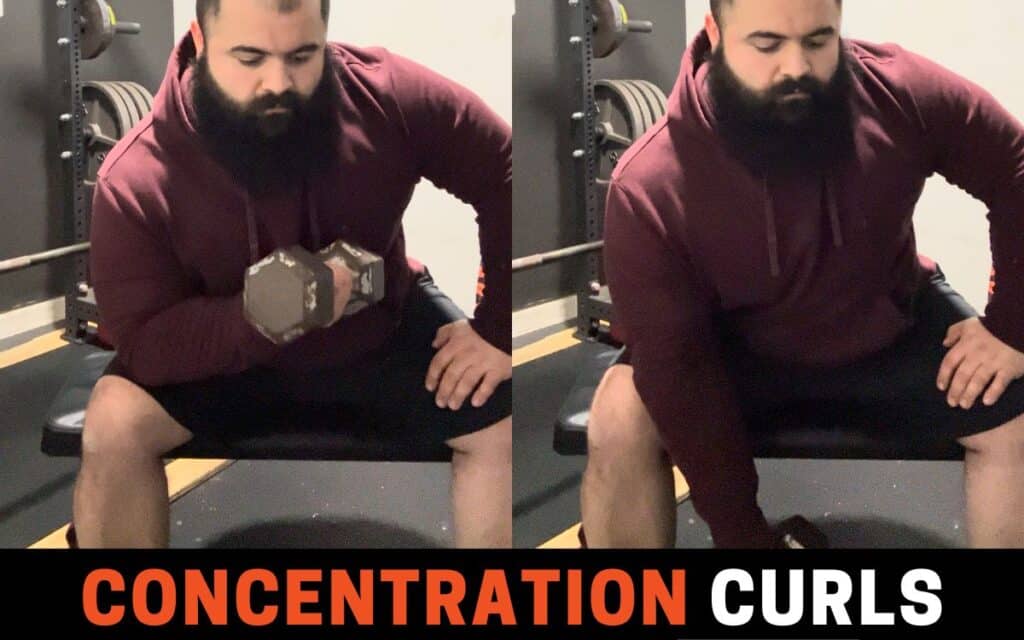
Concentration curls are great because you only need one dumbbell. This will target the short head, but just like all curl exercises, the long head will also be stimulated.
How To Do It:
- Sit on the edge of a bench.
- Lock your elbow into your thigh and lean forward.
- Extend your arm down and squeeze hard at the top of each rep.
Suggested Programming: 3–4 sets of 10–12 reps per arm | RPE 7–8
Pro Tip:
Make sure your elbow is locked into your thigh. Your elbow should be the pivot point. This helps prevent any added momentum and ensures all bicep muscles do the work.
2. Dumbbell Spider Curls
The spider curl has become a favorite for many because this lights up that bicep peak and is pretty easy to do. Just make sure you aren't making any common mistakes.
How To Do It:
For this exercise, you'll need 2 dumbbells and an incline bench.
- Start with both arms hanging over the top of an incline bench.
- Make sure you extend your arms down each rep.
- Focus on keeping your elbows forward.
- Squeeze hard at the top.
Suggested Programming: 3–4 sets of 12–15 reps | RPE 7
Pro Tip:
Keep reaching your elbows forward. Often when people get tired, they'll start pulling their elbows back while they're curling. Don't do this. Keep reaching your elbows forward to force tension onto the short head.
3. Dumbbell Preacher Curl
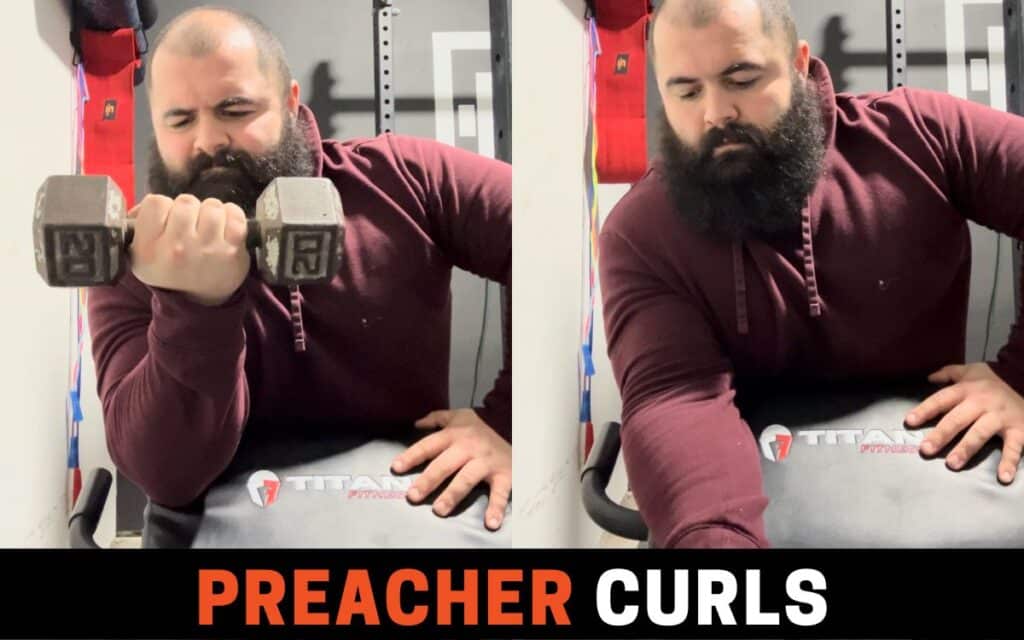
The Dumbbell Preacher Curl is similar to the spider curl, but the preacher setup allows your elbows to be slightly more forward. And that forward elbow position helps put an extra focus on the short head of the bicep. And there are preacher curl alternatives worth checking out too.
How To Do It:
You need a preacher curl setup and two dumbbells.
- Elbows should stay locked onto the pad.
- Extend out all the way at the bottom of each rep.
- Don't let your dumbbells come together as you come up — keep pushing them apart.
- Squeeze your bicep at the top of every rep.
Suggested Programming: 3–4 sets of 10–12 reps | RPE 7–8
Pro Tip:
Don't let your elbows move. The point of using the preacher curl machine is to fix your elbows into a locked position. Also, make sure to really squeeze at the top of each rep.
Cable Exercises
Using a cable setup is a great way to train the biceps! But you need access to a cable machine, which can be limited. If you can access one, the cable machine is one of my favorite ways to keep constant tension on the biceps.
More tension = more gains!
1. Straight Bar Elevated Cable Curl
This exercise is a great way to work the biceps simultaneously. It's pretty simple and a great exercise for beginners.
How To Do It:
- Grab a straight bar and set the cable to roughly shoulder height.
- Keep your elbows UP and LIFTED the whole time.
- Extend your arms out each rep — don't cut the reps short.
- Pull your hands to your face and squeeze the bicep at the top.
Suggested Programming: 3–4 sets of 12–15 reps | RPE 7
Pro Tip:
Don't let your elbows drop. Keeping your elbows out in front of you is one of the main ways to emphasize the short head when training the biceps.
2. Hercules Curl
If you can access this cable setup, this is a great exercise for keeping constant tension on your biceps. This is a little more advanced than the previous exercise, so if you're more of a beginner, start with the straight bar cable curl first.
How To Do It:
- Set the cable height to about shoulder height.
- Keep your elbows lifted as you curl.
- Squeeze the bicep at the top of each rep to put extra stress on the short head.
Suggested Programming: 3–4 sets of 12–15 reps | RPE 7–8
Pro Tip:
Remember: to isolate the short head you want to keep your elbows lifted. Fight that tendency to drop your arms as the biceps fatigue. Keep lifting your elbows to keep the focus on the short head.
3. Cable Squatting Bicep Curl
This is an exercise people aren't always familiar with, and it does require a bit of balance. However, it's great for working the short head because the elbows are both elevated and in front of your body.
It is a more advanced bicep curl variation.
How To Do It:
- Set the cable to the low position.
- Squat down and rest your elbows on the top of your knees.
- Use the elbows as a pivot point as you curl.
- Hands should come right in front of your face for each rep.
Suggested Programming: 3 sets of 10–12 reps | RPE 6–7
Pro Tip:
Don't start too heavy. Part of doing this exercise is finding your balance. You won't find that sweet spot if the cable has too much weight loaded.
Barbell Exercises
If you don't have access to a cable machine, worry not! Here are 3 barbell exercises to make sure you're stimulating the short head.
1. Barbell Curls
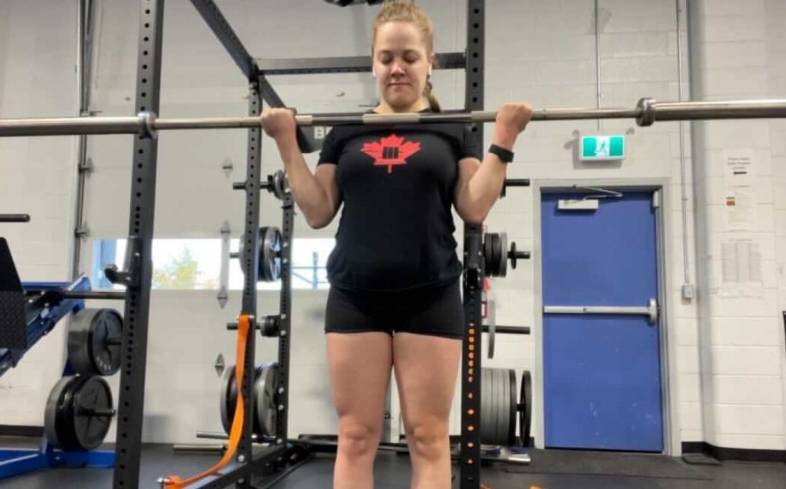
A standard bicep exercise utilized in gyms worldwide. This is a very user-friendly bicep exercise and is great for beginners. Just make sure you're doing it right.
How To Do It:
- Stand tall with your core braced.
- Hands should be slightly wider than shoulder width, palms facing up.
- Initiate the movement by engaging the biceps.
- Bring the barbell to your shoulders, squeeze the bicep at the top, then control as you extend back down.
Suggested Programming: 3–4 sets of 8–12 reps | RPE 7–8
Pro Tip:
Move your hands out slightly wider than shoulder width to make this even more biased toward the short head. That will force more supination, which the short head is primarily responsible for.
2. Wide Grip EZ Bar Curls
The EZ bar was designed to reduce stress on the wrist and forearm while providing a better grip for bicep and tricep exercises. So it was literally made for curls. Let's use it!
How To Do It:
- Find a grip that feels most comfortable on your wrists.
- Initiate the movement with your bicep.
- Bring the EZ Bar up to shoulder height, squeeze the bicep at the top, then control as you extend your arms back down.
Suggested Programming: 3–4 sets of 12–15 reps | RPE 7
Pro Tip:
Don't go too heavy to start. Think about the dumbbells you'd grab for this exercise and start with the EZ Bar weighing the combined total of those dumbbells. Read more: How Much Does An EZ Bar Weigh
3. EZ Bar Preacher Curls
We've gone through the preacher curl and the EZ Bar curl, so now we're combining these exercises. This is one of my personal favorites.
How To Do It:
- Find the most comfortable grip for your wrists — they should be roughly shoulder width apart.
- Lock your elbows on the preacher curl pad.
- Squeeze your biceps at the top, then extend all the way back out.
Suggested Programming: 3–4 sets of 12–15 reps | RPE 7–8
Pro Tip:
Experiment with different grips! Depending on your anatomy, having your hands slightly closer or wider will feel more comfortable on the wrist and forearm. Use the grip that feels most comfortable and most stimulating to the biceps.
Compound Exercises
By compound exercises, I mean multi-joint exercises that aren't typically considered bicep exercises. These movements are great because you're working multiple muscle groups, with an added bonus of bicep gains.
Here are my 3 favorite compound exercises for short head bicep growth.
1. Chin Ups
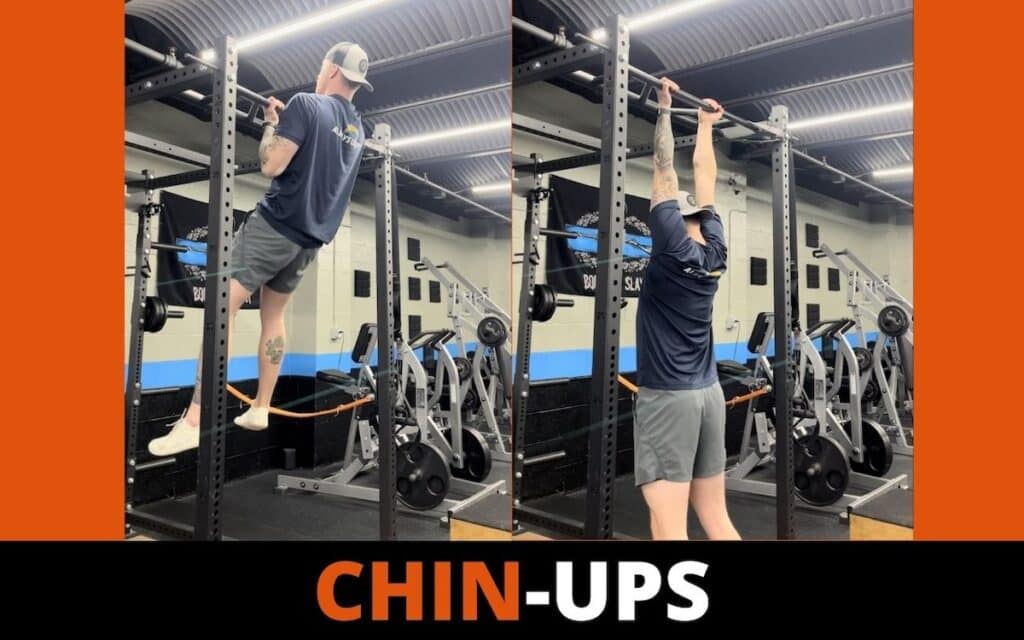
Chin ups are great because they don't require much equipment, and most gyms have pull up/chin up bars. Chin Ups are an advanced exercise but can be scaled using an assisted machine or bands. Isometric holds or eccentric variations are also great for beginners building up to full reps.
How To Do It:
- Place your hands palms up on the chin up bar.
- Pull your chin over the bar.
- Lower yourself down as slowly and as in control as you can.
Suggested Programming: 3–4 sets of 6–10 reps | RPE 8
Pro Tip:
Chin Ups are challenging, so if you need extra assistance, you can place a long band around your knees or feet for added support.
2. Supinated Lat Pulldowns
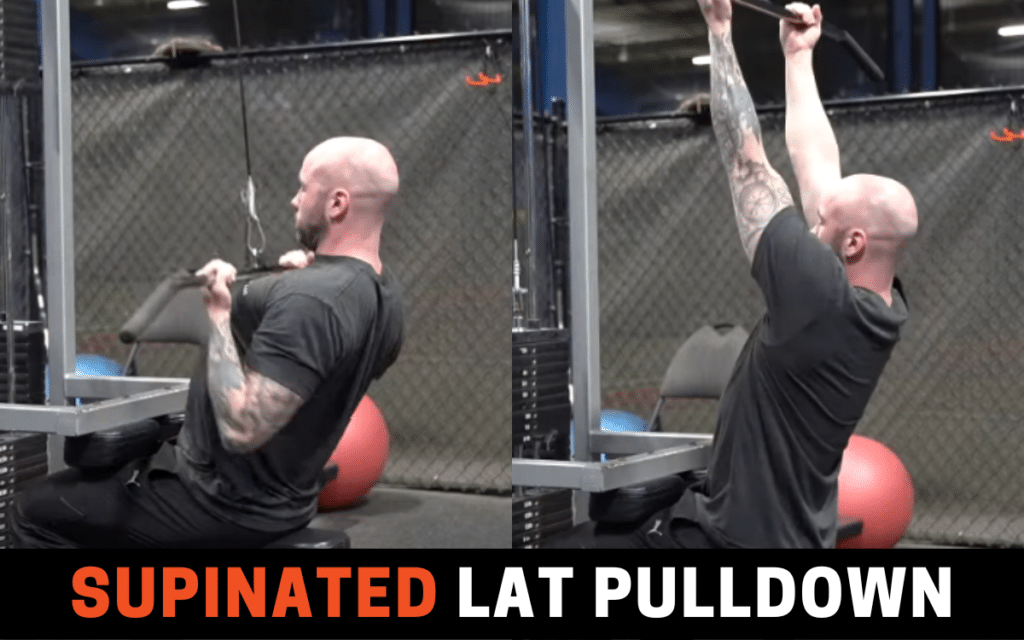
The Lat Pulldown machine is a classic for most commercial gym-goers, and most people have at least tried it. The Supinated Lat Pulldown is similar to a chin up, but is a more beginner-friendly exercise. Note that you do need a lat pulldown machine to perform this one.
How To Do It:
- Sit down with your legs wedged firmly under the pad.
- Grab the bar with your palms facing UP.
- Pull the bar to the top of the chest, then extend back out slowly and under control.
Suggested Programming: 3 sets of 20/16/12 reps (descending)
Pro Tip:
Make sure you're firmly wedged into the machine. A lot of people allow themselves to get pulled up as they fatigue. Don't let this happen. The more stable you are, the more muscle you will activate.
3. Supinated Inverted Rows
This exercise sits between a chin up and a lat pulldown in terms of difficulty — I'd classify it as intermediate. The key is in the setup. You'll need a barbell and a rack.
How To Do It:
- Set the barbell up to be about hip height.
- Lie on the ground and get under the barbell.
- Grab the barbell palms up with a shoulder width grip.
- Pull yourself up until your chest touches the bar.
- Control yourself as you lower back down.
Suggested Programming: 3–4 sets of 10–15 reps | RPE 7
Pro Tip:
If you can't pull yourself up just yet, scoot your feet back and lift your hips. This will make the exercise much easier, and you can gradually work your legs out as you build strength.
For more information about improving your bicep day, read our full article.
Tips For Targeting the Short Head of the Bicep
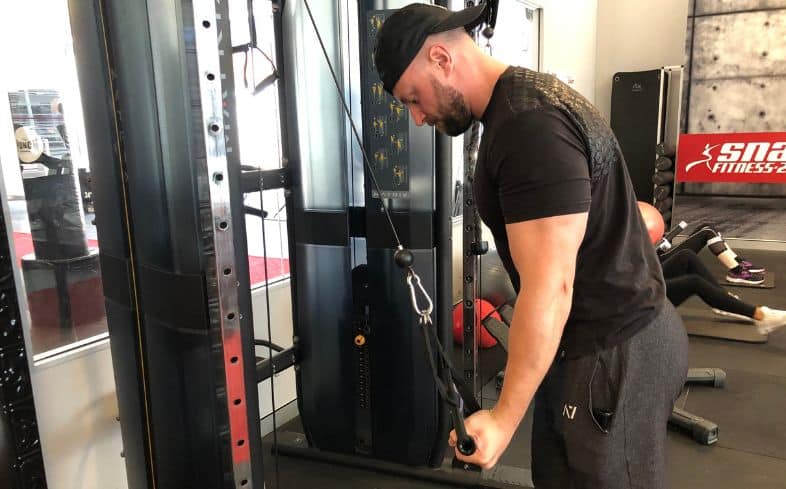
The first thing to remember is that you're never going to completely isolate the individual heads of the bicep. But you can bias each.
Which bicep head is preferably utilized is influenced by 3 positional elements: hand position, forearm position, and elbow position.
Hand Position
Your palms should face UP. This is called supination, and it really lights the short head up. Exercises with the palms facing down (pronation) will bias the long head instead.
Forearm Position
When your forearm is angled away from your body, you will be biasing the short head. In practical terms, widen your grip to focus on the short head and narrow your grip to bias the long head.
Elbow Position
The further your elbows are from your body, the more the short head is worked. Keeping your elbows close to your body will force more emphasis onto the long head.
Everyone has different goals. Use this knowledge to your advantage when selecting exercises.
A perfect exercise to preferentially work the short head = palms face up, your grip is wide, and your elbows are far from your body.
Mind-Muscle Connection
Pro Tip: Use the Mind-Muscle Connection
Research consistently shows that consciously thinking about the muscle you're training increases activation. For short head work, before each set, squeeze your bicep and focus on the inner portion of your arm. Use lighter weight if needed — activation beats load when it comes to peak development. Many elite lifters treat this as non-negotiable for arm training.
Want to know if it's better to do bicep curls standing or sitting? Read our full article.
Sample Short Head Bicep Workout
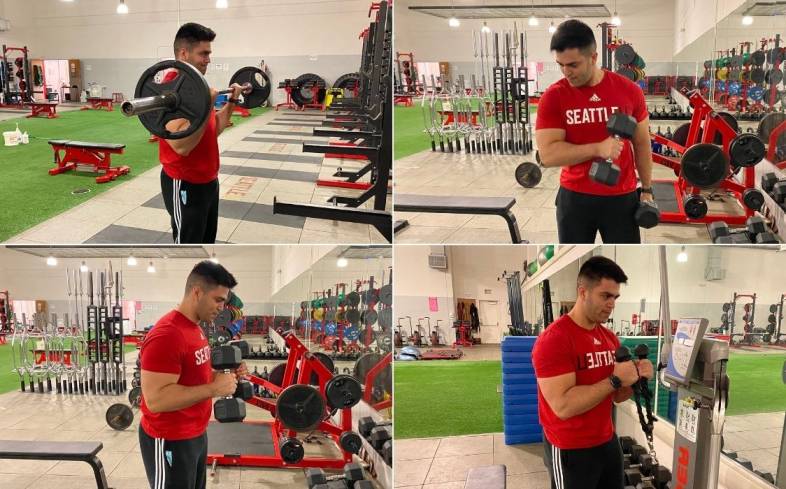
Arm training can either be combined with another body part, or it can be on its own day. Here are 3 separate sample workouts you can use to implement these exercises. Aim to train biceps 2 times per week with at least 48 hours of recovery between sessions, targeting 10–16 total sets per week for meaningful growth.
Sample Back & Bicep Workout
- Chin Ups x 3–4 sets of 6–10 reps (RPE @ 8)
- Supinated Lat Pulldown x 3 sets of 20/16/12 reps
- EZ Bar Upright Row x 3–4 sets of 12–15 reps (RPE @ 7)
- EZ Bar Preacher Curl x 3–4 sets of 12–15 reps (2-second tempo on the way down)
- Single Arm Dumbbell Concentration Curl x 3–4 sets of 10–12 reps per arm (RPE @ 7)
Sample Bicep + Tricep Finisher Superset
- Dumbbell Spider Curls x 3–4 sets of 12–15 reps
- Dumbbell Overhead Tricep Extension x 3–4 sets of 15–20 reps
- Straight Bar Elevated Bicep Curl x 3–4 sets of AMRAP (as many reps as possible)
- Straight Bar Tricep Pressdown x 3–4 sets of AMRAP
Sample Bicep Finisher
- Wide Grip EZ Bar Curls x 3–4 sets of 12–15 reps (RPE @ 7)
- EZ Bar Preacher Curls x 3–4 sets of 12–15 reps (RPE @ 7–8)
- Hercules Curl x 3–4 sets of 12–15 reps (RPE @ 7–8)
Frequently Asked Questions
What exercises target the short head of the bicep most effectively?
The most effective short head bicep exercises are those that keep your elbows elevated and in front of your body with a supinated (palms-up) grip. Top choices include concentration curls, spider curls, dumbbell preacher curls, and the straight bar elevated cable curl. The common thread across all of them: elbows forward, palms up, and a wider grip than you'd use for long head work.
How do you work the short head of the biceps with dumbbells?
You can work the short head of the biceps with dumbbells using a preacher curl setup, an incline bench for spider curls, or a single dumbbell for concentration curls. In all three, focus on keeping your elbows fixed in a forward position and use a supinated grip throughout. Start with a weight that allows perfect form — typically 5–10 lbs lighter than your standard curl weight.
What is the difference between the short head and long head of the bicep?
The bicep brachii has two heads that both run up the front of your upper arm. The short head sits on the inner side and is primarily responsible for the bicep “peak” when your arm is flexed. The long head runs along the outer side and contributes more to overall bicep width and thickness. You can't fully isolate either head — they work together — but grip width, elbow position, and palm orientation let you bias one over the other.
How often should I train the short head of the bicep?
Most lifters benefit from training their biceps (including short head-focused work) 2 times per week, with at least 48 hours of recovery between sessions. If you're already doing a back and bicep day plus an arm-specific day, you're hitting this target. Aim for 10–16 total sets per week across both sessions for meaningful growth.
Does the short head of the bicep create the “peak”?
Yes — the short head is primarily responsible for the bicep peak that's visible when your arm is flexed. However, overall bicep size, body fat percentage, and genetics all play a role in how pronounced your peak appears. Training the short head consistently will improve your peak, but it works best alongside long head training for full bicep development.
Can beginners do short head bicep exercises?
Absolutely. Barbell curls, dumbbell concentration curls, and the supinated lat pulldown are all beginner-friendly and effectively target the short head. Start with lighter weight to learn proper form — especially elbow position — before progressively loading. Avoid advanced variations like the Hercules curl or cable squatting curl until you've built a solid foundation.
Is a wide grip better for short head bicep activation?
Yes. A grip slightly wider than shoulder width increases supination demand and places more mechanical tension on the short head. This is why wide grip EZ bar curls and barbell curls with a wider-than-normal grip are consistently recommended for short head emphasis. Narrow grips shift the focus toward the long head and brachialis.
What is the mind-muscle connection and does it help with bicep peak?
The mind-muscle connection refers to deliberately focusing your attention on the muscle you're training during each rep. Research supports that this conscious focus increases muscle activation. For the short head specifically, think about the inner portion of your bicep contracting as you curl. Using a slightly lighter weight to prioritize this feeling over load is a worthwhile trade-off, especially for isolation work targeting peak development.
Final Thoughts
If you feel like you've been working your biceps but haven't seen the full definition or size you're looking for, you probably need to throw in a couple of exercises that prioritize the short head.
The short head is responsible for the bicep ‘peak' and adds fullness and size to the bicep.
Keep in mind that you cannot completely isolate the short head from the long head of the bicep. They are one muscle. But there are actions you can take to bias the short head.
Remember what stimulates the short head: palms face up, your grip is wide, and your elbows should be far from your body.
If you're unsure where to start, scroll up and use the sample workouts to get you going! Now fill those sleeves!
About The Author
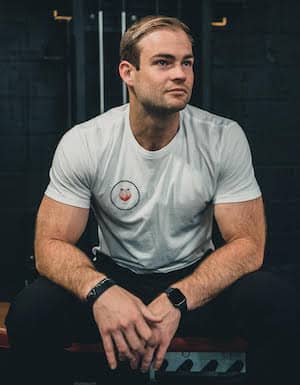
Kurtis Ackerman is a personal trainer residing in Southern California. He is the owner and head trainer of KB Fitness. Kurtis competed in powerlifting and Strongman in his younger years but has shifted to more endurance-focused events, completing his first marathon in 2020. He trains a wide variety of clientele but specializes in working around injuries.