

After years coaching athletes and lifters at every level, I keep coming back to the same truth: the lifters who improve fastest are the ones who understand why their programming works, not just what it says on the page. Books remain the most efficient path to building that foundation, whether you are stepping under a barbell for the first time or preparing for a national platform.
The fitness section of any bookstore is full of titles that recycle the same basic advice. The books on this list are different. They are the ones that changed how I coach and how I train. From beginner barbell programs to advanced periodization theory, each pick earns its spot with real coaching credentials, genuine depth, and proven results with lifters at every level.
The 18 best weightlifting books are:
- 5/3/1: The Simplest and Most Effective Training System for Raw Strength by Jim Wendler – Best Overall
- Strength Training Anatomy by Frederic Delavier – Best for Injury Prevention and Learning Form
- The New Encyclopedia of Modern Bodybuilding by Arnold Schwarzenegger – Best for New Bodybuilders
- Starting Strength by Mark Rippetoe – Best for New Lifters
- Bigger Leaner Stronger by Michael Matthews – Best Budget Pick
- Lift Like a Girl: Be More, Not Less by Nia Shanks – Best for Women
- Overcoming Gravity by Steven Low – Best for Calisthenics and Bodyweight Training
- Science and Development of Muscle Hypertrophy by Brad Schoenfeld – Best for Learning the Science Behind Weightlifting
- The Muscle Ladder by Jeff Nippard – Best Science-Based Muscle Building Guide
- Supertraining by Yuri V. Verkoshansky, Mel C. Siff, and Michael Yessis – Best for Advanced Weightlifters
- Olympic Weightlifting: A Complete Guide for Athletes and Coaches by Greg Everett – Best for Olympic Weightlifters
- Velocity-Based Training by Nunzio Signore – Best for Power Development
- The Complete Guide to Sports Nutrition by Anita Bean – Best for Nutrition
- Triphasic Training by Cal Dietz and Ben Peterson – Best for Athletes
- High-Intensity Training by Mike Mentzer and John Little – Best for Limited Workout Time
- Rebuilding Milo by Aaron Horschig and Dr. Kevin Sonthana – Best for Injury Rehabilitation
- Periodization by Tudor O. Bompa and Carlo A. Buzzichelli – Best for Coaches
- Essentials of Strength Training and Conditioning by the NSCA (Fifth Edition, 2026) – Best Comprehensive Reference for Coaches
If you are not sure where to start or feel overwhelmed by the options, this article covers all 18 books, who they are for, and what makes each one worth your time. Keep reading for full reviews, comparison tables, and a buying guide for selecting the right book for your current training level.
Table of Contents
Best Weightlifting Books at a Glance
| Book | Best For | Level | Rating |
|---|---|---|---|
| 5/3/1 by Jim Wendler | Overall strength programming | All levels | 5/5 |
| Strength Training Anatomy by Delavier | Injury prevention and form | All levels | 5/5 |
| New Encyclopedia of Modern Bodybuilding by Arnold | New bodybuilders | Beginner | 4/5 |
| Starting Strength by Rippetoe | New lifters learning barbells | Beginner | 3.5/5 |
| Bigger Leaner Stronger by Matthews | Budget-friendly intro to training | Beginner | 3/5 |
| Lift Like a Girl by Shanks | Women building strength and confidence | Beginner to intermediate | 3/5 |
| Overcoming Gravity by Steven Low | Calisthenics and bodyweight training | Intermediate | 4.5/5 |
| Science and Development of Muscle Hypertrophy by Schoenfeld | Understanding the science of muscle growth | Intermediate to advanced | 5/5 |
| The Muscle Ladder by Jeff Nippard | Science-based hypertrophy training | Beginner to intermediate | 4/5 |
| Supertraining by Verkoshansky, Siff, and Yessis | Advanced training theory and sports performance | Advanced | 4.5/5 |
| Olympic Weightlifting by Greg Everett | Olympic snatch and clean and jerk | Beginner to intermediate | 4/5 |
| Velocity-Based Training by Signore | Power development and athlete performance | Intermediate to advanced | 3.5/5 |
| Complete Guide to Sports Nutrition by Anita Bean | Nutrition for training and competition | All levels | 4/5 |
| Triphasic Training by Dietz and Peterson | Explosive performance in sport | Intermediate to advanced | 4.5/5 |
| High-Intensity Training by Mentzer and Little | Short, high-effort workouts | Intermediate | 3.5/5 |
| Rebuilding Milo by Horschig and Sonthana | Injury rehab for barbell athletes | All levels | 4.5/5 |
| Periodization by Bompa and Buzzichelli | Long-term programming for coaches | Advanced / Coaches | 5/5 |
| Essentials of Strength Training and Conditioning (NSCA, 5th Ed.) | Comprehensive coaching and CSCS reference | Coaches and trainers | 5/5 |
Featured Products
- 5/3/1: The Simplest and Most Effective Training System for Raw Strength by Jim Wendler – Best Overall
- Bigger Leaner Stronger by Michael Matthews – Best Budget Pick
- Triphasic Training by Cal Dietz and Ben Peterson – Best for Athletes
18 Best Weightlifting Books
1. 5/3/1: The Simplest and Most Effective Training System for Raw Strength by Jim Wendler – Best Overall

Rating: 5/5
Pros
- Easy progression plan to understand and execute
- Provides complete workout routines to follow immediately
- Effective for all experience levels
- Built-in deload weeks prevent overtraining
Cons
- Slow-moving program by design
- Requires consistent commitment over months to see full results
“5/3/1: The Simplest and Most Effective Training System for Raw Strength” earns the top spot because it delivers exactly what it markets. It also covers accessory exercise selection, alternatives to the main lifts, nutritional fundamentals, and, for advanced lifters, high-level programming concepts that translate to other systems.
In this book, Jim Wendler breaks down a time-efficient and effective program in an easy-to-understand manner. The program forces you to train with appropriate loads and proper intent, which keeps you from burning out, getting hurt, or chasing numbers that are not ready to be chased yet.
The program moves slowly by design: you add small increments of weight every month. That pace allows for consistent, uninterrupted training without hitting plateaus. The fact that it has worked for a tremendous number of lifters at every level demonstrates both its applicability and its durability as a system.
The 5/3/1 structure has you performing two working sets of three or five reps on each main lift each week, gradually building to a final AMRAP (as many reps as possible) set. Those AMRAP sets let you measure progress in multiple ways. If the weight on your squat stays the same but you complete more reps than last time, you have still made progress.
I have experimented with many set and rep schemes for myself and my clients, and I keep returning to Wendler's core principles. The consistent progression from higher reps at lighter loads to lower reps at heavier loads primes the nervous system for the top-end work far better than jumping straight to heavy singles. It also reduces session fatigue, because every week brings a slightly different stimulus that keeps training fresh.
2. Strength Training Anatomy by Frederic Delavier – Best for Injury Prevention and Learning Form
Rating: 5/5
Pros
- No filler content, just clear anatomical instruction
- Detailed illustrations show exactly how muscle fibers activate during each exercise
- Teaches correct form and joint positioning for common lifts
Cons
- Does not provide complete workout routines or programs
- Limited exercise selection compared to more comprehensive training texts
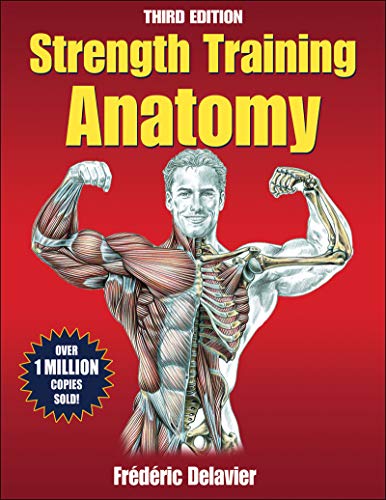
Injuries that happen because a lifter does not understand what they are doing are preventable. “Strength Training Anatomy” addresses that problem directly. The book covers fundamental exercises that appear in most lifting programs, explains how to perform them correctly, and shows how each movement affects the targeted musculature.
Delavier wrote this book with the working lifter in mind, and it shows. The language is accessible and the content stays focused. The most valuable element is the visual: intricate illustrations throughout the book show muscle fiber activation for each exercise, making it far easier to understand what good form actually looks like beneath the surface.
For anyone interested in training safely, learning how to properly wear a weightlifting belt is a complementary step that pairs well with what Delavier teaches about joint positioning and spinal mechanics.
3. The New Encyclopedia of Modern Bodybuilding by Arnold Schwarzenegger – Best for New Bodybuilders
Rating: 4/5
Pros
- Beginner bodybuilding programs with detailed, step-by-step exercise guides
- Covers the full arc of competitive bodybuilding, from training to stage prep
- Provides an extensive history of the sport with photos of iconic competitors
Cons
- Large format book that is not easy to carry or read at the gym
- The volume of information can feel overwhelming for first-time readers
- Advice trends toward generalized guidance rather than individual programming
The 7x Mr. Olympia shares the training philosophy, history, and routines that built one of the most recognizable physiques in sports history. Schwarzenegger covers his journey alongside the idols and rivals who shaped him, including Reg Park, Sergio Oliva, and Lou Ferrigno.
The book is richly detailed with photographs, and it works through an extensive library of exercises in a step-by-step format. Schwarzenegger includes nutritional advice for building a strong bodybuilding physique, explains competition preparation, and offers beginner workout routines, making it a genuine all-in-one guide for anyone entering the sport.
I never set out to become a bodybuilder when I read this book, but the principles it contains are ones I still apply today. Bodybuilders understand muscle development and hypertrophy better than any other community in strength sports. Those principles carry over directly to powerlifting, athletic conditioning, and injury rehabilitation. Even lifters with no interest in competing will find applicable knowledge here.
4. Starting Strength by Mark Rippetoe – Best for New Lifters
Rating: 3.5/5
Pros
- Simple language and an easy-to-follow program structure
- Widely recognized with a large support community
- Removes the intimidation of barbell training for complete beginners
Cons
- Limited value beyond the beginner stage
- The author repeats points frequently and sometimes veers into lengthy tangents
- Rippetoe openly criticizes other programs and industry standards in ways that can feel dismissive
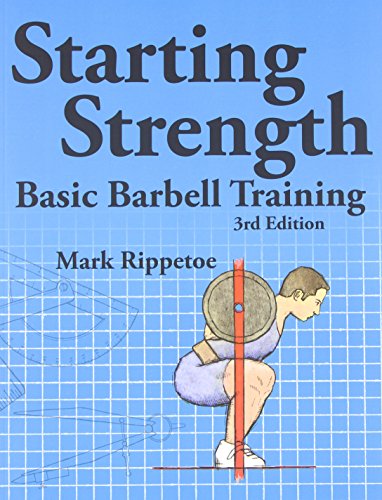
“Starting Strength” earns its place as the best weightlifting book for new lifters because it puts you on a simple, structured program and teaches you how to begin barbell training from scratch. Rippetoe explains barbell training fundamentals clearly and makes a strong case for the 5×5 set and rep scheme as a foundation for building strength.
For new lifters, learning consistent execution and correct form matter more than any other variable, and Rippetoe commits fully to delivering both. The book has a cult following and significant critical pushback in equal measure. At its best, it is a well-constructed introduction to barbell lifting. At its worst, it treats its approach as the only valid one.
My view is that 5×5 with barbells is one excellent way to build strength, not the only way. I have used it with clients and seen solid results, but I would never restrict training to a single framework indefinitely. If you have never touched a barbell and want a clear starting point, this book delivers that confidently.
Once you are training consistently, quality footwear matters. Check out our guide to the best weightlifting shoes if your squat mechanics are being limited by ankle mobility.
5. Bigger Leaner Stronger by Michael Matthews – Best Budget Pick

Rating: 3/5
Pros
- Strong reader testimonials across multiple editions
- Easy-to-follow weightlifting programs
- Simple meal planning guidance for beginners
Cons
- Written specifically for absolute beginners
- Limited depth in programming concepts
- Some nutritional recommendations lack rigorous evidence
“Bigger Leaner Stronger” earns the best budget pick because it is affordable and covers enough practical ground to help the average gym-goer move toward their goals. Matthews addresses the fundamentals of weight loss, muscle building, and calorie management in plain language. The book covers calorie counting and a structured lifting routine designed to support fat loss and muscle development simultaneously.
This book will not offer breakthrough insights. It is not designed to. It gives beginners a clear, non-intimidating path forward, and for that purpose, it works well.
6. Lift Like a Girl: Be More, Not Less by Nia Shanks – Best for Women

Rating: 3/5
Pros
- Highly regarded workout programs with strong reader results
- Positive and encouraging coaching voice throughout
- Easy to read and put into practice
Cons
- Author covers some points repetitively
- Nutritional guidance is basic
- Exercises require gym equipment, limiting accessibility
“Lift Like a Girl” stands out among weightlifting books for women because it directly challenges the fitness industry's tendency to use shame and unrealistic body standards as motivators. Shanks builds a different framework, one centered on capability, confidence, and sustainable progress rather than appearance-based goals.
The book includes several workout programs and basic nutritional guidance, but the core value is in the mindset shift it creates. Shanks provides a philosophy of training that many women find genuinely empowering, and the reader reviews reflect that consistently.
7. Overcoming Gravity: A Systematic Approach to Gymnastics and Bodyweight Strength by Steven Low – Best for Calisthenics and Bodyweight Training

Rating: 4.5/5
Pros
- Detailed progression plans for bodyweight exercises from basic to elite
- Presents calisthenics methodology in an organized, easy-to-follow structure
- Includes multiple levels of workout routines for different training stages
Cons
- Some sections repeat information that was already covered earlier in the book
- The book's organizational structure can feel disjointed in places
- Not well-suited for complete beginners without some movement background
Weight training does not require external load. Calisthenics demands that you control and move your own body through positions that build genuine strength. “Overcoming Gravity” is the best resource for bodyweight training because it is fully dedicated to programming viable full-body routines using bodyweight exercises only, with injury prevention and rehabilitation sections included.
Without a gymnastics or martial arts background, it is difficult to understand how bodyweight movements progress from one to the next or how they affect the body over time. This book solves that problem systematically. My own background includes years of martial arts calisthenics training that began in childhood. A resource like this would have saved considerable trial and error as I started developing my own routines as an adult.
8. Science and Development of Muscle Hypertrophy by Brad Schoenfeld – Best for Learning the Science Behind Weightlifting

Rating: 5/5
Pros
- Detailed explanations of how the body adapts to training stimuli
- Every major claim is backed by peer-reviewed research
- Practical and applicable takeaways for building your own programs
Cons
- Not beginner-friendly, assumes familiarity with basic training concepts
- Does not provide a workout program to follow directly
- Technical language requires focused reading
This book provides the scientific foundation that separates informed coaching from guesswork. It explains the mechanisms by which muscles grow, the role of mechanical tension and metabolic stress, and the research behind programming variables like volume, frequency, and intensity. It describes in depth how the body interacts with itself to become stronger and more efficient.
“Science and Development of Muscle Hypertrophy” is essential reading for coaches, personal trainers, and serious lifters who want to understand the reasoning behind their training decisions. Whether you are designing your own program or guiding athletes, this book ensures those decisions are grounded in evidence.
9. The Muscle Ladder: Get Jacked Using Science by Jeff Nippard – Best Science-Based Muscle Building Guide
Rating: 4/5
Pros
- Evidence-based principles presented in accessible, practical language
- Organized as a progressive framework from foundational habits to advanced training variables
- Strong visual design makes key concepts easy to absorb and apply
Cons
- Some content overlaps with Nippard's extensive YouTube library, which may feel redundant for longtime followers
- Skews toward hypertrophy and aesthetic goals rather than strength sport performance
- Less useful for advanced lifters seeking highly technical programming depth
Jeff Nippard has built one of the most respected science-based fitness platforms online, and “The Muscle Ladder” translates that work into a structured, book-length framework published in 2024. The central concept is that muscle building follows a hierarchy of priorities, and most lifters get poor results because they focus on lower rungs of that ladder before mastering the foundational ones.
The book presents each level of the hierarchy clearly, showing what actually moves the needle at each stage and what variables are secondary until the foundations are locked in. For a lifter who understands basic programming but wants a clean, research-supported system for hypertrophy, this book delivers a roadmap that is both actionable and honest about the evidence behind it. It pairs well with Schoenfeld's more technical text as a practical companion.
Best Science-Based Weightlifting Books
The following books are the strongest options for lifters who want to understand the research behind their training rather than simply following a program on faith.
| Book | Focus | Level | Rating |
|---|---|---|---|
| Science and Development of Muscle Hypertrophy | Muscle growth mechanisms and research | Intermediate to advanced | 5/5 |
| The Muscle Ladder | Evidence-based hypertrophy hierarchy | Beginner to intermediate | 4/5 |
| Supertraining | Sports performance and nervous system adaptation | Advanced | 4.5/5 |
| Periodization | Long-term athletic development theory | Advanced / Coaches | 5/5 |
| Essentials of Strength Training and Conditioning (NSCA, 5th Ed.) | Comprehensive exercise science and program design | Coaches and trainers | 5/5 |
10. Supertraining by Yuri V. Verkoshansky, Mel C. Siff, and Michael Yessis – Best for Advanced Weightlifters

Rating: 4.5/5
Pros
- Detailed explanations of training methodologies developed inside elite Soviet programs
- In-depth coverage of adaptation, super-compensation, and nervous system training
- Authors acknowledge the limits of their own knowledge, which adds credibility
Cons
- One of the most expensive books on this list
- Complex training terminology requires a strong existing knowledge base
- Dense presentation makes it slow and demanding to read
“Supertraining” functions as a textbook and reads like one. It covers training theory comprehensively but moves well beyond muscle growth into sports performance, force production, and nervous system adaptation. Verkoshansky developed these ideas within the Soviet athletic system, and the results of that era in international weightlifting speak to the effectiveness of those methods.
Advanced lifters and experienced coaches are the primary audience for this book. Once you reach a point where basic programming no longer produces progress, you need to understand the underlying science at a deeper level. Supertraining is the resource that takes you there.
11. Olympic Weightlifting: A Complete Guide for Athletes and Coaches by Greg Everett – Best for Olympic Weightlifters

Rating: 4/5
Pros
- Teaches the snatch and clean and jerk in a clear step-by-step progression
- Accessible for beginners with no Olympic lifting background
- Strong coverage of foundational weightlifting technique including grip, breathing, and squat mechanics
Cons
- Writing quality is uneven in places
- Limited programming content for structured workout routines
- Some readers note issues with print quality in physical copies
This book is the best resource for lifters entering the barbell strength sports who want to learn the Olympic lifts. It works especially well for those transitioning from a powerlifting background into snatch and clean and jerk training. Everett teaches both lifts methodically, with detailed written cues and visual demonstrations throughout.
The book prefaces the technical instruction with fundamentals: breathing technique, squat positioning, bar grip, and how to approach warm-up progressions. That combination of written instructions and visual breakdowns makes it easier to learn technically demanding movements that most coaches will tell you cannot be self-taught from a book alone.
I believe every strength athlete benefits from learning the Olympic lifts regardless of competitive goals. The power development and carry-over to the squat and deadlift are substantial. A book that breaks these movements down accessibly, as Everett does, fills an important gap.
12. Velocity-Based Training by Nunzio Signore – Best for Power Development

Rating: 3.5/5
Pros
- Clearly explains VBT principles and how to implement them in a program
- Widely adopted across collegiate and professional strength programs
- Directly applicable for coaches working with sport athletes
Cons
- Supporting research base is less extensive than for other approaches on this list
- Requires VBT technology that may not be accessible or cost-effective for average gym-goers
- Unnecessary for recreational lifters without a sport performance focus
Nunzio Signore is a high-level strength coach with extensive experience working with professional baseball teams and individual athletes. This book details a principle that now drives programming in elite strength and conditioning settings: in most sports, what separates great athletes from good ones is not peak strength or top-end speed, but the ability to produce force rapidly across changing movement demands.
VBT is now an established methodology in collegiate and professional strength programs, not an emerging trend. Coaches use bar velocity data to autoregulate training loads, track readiness, and develop explosive power in ways that traditional percentage-based programming cannot replicate. If you work with athletes at any competitive level, this book belongs on your shelf.
As a coach, I find velocity-based principles valuable for supplementing sport-specific development. The key insight is that maximum lifting rarely occurs in actual competition. Training movements at speed-focused effort levels translates more directly to on-field performance than grinding out heavy singles week after week.
13. The Complete Guide to Sports Nutrition by Anita Bean – Best for Nutrition

Rating: 4/5
Pros
- Walks through how to identify your individual nutritional needs and how to meet them
- Covers hydration strategy and supplementation alongside food-based guidance
- Connects nutrition directly to training performance in practical terms
Cons
- Dense presentation, not the most engaging read
- Heavy reliance on dairy as a nutritional cornerstone
- Nutritional programs are calibrated for competitive athletes, not general gym-goers
Anita Bean is a former British bodybuilding champion and registered nutritionist. Her depth in both performance sport and the science of eating makes this one of the more credible nutrition resources available. The book covers supplementation, hydration protocols, gut health, and pre- and post-training nutrition strategies with genuine rigor.
“The Complete Guide to Sports Nutrition” is the strongest option for athletes wanting to raise their nutritional standard, but the principles apply beyond competitive sport. Every lifter needs to fuel training adequately to perform and recover well. Understanding how to identify and meet those needs is a skill this book develops clearly.
14. Triphasic Training by Cal Dietz and Ben Peterson – Best for Athletes

Rating: 4.5/5
Pros
- Detailed programming built specifically for competitive athletes
- Clear explanation of the triphasic methodology and the logic behind each phase
- Reflects current practice in high-level collegiate and professional strength programs
Cons
- Primary benefits are specific to athletes, less useful for recreational lifters
- Complex program structure requires careful attention to follow correctly
- Demands intentional week-to-week and exercise-to-exercise progression
Collegiate strength coaches Cal Dietz and Ben Peterson built this book around a model they developed through years of working with high-level athletes across multiple sports. The triphasic framework separates training into eccentric, isometric, and reactive phases, hence the name, building power by addressing each phase of the stretch-shortening cycle deliberately.
Beyond the methodology, the authors explain why the triphasic model produces results in elite athletics and share the actual programs they run with collegiate and professional athletes. The core thesis is that the best athletes are not necessarily the strongest or fastest in isolation. They are the ones who can decelerate and accelerate in the most precise and reactive way.
This book shaped how I think about athlete programming. Strength coach development is not about making athletes tire themselves out in the weight room daily. It is about supplementing their sport in a way that creates measurable improvement without compromising their on-field performance, and peaking them at the right point in the season.
15. High-Intensity Training by Mike Mentzer and John Little – Best for Limited Workout Time

Rating: 3.5/5
Pros
- Comprehensive guidelines for the HIT methodology in one accessible volume
- Affordably priced for the content it contains
- Well-written and easy to follow
Cons
- Mentzer's personal results are difficult to separate from his heavy anabolic use, which limits generalizability
- The philosophy diverges sharply from mainstream training consensus
- HIT programming is associated with frequent nervous system fatigue when applied long-term
The famed Mr. America bodybuilder Mike Mentzer outlines the programming he used late in his competitive career. The core principle of HIT is that less training time with maximum effort produces results equivalent to or better than high-volume approaches. Short workouts and a limited number of training days per week are the practical expression of that philosophy.
Mentzer believed one set per exercise performed to absolute failure, with each repetition executed as slowly as possible, was sufficient to drive muscle adaptation. Anyone who has attempted to lift significant load slowly understands how taxing that actually is. HIT has real short-term merit, and the book makes a reasoned case for it. It is not, however, a sustainable long-term approach for most lifters.
16. Rebuilding Milo by Aaron Horschig and Dr. Kevin Sonthana – Best for Injury Rehabilitation
Rating: 4.5/5
Pros
- Written by a Doctor of Physical Therapy who also coaches strength athletes, a rare and valuable combination
- Includes self-assessment protocols so lifters can identify and address their own problem areas
- Rehab exercises and corrections are designed specifically around barbell movements, not generic gym work
Cons
- Focused primarily on rehabilitation and injury prevention rather than performance programming
- Some sections assume basic anatomical knowledge to follow fully
- Less useful for lifters with no current or past injury history
Aaron Horschig is the founder of Squat University and holds a doctorate in physical therapy alongside competitive powerlifting and coaching credentials. That dual background makes “Rebuilding Milo” one of the most practically useful books any barbell athlete can own. Published in 2021, it fills a gap that most strength training books leave entirely unaddressed: what to do when your body breaks down.
The book walks through the most common injuries powerlifters and weightlifters encounter, including knee pain, lower back dysfunction, shoulder impingement, and hip problems. For each condition, Horschig provides a self-assessment protocol and a structured corrective plan drawn from physical therapy principles. Every assessment and corrective exercise in this book is designed around the squat, bench press, and deadlift, not generic movements that fail to account for what barbell training demands.
As a coach, I recommend this book to any lifter who has dealt with recurring pain and has not been able to find answers that actually acknowledge the demands of heavy lifting. It belongs on the shelf alongside whatever programming book you are currently following.
17. Periodization by Tudor O. Bompa and Carlo A. Buzzichelli – Best for Coaches

Rating: 5/5
Pros
- Covers the full history of periodization, giving coaches the context to understand how it developed
- Applicable across virtually every sport and athletic discipline
- The principles have been validated by generations of coaches and athletes with measurable outcomes
Cons
- Some sections have been superseded by more recent research
- Written primarily for elite athletes and coaches rather than recreational lifters
- Takes considerable time before reaching the core periodization content
Tudor Bompa is one of the most important figures in the history of strength coaching. A Romanian athlete and coach who developed his ideas within Soviet-era athletic structures, his biggest contribution was formalizing periodization as a systematic methodology and introducing it to Western athletic organizations. The dominance of Soviet athletes in weightlifting during the following decades was not coincidental.
“Periodization” is the essential text for coaches because most coaches already apply some version of it, whether they know it by that name or not. Understanding the framework explicitly allows you to optimize what you are already doing. The book covers how periodization developed, how to implement it across a full training year, and how to sequence training to peak athletes for the competitions that matter most.
18. Essentials of Strength Training and Conditioning by the NSCA (Fifth Edition, 2026) – Best Comprehensive Reference for Coaches
Rating: 5/5
Pros
- The definitive reference text for the CSCS certification, updated with 2026 research
- Covers exercise science, program design, testing, evaluation, and facility management in a single volume
- Authored and reviewed by a large body of credentialed researchers and coaches through the NSCA
Cons
- Textbook format makes it dense and demanding to read cover to cover
- More expensive than most books on this list
- Not a program guide; does not tell you what to do in the gym tomorrow
The National Strength and Conditioning Association's flagship textbook is the most comprehensive single reference available for strength and conditioning professionals. The fifth edition, published in 2026, incorporates the latest research in exercise physiology, biomechanics, nutrition, program design, and athlete testing. It is the primary study resource for the Certified Strength and Conditioning Specialist (CSCS) credential, the gold standard certification in the field.
This is not a book you sit down and read straight through for enjoyment. It is a reference library in a single volume, and every coach who is serious about understanding the science behind what they do should own a copy. When questions arise about programming rationale, physiological adaptations, or testing protocols, the NSCA text is where the answers are. The 2026 update makes it the most current edition yet.
Best Weightlifting Books with Personal Success Stories
Some books stand apart not just for technical instruction but for the personal journeys they document, the reader transformations they have driven, and the communities they have built. These are the titles lifters return to when they need both information and motivation.
| Book | Success Story Angle | Best For |
|---|---|---|
| 5/3/1 by Jim Wendler | Community-proven across thousands of lifters of all levels | All levels |
| The New Encyclopedia of Modern Bodybuilding by Arnold | Arnold's personal journey from Austria to multiple Mr. Olympia titles | New bodybuilders |
| Starting Strength by Rippetoe | Broad community following with documented beginner transformations | New lifters |
| Bigger Leaner Stronger by Matthews | Extensive reader testimonials woven throughout multiple editions | Beginners focused on physique |
| Lift Like a Girl by Shanks | Reader mindset and confidence transformations at the center of the book's message | Women new to strength training |
| Rebuilding Milo by Horschig and Sonthana | Patient and athlete recovery journeys grounded in DPT practice | Lifters returning from injury |
Why You Should Trust PowerliftingTechnique
We have a diverse group of coaches and writers with extensive knowledge across powerlifting, strength and conditioning, athletic performance, and sports rehabilitation. We train differently and draw from different sources, which is a deliberate choice.
From competitive powerlifters to sport coaches to athletes in other disciplines, we have firsthand experience with the demands these books address, and we have applied their content with real athletes and in our own training. We know what it takes to find the right resource for a specific goal and how to make it work in practice.
How We Chose the Best Weightlifting Books
We chose the books on this list based on criteria that serve the widest range of lifters, from novice to elite. Those criteria include author credentials, clarity of instruction, widespread adoption within the lifting community, and real-world applicability. All of these factors strengthen the credibility of any training resource.
We also selected books that we have read ourselves and return to regularly, whether for coaching clients, designing our own programs, or answering specific technical questions. Books that passed the test of personal use and delivered results in practice earned their place on this list.
Buying Guide: What to Look for in a Weightlifting Book
When purchasing a weightlifting book, consider the following factors so you invest in the right resource for where you are in your training right now.
Are You Ready for a Weightlifting Book?
If you have a genuine interest in a weightlifting topic, whether basic or advanced, you are ready. The level you are currently at matters less than your capacity to sit with pages of detailed information and put it into action. An appetite for reading and a willingness to apply what you learn are the only prerequisites.
How Do You Use a Weightlifting Book?
How you use a weightlifting book depends entirely on its purpose. Not every book functions the same way, and some require active effort to extract and apply the knowledge.
“Starting Strength” gives you a structured program and barbell technique instruction you can implement in your next training session. “Science and Development of Muscle Hypertrophy” does not hand you a program. It gives you the research and reasoning that lets you build a better one. One is immediately prescriptive; the other is supplemental knowledge that sharpens your decision-making over time. Both are valuable, just at different stages and for different purposes.
What Is a Good Price?
Weightlifting books generally cost more than general-audience titles. That is appropriate: the science, research, and coaching expertise behind the better ones justify a higher price. A well-written, accessible strength training book typically falls in the $30 to $50 range. Research-heavy or textbook-format titles, like Supertraining or the NSCA Essentials, can run from $60 to $150 or more. Cheaper books tend to cover less depth. That does not make them useless, but you should calibrate your expectations accordingly.
Can You Trust the Author?
You will not know every author in advance, and that is normal. Look at their background and confirm that their experience is relevant to what the book covers. A competitive swimmer may understand training broadly, but that background does not qualify them to write a detailed bodybuilding programming guide.
Strong credibility markers for science-focused books include graduate degrees such as MA or Ph.D. For coaches, look for field experience with competitive athletes alongside certifications such as CSCS (Certified Strength and Conditioning Specialist), USAW (USA Weightlifting), or a licensed personal training credential. Researching the author before buying is worth the five minutes it takes.
How Can You Identify Quality Content?
The most useful test is whether the content moves you forward from where you currently stand. Seek out the topic you want to understand better and be specific about your search.
You cannot always know the quality of content before reading and applying it, but reader reviews give you a strong signal. Read broadly, not just the five-star summaries. Seek out the critical reviews and understand why some readers did not benefit. From my experience, the books that have helped me most are ones that provide complete programs along with the reasoning behind them. Understanding why a method works, and testing that reasoning against my own coaching experience, is how I evaluate whether an author actually knows their subject.
Frequently Asked Questions
What is the best weightlifting book for beginners?
“Starting Strength” by Mark Rippetoe is the most widely recommended starting point for lifters new to barbell training. It provides a simple program, clear technique instruction, and a structured path forward. “Bigger Leaner Stronger” by Michael Matthews is a more affordable alternative that covers both training and basic nutrition for those just getting started.
What is the best weightlifting book for powerlifters specifically?
“5/3/1” by Jim Wendler is the top recommendation for powerlifters because it is built around the squat, bench press, and deadlift with a proven progression model. “Periodization” by Bompa and Buzzichelli and the NSCA Essentials are also highly relevant for lifters wanting to understand long-term programming at a deeper level.
Can weightlifting books replace a personal trainer?
Weightlifting books provide excellent templates, research, and programming frameworks, but they cannot replace a qualified coach. A trainer corrects your form in real time, monitors your fatigue and recovery, and personalizes your program to your body and goals. Books are a strong supplement to coaching, not a substitute for it.
Are weightlifting books worth buying when so much information is free online?
Yes, for serious lifters. Free content tends toward surface-level advice optimized for engagement. The books on this list go considerably deeper, presenting complete systems, research, and coaching methodologies that are rarely covered in full online. If you want to understand your programming rather than just follow it, investing in one or two quality books pays back over time.
What is the best book on the science of muscle growth?
“Science and Development of Muscle Hypertrophy” by Brad Schoenfeld is the most research-supported resource available on this topic. “The Muscle Ladder” by Jeff Nippard is a more accessible companion that presents the same evidence-based principles in a practical, progressive framework.
What is the best weightlifting book for coaches?
“Periodization” by Tudor Bompa and the NSCA “Essentials of Strength Training and Conditioning” (Fifth Edition, 2026) are the two essential texts for coaches. Bompa provides the foundational framework for long-term athlete development. The NSCA text covers the full range of exercise science, program design, and testing protocols that a working strength coach needs.
What weightlifting book is best for recovering from injury?
“Rebuilding Milo” by Aaron Horschig and Dr. Kevin Sonthana is the strongest option for barbell athletes dealing with injury. It provides self-assessment tools and corrective protocols designed specifically around squat, bench press, and deadlift demands, written by a Doctor of Physical Therapy who also competes in strength sports.
How do I know if the advice in a weightlifting book is right for me?
Confirm the book addresses your specific question and that you can follow the content clearly. Then apply it. Small adjustments are expected. Follow the approach for six to eight weeks before drawing conclusions about whether it works for your training. Real feedback comes from time under the bar, not from reading alone.
Final Verdict
“5/3/1: The Simplest and Most Effective Training System for Raw Strength” by Jim Wendler remains the best overall weightlifting book. The program is proven at every level of lifting, the concepts are clear and adjustable, and the results speak for decades of consistent use across a large and active community.
For coaches and lifters who want to understand the science behind their training, the combination of Brad Schoenfeld's hypertrophy text and the 2026 NSCA Essentials is the most current and comprehensive pairing available. For any lifter dealing with recurring injury, “Rebuilding Milo” belongs in every gym bag alongside whatever programming book you are currently running.
The right book is the one that meets you where you are in your training and moves you forward from there. Use this list as a reference, not a prescription. Start with the title that addresses your most pressing gap right now, apply it with consistency, and build from there.