
One of the debates in the world of strength is “high bar vs. low bar squat”, which is better?
You need to know where to place the bar when you’re getting ready to do a set of heavy barbell squats. The squat bar position will change depending on your squat style, your stance, and your goal.
So, what is the difference between low and high bar placement for squats? In a high bar squat, the bar rests on the upper traps, just below the bony bump at the base of the neck (C7). In a low bar squat, the bar sits a little lower across the rear delts. That slightly lower position usually creates more forward torso lean and can help you move as much weight as possible when strength is the priority. High bar squats usually keep you more upright and tend to transfer better to Olympic lifting and many bodybuilding goals.
There’s more to it than that, though. You’ll want the right bar position for your goal, or you can end up wasting time and limiting progress.
Keep reading to learn about the low bar squat and high bar squat, including muscles targeted, who they’re best for, and a full list of benefits.
Table of Contents
Quick answer: the most efficient way to choose your bar position
If you want the most efficient way to decide, pick the variation that lets you keep the bar over midfoot, hit depth with control, and maintain a neutral lumbar spine.
- Choose high bar if you want a more upright torso, you train Olympic lifts, you want more quad emphasis for your build, or low bar aggravates your shoulders and wrists.
- Choose low bar if your priority is max strength, you compete in powerlifting, or you consistently lift more with a hip dominant pattern.
- If you are unsure, film from the side and ask a coach to confirm bar path, depth, and whether your stance supports stable knees and a strong brace.
Key differences in the high bar vs. low bar squat
| Difference | High bar | Low bar |
|---|---|---|
| Bar position | Upper traps | Across rear delts |
| Typical torso angle | More upright | More forward lean |
| Common stance pattern | Often slightly narrower with more forward knee travel | Often slightly wider with more hip hinge |
| Muscles emphasized | All lower body, often more quad demand | All lower body, often more posterior chain demand |
| Best fit | Olympic lifting carryover, beginners, quad focused training | Powerlifting carryover, heavy strength work, lifters who prefer a hip dominant squat style |
There are a few key differences to consider when deciding where to put the bar when squatting, including:
- Form
- Muscles targeted
- Performance needs
Read more: The Different Types of Squat Bars
Form
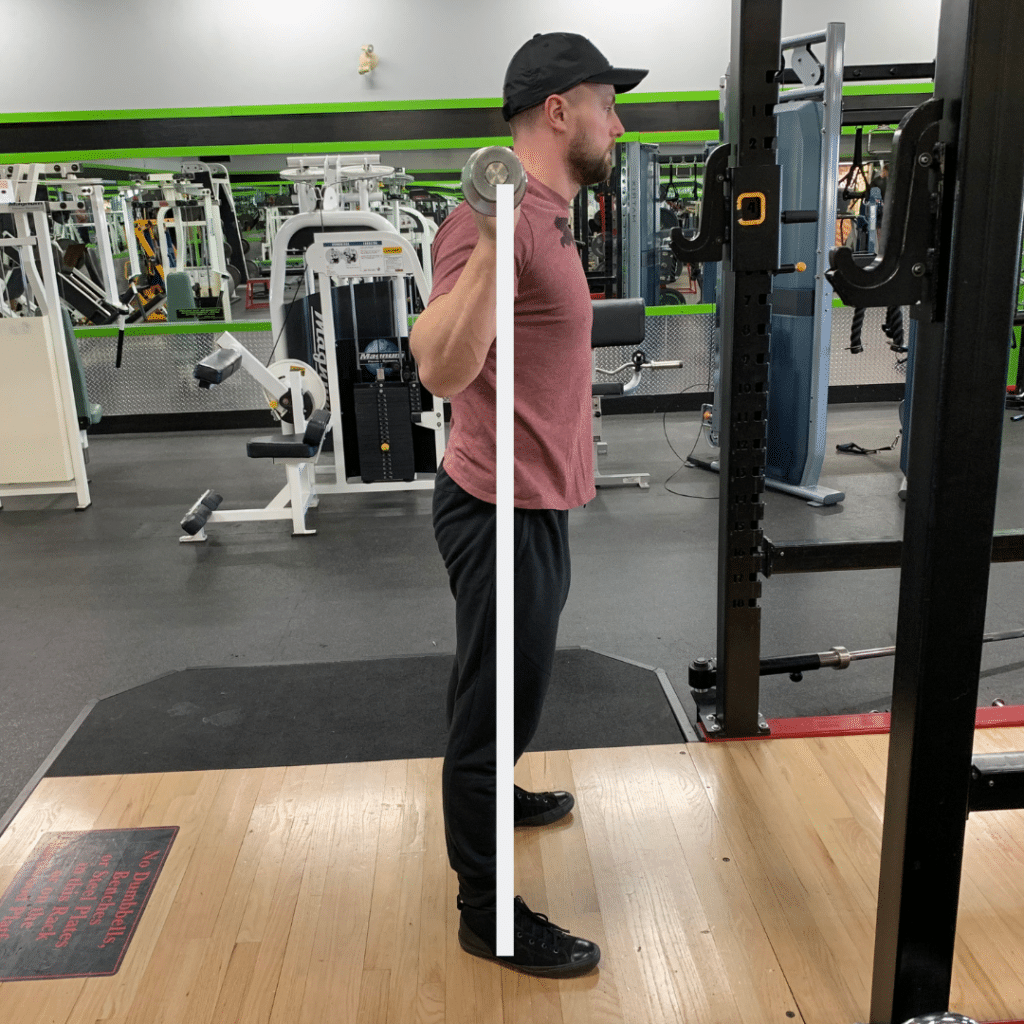
The main difference between a low bar squat vs. a high bar squat is your form.
Although the bar should always stay directly over the midline of your feet, your torso angle and joint angles will change slightly based on bar placement, stance, and individual mechanics.
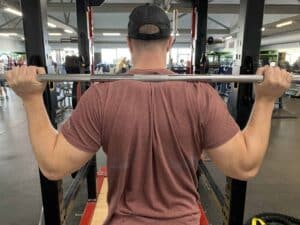
- In high bar squats, the barbell sits on your traps (the top of your shoulders), just below your seventh cervical vertebrae.
- In a low bar squat, the barbell sits a little further down on the posterior deltoids. In this variation of the barbell squat, you need to squeeze your shoulder blades together to fix the bar in position.
Muscles targeted
All types of squats work every muscle in the lower body. Still, bar placement can shift the emphasis toward the anterior or posterior chain.
Because the goal is to keep the bar over the midline of the foot, placing the bar higher or lower changes the angles of your back, torso, and knees. Your job is to keep a strong brace, maintain a neutral lumbar spine, and make sure the bar path stays stacked over midfoot.
High bar squats typically place more emphasis on your quadriceps because the torso stays more upright for most lifters. To achieve that upright position, you often need better ankle mobility and comfort with greater forward knee bend at the bottom of the squat. More forward knee bend shifts demand from the hips toward the quads.
Low bar squats are different. In low bar squats, you need to hinge your hips more, which creates more forward torso lean. This often makes the shins more vertical and can shift emphasis from your quads toward your glutes and erector spinae. The exact torso angle depends on your individual mechanics (torso length, femur length, mobility), plus how your stance is set up.
As long as your back stays neutral and your brace stays solid, you want the bar to remain over the midpoint of the foot.
Performance needs
To decide where to put the bar when doing the barbell squat, factor in your performance needs. Both low bar and high bar squats build lower body strength.
Low bar squats are usually the best option for powerlifting because the torso angle and leverage often let you lift more. If your goal is to practice heavy singles, heavy doubles, and heavy sets safely, low bar is commonly the better fit.
High bar squats are often a better choice for Olympic weightlifting and many bodybuilding goals because they keep the torso more upright and can increase quad demand for many lifters. If you are trying to choose between squat styles for a sport, your best move is to pick the version that transfers to your competitive lifts and stays consistent with your mobility and stance.
Low bar squats are also a better choice if you’re powerlifting. You’ll be able to safely practice one-rep maxes and heavy power-focused sets of squats, assuming your shoulders and wrists tolerate the position.
Depending on your torso and limb length, shoulder, hip, and ankle mobility, you might feel more comfortable placing the bar higher on your traps and performing high bar squats. You can still build muscle and strength with high bar as long as you use great form, control your depth, and progress your training.
If you place the bar too high, it can irritate your neck. Check out my article on How To Fix High Bar Squats Hurting Your Neck.
How to do a high bar back squat
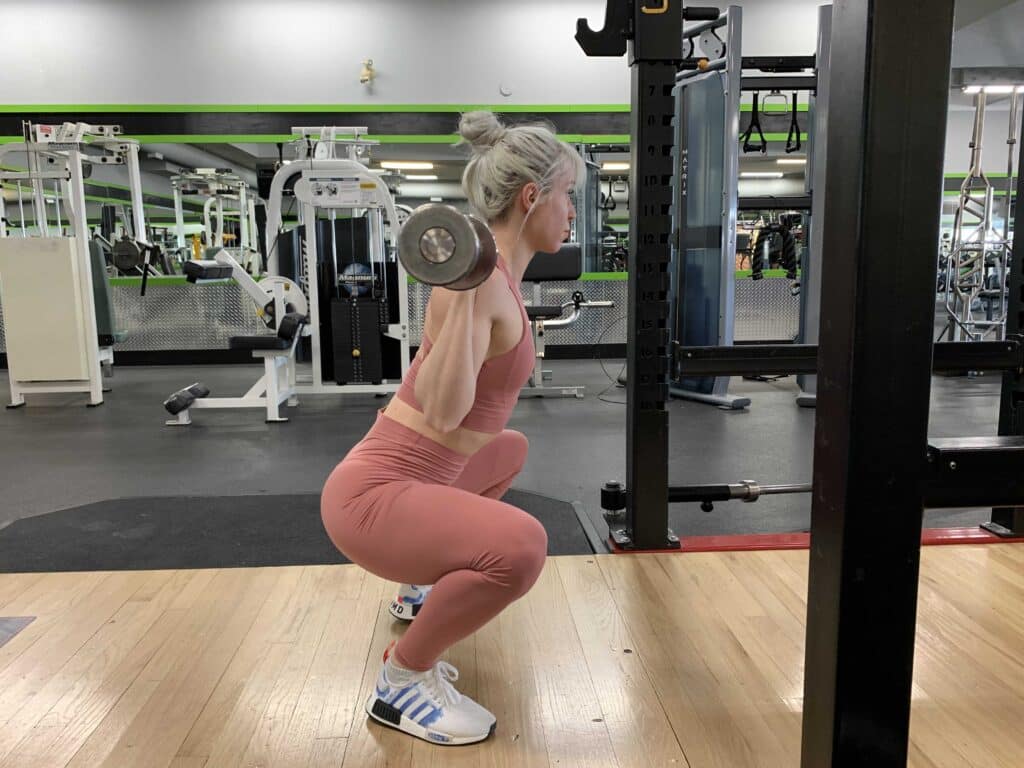
Most people use a high bar squat bar placement when they first begin lifting, whether intentionally or not.
Here’s how to correctly perform high bar back squats:
- Load the barbell to your desired weight.
- Unrack the bar onto your upper traps and take your grip.
- Step back and set your stance at about shoulder width, then brace your core.
- Descend by bending the knees and hips together, keeping your brace and upper back tight.
- Keep your torso relatively upright and the bar path over midfoot.
- Hit your desired depth, then drive up by pushing through the floor and maintaining a stable bar path.
- Repeat for your desired reps, then re-rack the barbell.
What are the benefits of high bar squats?
High bar squats offer several benefits.
First, high bar form is relatively easy to achieve, even for beginners. If you have good ankle mobility, you’ll find it easier to drop into a deep squat with an upright torso while staying balanced and stable. Many lifters also find it easier to keep their lumbar spine neutral in high bar when they are still learning to brace.
High bar typically creates higher quadriceps demand when comparing bar positions, so it can be the better option if your main aim is quad growth. Because the torso stays more upright for many lifters, it can also reduce how much hip hinge you rely on, which some people find more comfortable.
Learn more about the high bar squat in my article on Is The High Bar Squat Harder?
How to do a low bar back squat
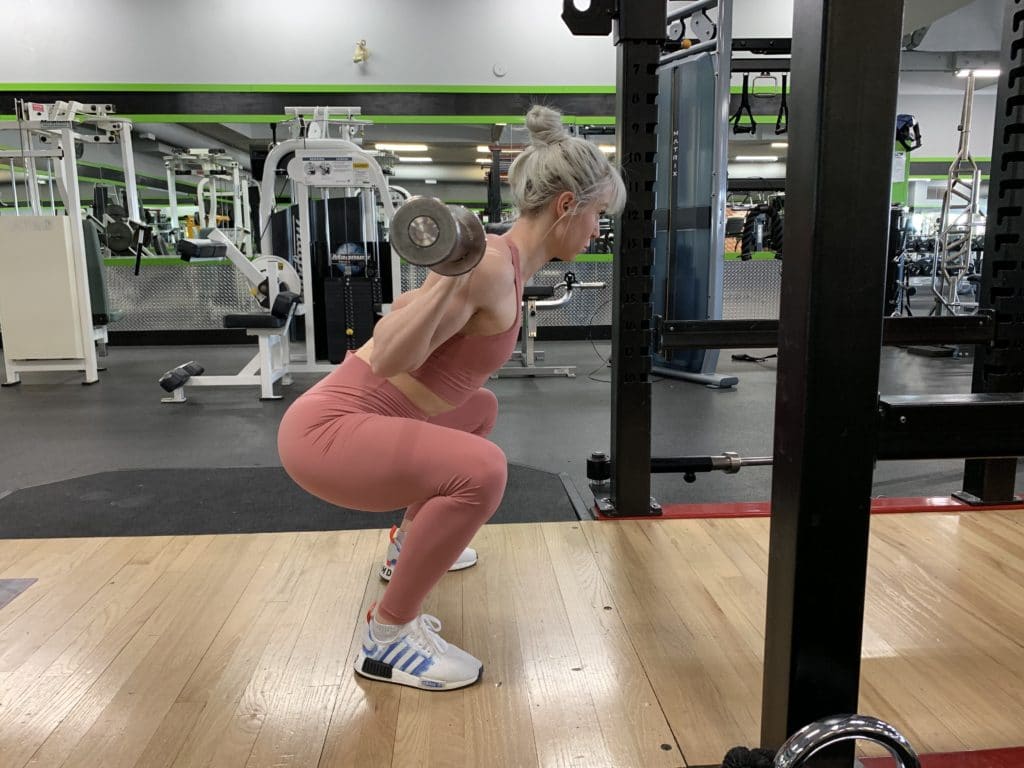
There are key differences in how you perform a high vs. low bar squat, although the setup is very similar.
Here are the key steps to doing a barbell squat with a low bar position:
- Load the barbell to your desired weight and step up to the bar.
- Unrack the bar onto your rear delts, just above the shoulder blades, and create a tight upper back shelf.
- Grip the bar. If you have poor shoulder mobility, you might need a wider hand position, but keep the position stable.
- Set your stance and brace. Descend by hinging the hips back as the torso leans forward slightly, keeping the bar path over midfoot and knees tracking in line with toes.
- Drive up by squeezing the glutes and keeping the bar stacked over the midpoint of the foot.
- Repeat for your reps and re-rack the bar.
Check out my article on Squats For Tall Guys to see my recommendation on whether someone with long legs should use a high bar or low bar position.
What are the benefits of low bar squats?
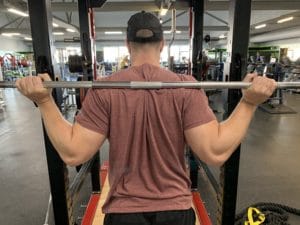
The low bar back squat is a strong choice when you want to target your posterior chain (glutes, hamstrings, and spinal extensors) and build the type of strength that often carries over best to powerlifting.
It’s also useful if you have limited ankle mobility because the greater forward lean can make it easier to reach depth without excessive ankle flexion. The key is keeping a solid brace so the lumbar spine stays neutral.
Low bar squats generally enable you to lift more weight than high bar squats for many lifters. On average, you’ll often see a difference of about 5 to 10 percent, but the real question is how much weight you can move with consistent form, repeatable depth, and a stable bar path.
Your bar placement also depends on your back angle. Read what the best back angle is for squats. Also, in my article on Powerlifting vs Olympic Squats, I explain how squat style influences bar position.
High bar vs. low bar squat, which is better?
Low bar and high bar squats build muscle and strength, and both train the lower body and core. The better option depends on your anatomy, mobility, stance, and goal.
If you want the version that transfers best to your sport, match your squat style to what you need to express on the platform, or under the bar in competition. If you want to get stronger in the squat itself, pick the bar position that lets you add load over time while keeping the bar over midfoot and maintaining a neutral lumbar spine.
When to use the high bar squat
You should use a higher barbell position if:
- You’re a beginner at weightlifting
- You want to strengthen Olympic weightlifting exercises like cleans and snatches
- You want to target your anterior chain
- You have limited wrist mobility
- Your lower back hurts with a low bar squat position
- You’re using barbell squats to improve sports performance with an upright torso
When to use the low bar squat
It’s best to use the low bar back squat instead of a high bar back squat when:
- You already use good form when squatting
- You are a powerlifter and want to lift as heavily as possible
- You want to target your posterior chain
- You have long femurs and prefer a hip dominant squat style
- You have limited ankle mobility
- You have limited knee mobility or previous knee related issues
If you squat using a high bar position, you’ll often feel more comfortable in shoes with a higher heel. Check out my reviews of squat shoes with the highest heel.
What if you can’t hold the bar while doing a low bar squat?
If you've decided low bar squats are for you, holding the bar in the correct position may be challenging. Here are some tips:
- Try a narrower grip: the best grip for low bar squatting is the narrowest grip possible while staying comfortable in the elbows and shoulders.
- Ensure you’ve found your rear delt shelf: you need to create it by engaging the musculature of your upper back.
- Bring the barbell up on your back slightly: you may have the bar too low, which can cause it to roll.
- Increase upper back musculature: lifters with less muscle mass in the upper back often feel more instability in a low bar position.
- Slightly flare your elbows back: for some athletes, this makes it easier to keep the bar secure.
- Work on shoulder and wrist mobility: limited mobility can make low bar positioning uncomfortable or unstable.
- Focus on torso angle: sometimes the issue is less about hand position and more about losing posture, bracing, or bar path.
Common mistakes and fixes
- Bar drifts forward: film from the side and adjust stance or torso angle so the bar stays over midfoot.
- Knees cave inward: reduce load, pick a stance you can control, and keep knees tracking in line with toes.
- Butt shoots up: brace harder, keep the upper back tight, and control the descent so hips and chest rise together.
- Back discomfort: check that your lumbar spine stays neutral and that you are not losing position at the bottom.
- If you are stuck, a coach can spot technical leaks quickly, especially with bar position, stance, and depth consistency.
Final word, high bar vs. low bar squat
When comparing a high bar vs. low bar squat, the best option depends on your anatomy, joint mobility, training preferences, and goals.
If you’re a powerlifter, low bar is usually the right default because it often lets you lift more and practice heavy work with a repeatable bar path. If you’re a CrossFitter or Olympic weightlifter, high bar is usually the better choice because it transfers more cleanly to the receiving positions in your other lifts.
Whether you choose high bar or low bar, the focus should be the same: consistent form, a stable stance, a strong brace, a neutral lumbar spine, and a bar path that tracks straight over the midpoint of your feet.
If you can't hold onto the barbell when low bar squatting, check out my 7 tips.
FAQ: high bar vs. low bar squat
Which squat style is best for lifting more weight?
Low bar often lets lifters move more load because leverage changes with a more forward torso angle, but the best choice is the one you can repeat with stable depth, solid bracing, and a neutral lumbar spine.
How much weight difference is normal between high bar and low bar?
Many lifters see low bar come in higher, often around 5 to 10 percent, but individual mechanics and stance matter. Track both variations over several weeks to see what is consistent for you.
Which hits quads more, high bar or low bar?
High bar typically increases quad demand because many lifters stay more upright and allow more forward knee travel. Your stance, femur length, and mobility influence how strong that effect is.
Which is better for glutes and posterior chain?
Low bar often increases posterior chain demand because the hips contribute more with greater torso lean. Both variations train glutes and hamstrings well when programmed intelligently.
Is high bar safer for the back?
Both can be safe if you keep a strong brace and a neutral lumbar spine. If one variation forces you into positions you cannot control, that variation becomes the higher risk choice for you.
Should beginners start high bar or low bar?
Many beginners start high bar because it is simpler to learn and easier to keep upright. You can transition to low bar later if your goal becomes lifting as much weight as possible for powerlifting.
How do I choose my stance for each squat?
Start with a stance you can control and that lets knees track in line with toes. High bar is often comfortable with a slightly narrower stance, low bar often with a slightly wider stance, but your build and mobility should drive the final setup.
What is the most efficient way to improve my squat quickly?
Pick one squat style for a training block, lock in a stance you can repeat, film your sets to confirm bar path over midfoot, and progress load or reps while keeping bracing and lumbar spine position consistent. A coach can speed this up.
About The Author

Athina is a Biochemistry and Genetics graduate, and a qualified personal trainer with a passion for women’s health and fitness. She is passionate about helping women to learn more about the importance of the menstrual cycle and how to balance their hormones. She is the host and producer of Fertility and Freedom podcast, which covers all things women’s health and hormones.