
The barbell overhead press is one of the purest expressions of upper-body strength. It builds the shoulders, triceps, and upper chest, but it also challenges coordination, posture, and stability from head to toe. Strength coach Joseph Lucero explains that the overhead press does more than isolate a few muscles. It teaches the entire body to press with precision and power.
The overhead press often plays a supporting role to the bench press, but both lifts are deeply connected. If you want a better bench, learn to press overhead. And if you want to press overhead more effectively, your bench press training can help you get there.
Each movement reinforces the other. The bench allows you to handle heavier loads through the arms and chest, while the overhead press forces those same muscles to stabilize through a full range of motion without lower-body support.
Table of Contents
What Is the Barbell Overhead Press?
The barbell overhead press, sometimes called the strict press, begins with the bar resting across the upper chest and shoulders. From that starting point, the lifter presses the bar straight overhead until the arms reach full extension. The lift finishes when the bar is above the crown of the head, the elbows are locked, and the torso is upright.
Unlike many compound movements, the overhead press does not allow momentum or assistance from the legs when performed in its strict form. That limitation makes it a powerful test of shoulder and triceps strength, along with midline control.
Proper Barbell Overhead Press Form
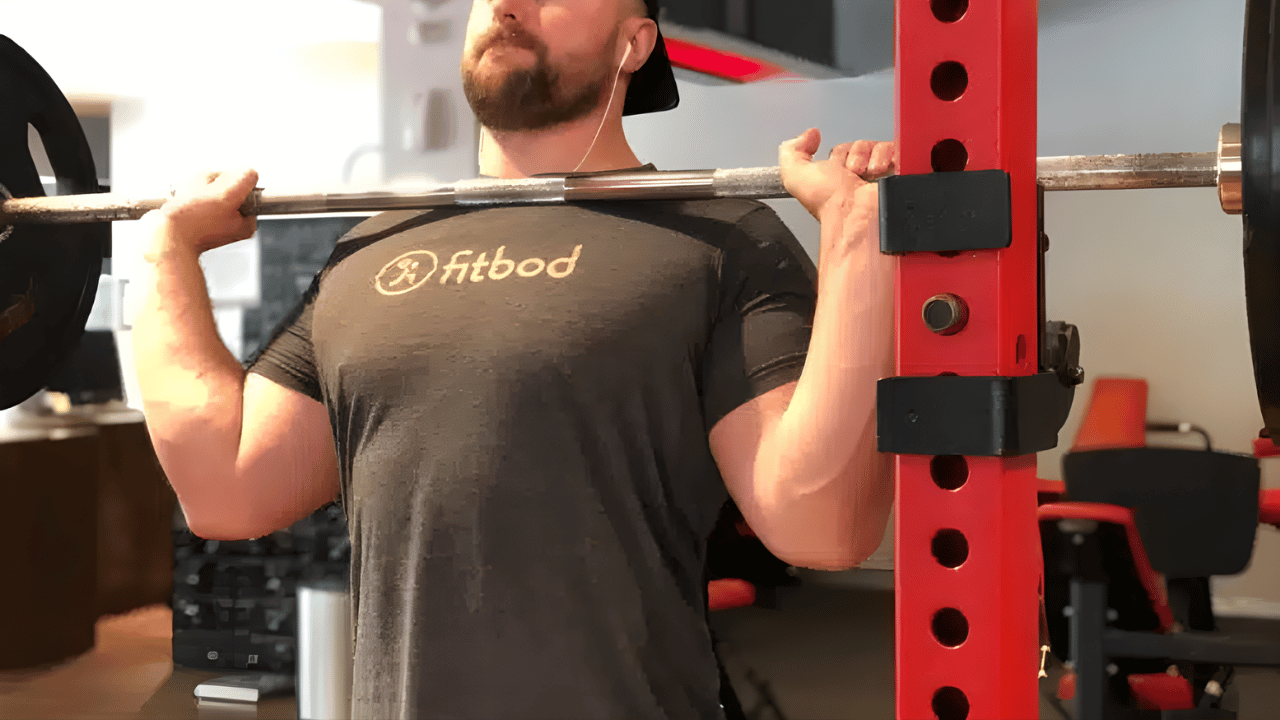
A successful press starts with setup. Here's the starting position: Step under the bar so it rests high across the front delts, just above the collarbones.
Hands should grip the bar slightly wider than shoulder width, with wrists stacked over the forearms. Keep the elbows just in front of the bar, not flared outward.

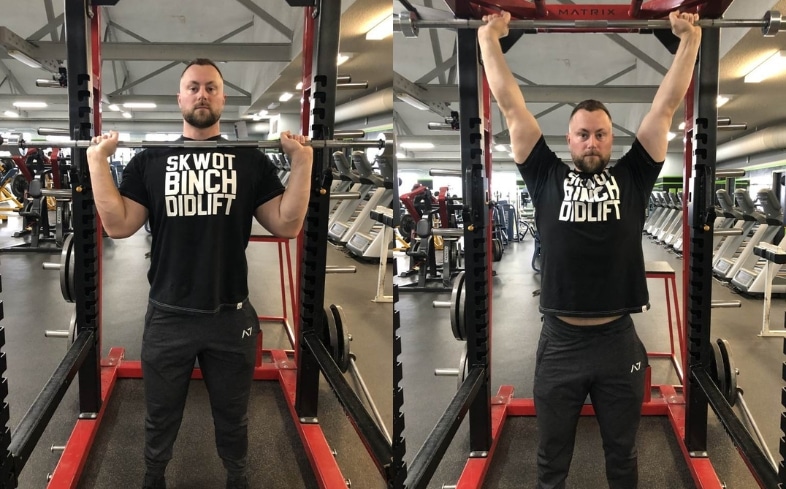
As you press, keep your chest lifted and your core tight. Drive the bar upward while clearing your head slightly backward. Once the bar passes your forehead, push your head through and return to a tall upright posture.
This final head-through position allows the arms to align vertically, transferring the load through the joints rather than the smaller stabilizing muscles. That's the top position, and it's where strength coaches tend to catch the most mistakes.
Many lifters mistakenly leave the bar in front of the body, arms at an angle, which forces the shoulders and arms to fight unnecessary resistance. Finishing with the head through the bar keeps the arms vertical and locks the body into a stable, strong position.
Muscles Worked in the Overhead Press
The overhead press trains multiple upper-body muscles, especially the front (anterior) and side (medial) deltoids. The triceps extend the elbows at lockout, and the upper chest helps initiate the lift from the bottom.
The lift also challenges the lats, upper back, and core. Those muscles act as stabilizers that keep the torso rigid and prevent the lower back from arching. The overhead press exists in what Lucero calls the “frontal plane,” moving the arms toward and away from the midline of the body. That movement activates both the front and side heads of the deltoid, providing a complete shoulder challenge that few other exercises match.
Common Mistakes to Avoid
Several technical errors can limit strength or increase injury risk:
- Leaning Back Too Far: Excessive lower-back arching shifts the load from the shoulders to the spine. Brace your abs and glutes to maintain an upright torso.
- Keeping the Bar Too Far Forward: The bar should finish directly above the shoulders, not in front of the head. Push your head through at the top.
- Elbows Flaring Out Too Early: Keep the elbows close to the torso until the bar clears your forehead. This maintains control and keeps the bar path efficient.
- Poor Grip Width: Too narrow stresses the wrists and triceps. Too wide reduces power. Slightly wider than shoulder width suits most lifters.
Note that these can also contribute to a weak overhead press. If you find the movement challenging, go back and evaluate your technique.
How Much Weight Should You Overhead Press?
As discussed on our YouTube channel, our coach recommends half your body weight as a solid starting target. For example, a 180-pound lifter should aim to strict press around 90 pounds for balanced development. Progress from there as your technique and strength improve.
For strongman-style strength goals, bodyweight or more is a worthy long-term standard. Those athletes must lift heavy objects overhead frequently, so pressing from a standing position builds the shoulder endurance and stability they need.
For powerlifters and general strength trainees, pressing half your body weight or slightly above builds shoulder resilience that supports a heavier bench press.
Seated vs Standing Overhead Press
Both versions have value. The standing overhead press requires greater total-body coordination and challenges the core to stabilize the spine. It resembles the way you would press in athletic or functional settings.
The seated overhead press removes the legs from the equation and isolates the upper body more. It allows heavier loading of the shoulders without the need to balance through the legs and torso. Lucero advises alternating both variations. If your main sets are standing, use seated presses as accessory work, or reverse that strategy depending on your program.
Best Overhead Press Alternatives
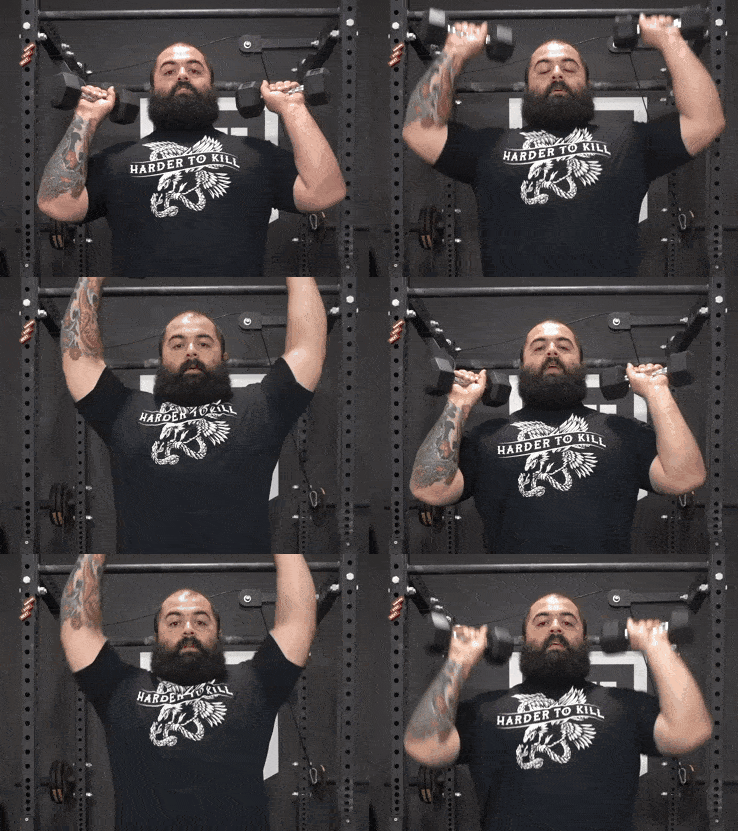
The most direct alternative to barbell overhead press is to do the same motion with dumbbells. This challenges the same muscle groups but has the added benefit of more independent stabilization effort. So if you're looking for more of a challenge, swapping in dumbbells could be a good start.
If shoulder mobility limits your ability to press overhead safely, the 70-degree incline press is an excellent substitute. Sitting slightly reclined on an incline bench reduces the range of motion while still targeting the same muscles. It offers the shoulder benefits of pressing overhead in a safer position for those with tight lats or limited flexibility.
Another advanced variation is the Z Press. Performed while sitting upright on the floor with legs extended forward, the Z Press eliminates leg drive and back support completely. This forces the lifter to stabilize entirely through the core while pressing. The Z Press not only builds shoulder and triceps strength but also engages the lats and spinal stabilizers.
Benefits of the Barbell Overhead Press
- Builds strong, stable shoulders and triceps
- Strengthens the upper chest and upper back
- Improves posture and scapular control
- Enhances core stability under load
- Transfers power to the bench press and other pressing movements
- Lucero emphasizes that the overhead press is a full-body strength exercise, not just a shoulder lift. It teaches you to coordinate the upper and lower body while maintaining an upright posture.
How to Add the Overhead Press to Your Training
For most lifters, one to two overhead pressing sessions per week is ideal. It pairs well with horizontal pressing days or can anchor a dedicated shoulder session.
Sample structure:
- 3–4 sets of 5–8 reps for strength development
- 3–4 sets of 8–12 reps for hypertrophy and control
Accessory work can include seated dumbbell presses, lateral raises, or incline pressing variations
Use strict form and progress the weight gradually. When the goal is stability and control, speed does not replace precision. The best progress comes from consistent training and sound mechanics. There are also benefits to high-rep overhead press.
Summary
The barbell overhead press remains one of the best measures of pressing strength and shoulder development. Whether your goal is to build muscle, increase power, or reinforce your bench press, learning proper overhead pressing mechanics will carry over to every lift you perform.
Keep your form strict, push your head through, and focus on tall posture at lockout. With time and consistency, your barbell overhead press will become one of the strongest movements in your program.