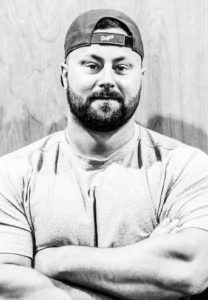

Many lifters want to grow their legs but struggle with lower back pain. Whether from bad posture, injury history, or simple fatigue, back issues can make heavy squats or deadlifts feel impossible. To find out how to train legs effectively and safely, we asked Joseph Lucero, one of the professional coaches at Powerlifting Technique, for his advice.
Lucero explains that lower back fatigue or pain often comes from improper technique, weak bracing, or overuse of compound lifts. When you squat or deadlift heavy, your spine and core take a big share of the load. If those areas are weak or sore, you cannot train hard enough to grow.
That does not mean you should skip leg day. It just means you need to choose movements that protect your spine while still challenging your legs. We can train around pain while still building muscle. We just have to be smart about what we pick.
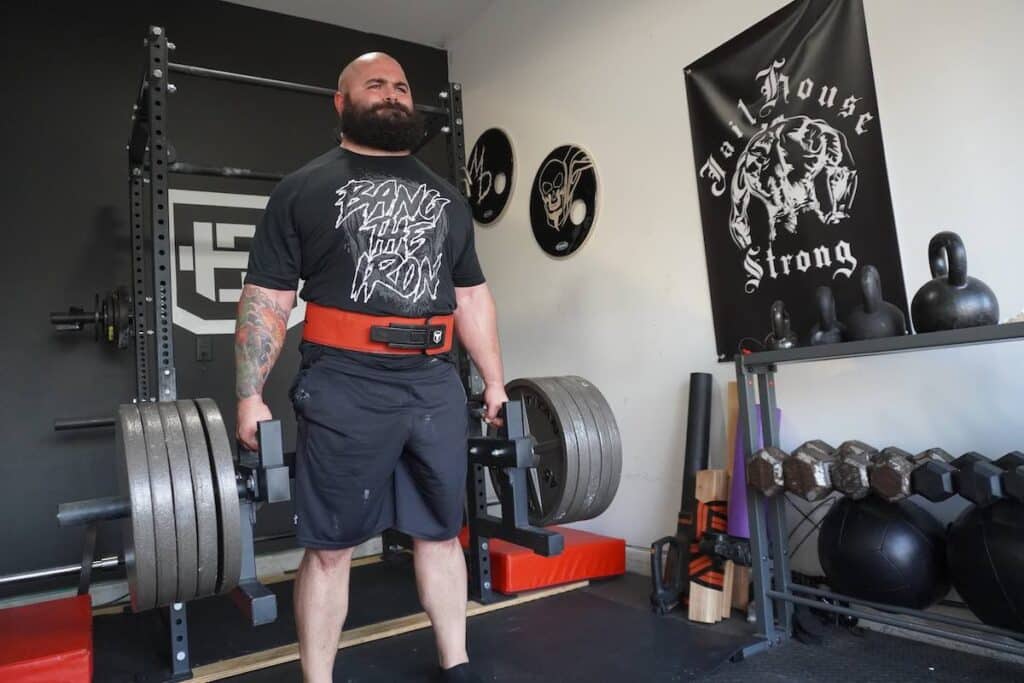
The belt squat is one of Lucero’s top recommendations. It allows you to train the squatting motion without putting a barbell on your back. There is no vertical compression on the spine. The weight is attached to your hips, so your back stays relaxed while your legs work hard.
The movement still challenges balance and coordination but removes most of the risk for back strain. Many gyms have dedicated belt squat machines, but you can also perform the movement with a loading pin and a dip belt attached to free weights.
If you cannot squat at all without discomfort, the leg press is another great choice. You sit against a back pad and push against a weighted platform, isolating your legs from the rest of the body. Because your torso stays fixed, your lower back has less strain compared to free barbell movements.
Coach recommends keeping your feet shoulder-width apart, with toes slightly out. You want to use full range of motion without letting your hips lift off the seat. That ensures your legs do the work and your back stays stable.
Both the hack squat and Smith machine squat are controlled movements that guide your range of motion. They can help target the quads without forcing your lower back to stabilize heavy free weights. These are more restricted, but for someone who needs safety, that can be a good thing.
Coach Lucero suggests keeping the weight moderate and focusing on form. With both variations, control the eccentric portion of each rep to maximize muscle engagement.
Single-leg exercises like Bulgarian split squats can build strength while reducing total load on the spine. Split squats, lunges, and Bulgarian split squats strengthen your quads, glutes, and hamstrings while training balance and coordination. The key is to stay upright and keep tension on the legs. You can perform these movements with dumbbells instead of a barbell to avoid compressing your spine. Start light and focus on stability before adding weight.
If your back limits how often you can squat, Lucero recommends a simple split. Do one heavy leg session each week and one lighter, machine-based session. This keeps the intensity high enough for strength but lets your back recover. For example, squat or belt squat early in the week, then use leg press or hack squat a few days later. Add leg extensions, curls, and glute bridges to round out your program. This balances strength and hypertrophy without overloading your spine.
Back pain from squats often comes from trying to do too much too soon. Lucero stresses patience and consistency. Train with intent, not ego. Focus on quality reps and positions. The goal is to improve your strength safely so you can keep training long-term. When done properly, you can still build powerful legs without aggravating your back. The key is knowing when to modify, when to rest, and when to push hard. With careful programming and movement selection, your back will thank you.