

One of the biggest questions I get as a strength coach is simple: what is a back off set, what is a cluster set, and when should you actually use each one in your training?
Both of these tools can make you stronger, but they do it in different ways. Back off sets give you a chance to clean up technique and build volume at a lighter load. Cluster sets help advanced lifters handle heavy percentages when their muscular endurance cannot quite keep up with their strength. In this article I will walk through what each one is, how I program them, and which situations they are best for.
Table of Contents
What are back off sets?
Back off sets, sometimes called “back downs,” are lighter follow up sets you perform after your top set of the day. They are based on a percentage of that top set so you can keep some structure instead of guessing.
Here is how I usually set it up. Let us say one of my athletes hits a top set of five on bench press with 300 pounds. That is the heaviest working set we want for the day. After that, I might tell them:
You are going to do three sets of three at 80 percent of that top set. Use a tempo. Come down slow, pause, then drive off your chest.
In that example, 80 percent of 300 is 240 pounds. So their back off work becomes three sets of three with 240, using a controlled tempo to really feel the bar path, stay tight, and fix any issues I saw on the top set. I will usually live in the 70 to 80 percent range for back offs. If we are adding bands or chains, 70 percent makes more sense. If it is straight weight, 80 percent works well.
The key point is that these are submaximal loads that let you focus on:
- Technique and bar path
- Staying tight under control with a tempo
- Reinforcing the same setup and cues you used on the top set
Back off sets are not just for powerlifters. I use them with beginners, intermediates, and advanced lifters. If you are still learning how to squat, bench, or deadlift, this is one of the best ways to get extra practice with good reps after you have already done the heaviest work. It pairs well with heavier top sets like the ones I talk about in my article on the max effort method, where the goal is to push intensity without losing control.
In practice, a back off block for a main lift might look like:
- Top set: 1 × 5 @ heavy, RPE 8 to 9
- Back off work: 3 × 3 @ 80 percent of that top set, with tempo and strict pauses
You walk away with one heavy set to drive strength and several cleaner sets to groove the movement pattern.
What are cluster sets?
Cluster sets are a different animal. Instead of dropping the weight after your top set, you keep the same heavy load, but you split the reps into small “clusters” with very short rest breaks in between.
Here is an example. Let us say the goal is to deadlift 400 pounds for six total reps. On paper, that is 1 × 6 @ 400. But maybe the lifter does not have the muscular endurance to pull all six reps in a row with good technique. If we force that, the last few reps might turn into ugly grinders with a rounded back.
Instead, I might tell them:
We are going to hit six total reps with 400, but you will do it as three clusters of doubles. Pull two reps, rest 10 to 15 seconds, pull two more, rest again, then finish with the last two.
So the volume is still six reps at 400, but now it is broken up as 2 + 2 + 2. Those short rest intervals give the lifter just enough time to reset their brace, regrip, and keep the technique sharp without dropping the weight. You stay in that heavy zone while keeping the quality high.
This is especially useful for more advanced, stronger lifters whose one rep maxes are high, but whose repetition strength at those heavy percentages is limited. For example, I might be strong enough to bench 450 pounds, so on paper you would think 400 × 5 is doable. In reality, two or three reps at 400 might be my true limit in a straight set. Clustering those reps lets me hit the target volume at the correct intensity without the last few reps falling apart.
Cluster sets can work for squats, bench presses, and deadlifts, but they require good awareness and discipline. You are still lifting near your top set, so this style is better suited to experienced lifters who already have a solid base and understand how to maintain form under heavy loads. If your setup and bracing are not dialed in, you will get more out of standard back offs and basic straight sets first.
Back off sets vs cluster sets, which is better when?
Both tools have value. They are not really competing methods as much as they are different ways to solve different problems.
Use back off sets when:
- You are still learning the lift and need more quality reps
- Your top set exposed some technical issues that need cleaning up
- You want more volume without beating yourself up with repeated heavy sets
- You are coming back from a break or managing some joint irritation and want to live in that 70 to 80 percent range
This is why I give back offs to almost everybody at some point. If you are working on your squat bar path, your bench touch point, or your deadlift setup, back offs give you a safe place to rehearse those cues. They pair nicely with good warmups like scapular push ups or the shoulder activation drill I cover in my guide on the warmup move that activates every muscle you need for a heavy press.
Use cluster sets when:
- You are an advanced lifter trying to push heavy volume near your top percentages
- Your strength is ahead of your muscular endurance at those loads
- You want to accumulate more quality reps at a high intensity without technique falling apart
- You are peaking for a meet and need to feel heavy weight more often without turning every set into a grind
Think about a strong deadlifter prepping for a powerlifting or strongman competition. If the event demands multiple heavy reps, but the lifter cannot maintain form on straight sets at that load, cluster sets give you a way to bridge that gap. You slowly build up their ability to live in that heavy zone without sacrificing bar path or back position.
How back off sets and cluster sets fit with straight sets
Straight sets are probably what most athletes think of when they hear “sets and reps”. You pick a weight and do multiple sets of the same reps with the same load. For example, a football player with a 300 pound bench max might be prescribed three sets of 10 at 70 percent, which is 210 pounds. That is a classic straight set protocol.
Powerlifters and strongman athletes often take a different path. Instead of doing straight sets at a fixed percent, they will ramp up to a heavy top set, like a heavy triple or single, then do back off work after. Over the course of a training cycle, that heavy top work might be organized using something like the max effort method, where the goal is to push intensity on the main lift while still managing fatigue.
Cluster sets are another way to support that top work. Instead of doing one all out set at a given percentage and hoping all the reps look good, you break the set into smaller chunks with short rests. Straight sets are still useful if your sport demands continuous, repetitive effort with the same weight. Back offs and clusters make more sense when you are trying to balance maximum strength, technical quality, and recovery.
Putting it all together in your training
If you are newer to lifting, start by mastering your straight sets and adding simple back offs to your main lifts. For example, on squat day you could work up to a challenging set of five, then drop to 75 or 80 percent for two or three back off sets of three with a controlled tempo.
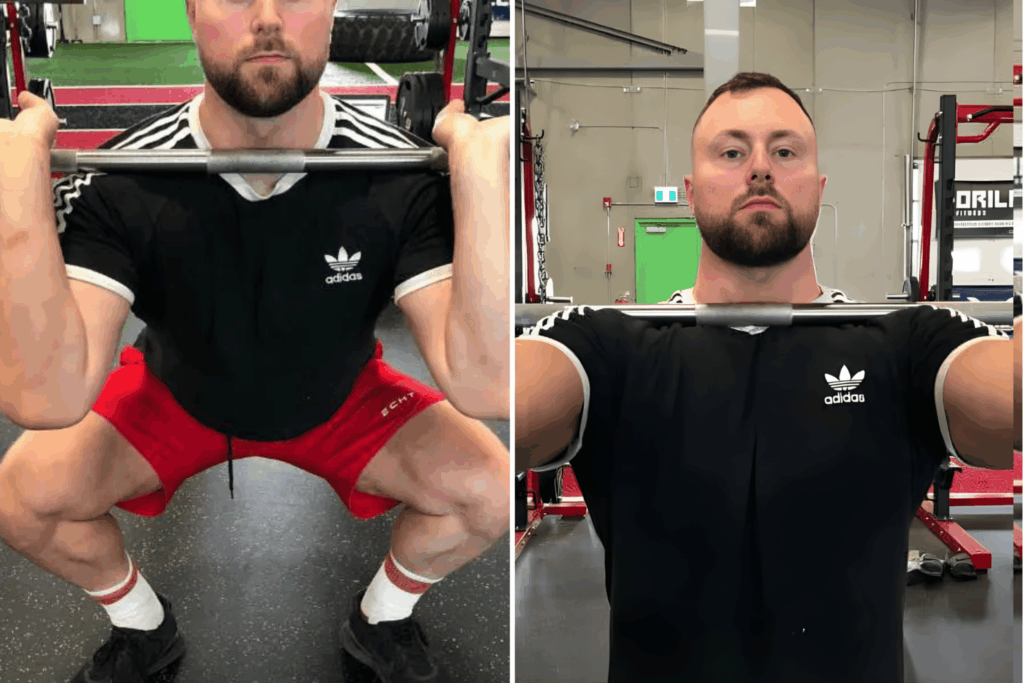
That lets you build strength, dial in your technique, and recover well enough to train again. For help on how to structure your main squat work itself, you can also look at the cues I share in my front squat guide and apply the same bar path and bracing ideas to your back squat.
If you are more advanced, and you already have years of good straight sets and back offs behind you, then cluster sets are a tool you can pull out when you hit a ceiling. They do not replace solid programming or good warmups. They just give you another way to get quality work at higher intensities when your strength outpaces your ability to crank out clean reps in a row.
Back off sets and cluster sets are not magic tricks. They are just different ways of organizing volume and intensity to respect your current ability. If you are honest about your technique and your recovery, and you pick the right tool for the right situation, both methods can help you add plates to the bar without sacrificing your long term progress.