
I spend part of my life in the weight room coaching lifters, and the other part in a college classroom teaching care and prevention of athletic injury, fitness programming, and kinesiology. The same principles I write on the whiteboard are the ones I want you thinking about when you set up for a heavy squat or deadlift.
In this article I want to walk you through what I consider the safest back angles for the squat and deadlift, and how to adjust things if your body type makes those positions tricky. There is a little bit of math behind movement here, but my goal is to give you simple cues you can take straight to the gym.
Table of Contents
Why your back angle matters
When you load a barbell, you create a series of levers. Your spine becomes one of those levers, and your low back often ends up in the middle of it. If the bar drifts too far away from your base of support, or your torso folds over too much, that lever arm gets longer and the stress on your lumbar spine goes way up.
That is why I am always talking about bar position, midfoot, and posture. You can have strong legs and a big engine, but if the angles are off, you will feel every heavy rep in your low back.
A lot of the problems I see in person are the same ones we talk about in this article on common squat mistakes. The good news is that once you understand where the bar should sit and how your back should angle, you can fix a lot of this with setup alone.
Back angle for the squat
With squats, the bar sits on your back instead of in front of you. That completely changes the geometry compared with a deadlift. And it also changes the angle of your back during the lift. So what is the proper back angle for squat?
From the side, if you draw a straight line down from the bar, that line should land right over the middle of your foot. This matters when you're interested in powerlifting squat technique and rules, because it is a key piece of staying stable and passing depth in competition.
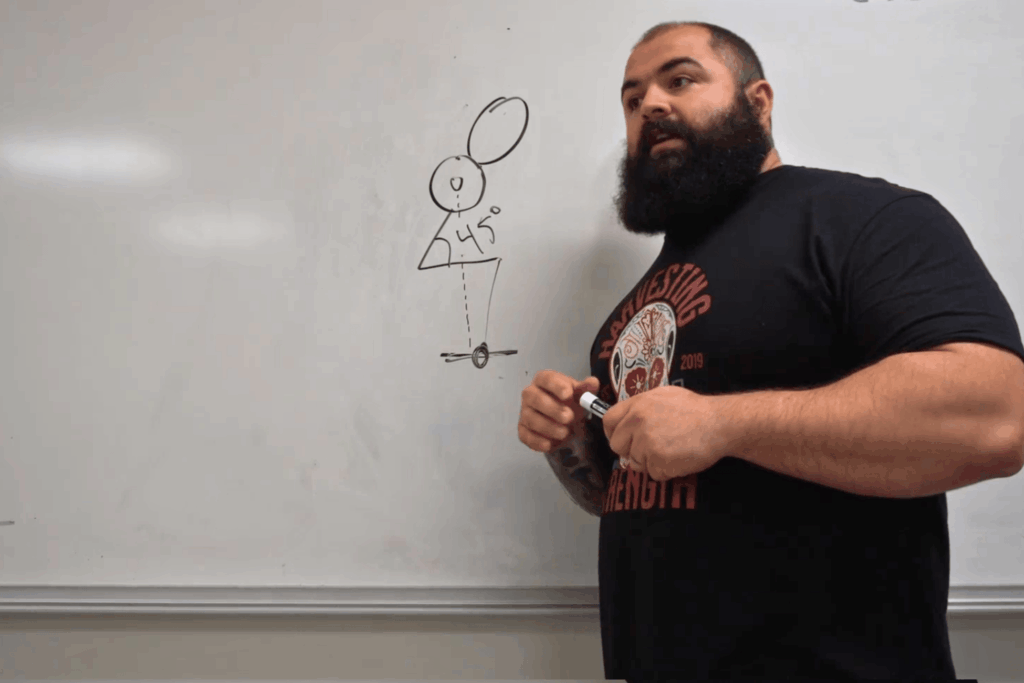
Once the bar is over the midfoot, we can talk about your back angle. For most lifters, a solid target at the bottom of the squat is around a 45 degree back angle relative to the floor.
That means your torso is leaning forward a bit, but you are not bent over like a good morning. Your hips sit back, your knees track over the toes, and your core and upper back stay braced so that the bar still lines up with the midfoot.
This is where body type starts to matter. If you have a longer torso or very long legs, you might feel like you are folding in half just to hit depth. The more you lean forward, the more load ends up on your low back.
I work with a lot of lifters who feel “tipped over” in the hole for this reason. If that sounds like you, I would encourage you to look at this article on squat tips for lifters with long legs, where we go deeper into stance width, toe angle, and bar placement for that body type.
Bar placement is one of the easiest tools you have. A true high bar position, up on the traps, will usually force the torso a little more forward to keep the bar over the midfoot. Shifting the bar slightly lower on the rear delts changes the lever.
Now the bar is a bit closer to the hip joint, which can let you stay a touch more upright at the same depth. For many lifters, moving to a controlled low bar position gives their back angle a small but meaningful improvement and takes pressure off the low back.
So for the squat, here is how I would summarize your target. Aim for a back angle around 45 degrees at the bottom, keep the bar tracking over the midfoot, and if your build forces you way past that, use stance and bar placement to bring yourself closer to that range.
Back angle for the deadlift
Now let us move to the proper back angle for deadlift. From the outside it looks like another hip hinge, but the bar starts in front of you on the floor and you do not have it resting on your back.
That means the mechanics change right away. My priority in the deadlift setup is lining up the shins, arms, and bar so that everything is in the strongest position possible before you even pull.
When you set up, get your shins close to the bar and think about stacking your shoulders directly over the barbell. If I froze that position and drew two straight lines down, one from your shoulder to your hand and one from your knee to your ankle, both of those should be close to vertical.
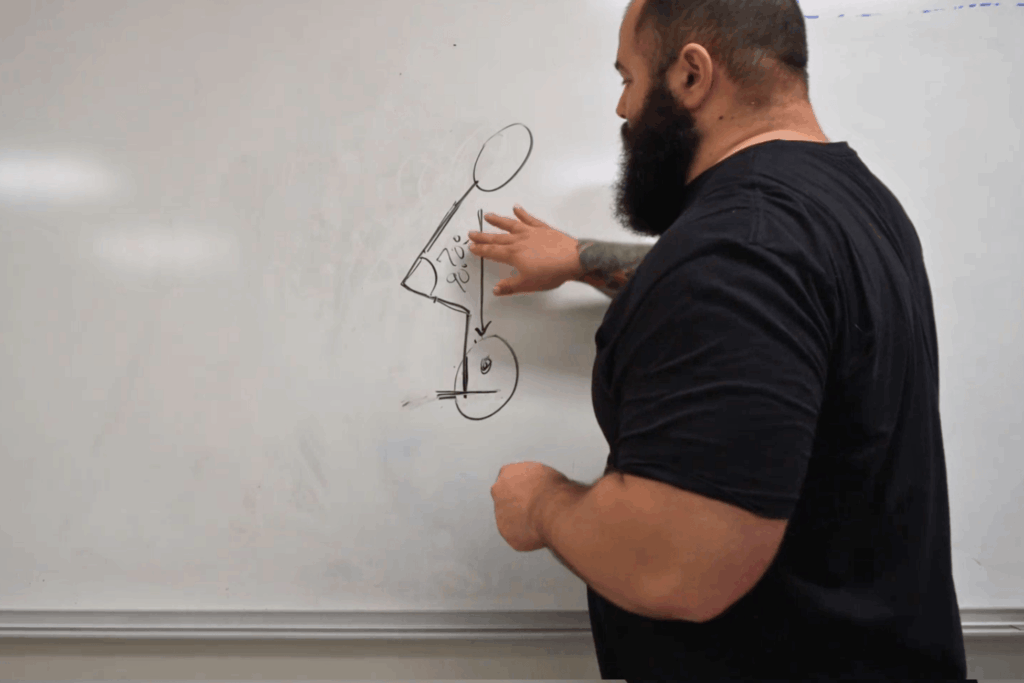
Then the bar should sit right up against your shins. More on that in this guide to deadlift bar path. The main idea is that a straight bar path and tight distance from the bar to your body is safer and stronger.
Once those pieces are set, your back angle will naturally be different from your squat. In a conventional deadlift, I like to see most lifters somewhere in the 70 to 90 degree range relative to the floor. That means your chest is much more up than in the squat, your hips are a bit higher, and the spine is closer to vertical. You are still hinging and loading the posterior chain, but you are not dumping the entire lift into a long, horizontal back lever.
Some lifters struggle to get into that position because of their limb lengths. If you have shorter arms, you have to reach farther down to grab the bar. That often pushes the hips lower and forces the torso to lean more, so your back angle creeps closer to 45 degrees.
Now the low back is taking more of the brunt of the pull. On the other side, very tall lifters with long legs and long spines have to be even more precise with how they set up. For those lifters, I often use the adjustments mentioned in this guide to deadlifting for tall lifters.
This is also one reason many lifters experiment with a sumo stance. By widening the feet and turning the toes out, you can drop the hips closer to the bar and shorten the distance the torso has to travel. That makes it much easier to keep the chest up and the back angle closer to that 70 to 90 degree range. Whether you choose conventional or sumo, the principle is the same. You want a braced, more upright spine, a tight bar path, and a setup that respects your individual leverages.
If you feel like your pull is always rough off the floor or your hips shoot up before the bar moves, that is often a sign that the angles are off. A lot of the fixes I use in my coaching and in articles like my deadlift bar path breakdown are really just about getting those lines stacked in your favor again.
What about the leg press?
While this article is mainly about the squat and deadlift, I want to touch on the leg press because I see a similar mistake there. On many leg press machines, you can change the angle of the back pad.
Lifters will often crank the pad up very upright, then they end up completely jammed in the bottom position with their thighs smashed into their torso and a very tight back angle, something closer to 30 degrees.
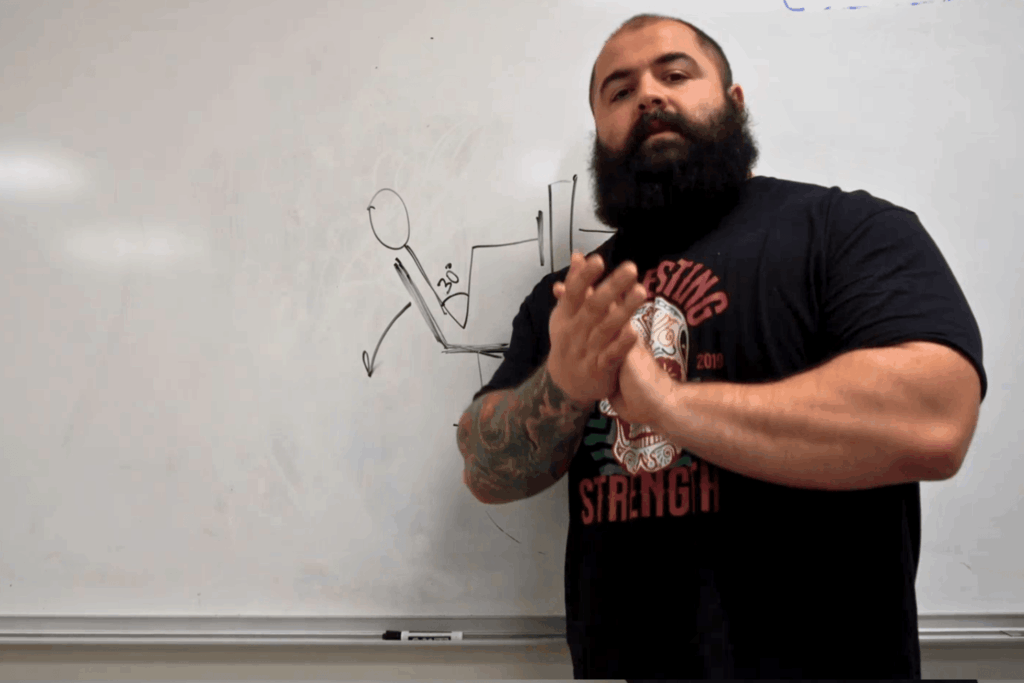
When you are that scrunched up, the movement feels heavy before it even starts and the hips and low back are not in a friendly position. If your machine allows it, I like to open the pad up so you are closer to a 45 degree angle through the torso instead of being folded.
That keeps tension where you want it and usually makes the leg press feel more like a controlled squat pattern, not a contortion act. If you are still deciding how the leg press should fit into your training next to squats, read more on whether you should leg press or squat for bigger legs.
I want you to remember a few simple checkpoints from all of this. For the squat, keep the bar over the midfoot and aim for roughly a 45 degree back angle at the bottom. Use stance, bar height, and your own anthropometrics to fine tune that.
If your build makes the movement feel awkward or painful, you are not stuck. There are specific adjustments you can make, and I cover many of them in my resources on squat technique, long leg squat tips, and common squat mistakes.
For the deadlift, think about vertical shins, vertical arms, and the bar as close to you as possible. From there, work toward a back angle in the 70 to 90 degree range, whether that is conventional or sumo. If you are constantly fighting your leverages, look at how you can tweak stance, grip, and hip position instead of just muscling through bad positions.
You cannot change the skeleton you were born with, but you can absolutely change how you set that skeleton under the bar. If you take the time to respect back angle, bar position, and the simple “bar over midfoot” rule, you will not only lift more weight over time, you will also give yourself a much better chance of staying healthy enough to keep training.