
Bicep curls are one of the most recognizable exercises in the gym, but few lifters understand how to perform them correctly for strength, muscle growth, and long-term performance. Whether your goal is bigger arms or better control during heavy presses, knowing how to curl with proper form can make a real difference. This complete guide breaks down everything you need to know about bicep curls, how they benefit powerlifters, and how to program them effectively.
Table of Contents
What Are Bicep Curls?
A bicep curl is a resistance exercise that targets the muscles responsible for flexing the elbow joint. It primarily trains the biceps brachii, which has two heads (short and long), along with the brachialis and brachioradialis. The classic version involves holding a dumbbell, barbell, or cable handle with an underhand (supinated) grip and bending the elbow to lift the weight toward the shoulder.

Bicep curls can be performed standing, seated, or on an incline bench. Each variation changes the muscle activation slightly, allowing lifters to emphasize different areas of the biceps or supporting muscles.
How Do You Do Bicep Curls the Right Way?
To perform a proper bicep curl, start with your arms fully extended and palms facing forward. Keep your elbows close to your body and avoid swinging your torso. The movement should be controlled, with the elbow acting as the hinge. Curl the weight until your forearms are nearly vertical, then slowly lower it back to the starting position.
Coach Joseph Lucero of Powerlifting Technique recommends maintaining an underhand grip throughout the movement to train both heads of the biceps. He also emphasizes focusing on intentional lifting rather than speed. The goal is to feel the muscle contract and stretch rather than rushing through the motion.
We cover this in full on our YouTube channel, too. That's where you'll see the coach walking through the full process, and it's where we share more tips for lifters.
How Often Should You Do Bicep Curls?
So many lifters ask how often to do bicep curls, and the answer is this: Most lifters should train biceps two times per week. This provides enough volume for muscle growth without excessive fatigue. On the first day, include compound pulling exercises such as underhand barbell rows or chin-ups. On the second day, focus on isolation work like curls and grip variations.
Beginners may benefit from one session per week until their recovery improves. More advanced lifters, especially bodybuilders and powerlifters in hypertrophy blocks, can handle up to three sessions per week as long as elbow and shoulder joints remain healthy.
Why We Lean Back During Bicep Curls
Leaning back slightly during a curl, often called the “Perfect Curl,” helps maintain constant tension throughout the full range of motion. As Joseph Lucero explains, this diagonal positioning keeps tension at both the bottom and top of the movement. When performed correctly, leaning back is not a cheat but a technique to extend the range of motion and challenge the biceps from start to finish.
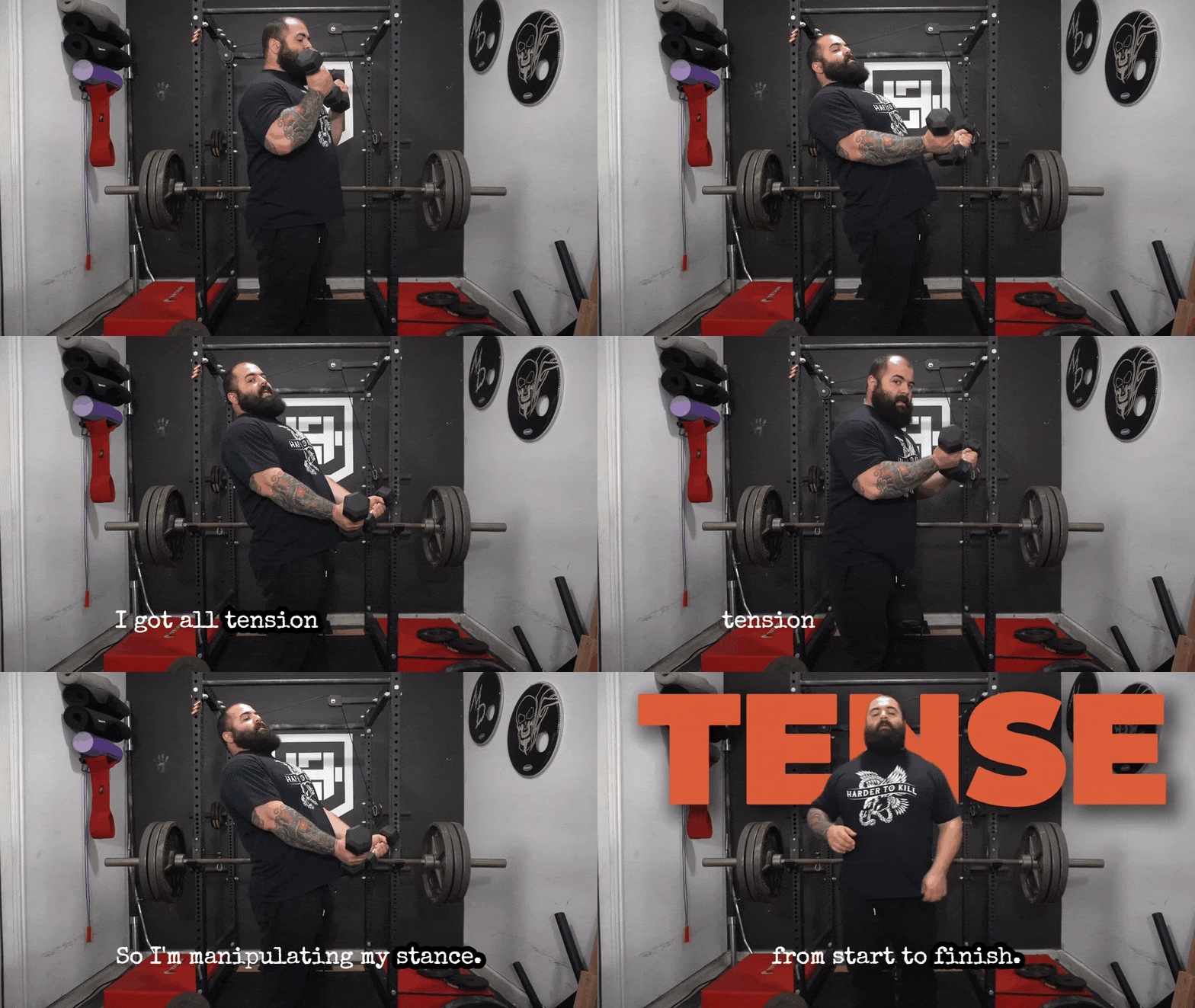
The key is control. Leaning too far or swinging your torso turns it into a momentum-driven lift, reducing muscle activation. A subtle lean is acceptable if it helps you feel the tension in the biceps through the entire movement.
What Muscles Does the Bicep Curl Work?
The bicep curl mainly targets the biceps brachii, which flexes the elbow and rotates the forearm. The long head contributes to the outer portion of the upper arm, while the short head fills out the inner section. Supporting muscles include:
- Brachialis: Located underneath the biceps brachii, it adds thickness and helps lift the forearm.
- Brachioradialis: A forearm muscle that assists in elbow flexion and improves grip strength.
- Deltoids and Core: Stabilize the upper body during standing curls.
How does this benefit powerlifters and other strength athletes? Strong biceps protect the elbow joint during heavy pressing movements like bench press or overhead press. They also assist in controlling the descent of the bar, which helps prevent injuries.
For powerlifters, strong biceps can contribute to stability during squats and deadlifts by maintaining tightness in the upper body and arms. And training with proper technique helps you avoid arm muscle strains, which can set back your training program by weeks.
How Many Should I Do?
The number of reps and sets you perform depends on your experience level and goals. Here’s a simple chart you can copy and use in your program:
| Level | Sets | Reps | Notes |
|---|---|---|---|
| Beginner | 2-3 | 10-15 | Focus on control and learning proper form |
| Intermediate | 3-4 | 8-12 | Use moderate weight and slow tempo |
| Advanced | 4-6 | 6-10 | Heavier loads, include grip variations and compound curls |
Beginners should start with lighter weights and prioritize full range of motion. Intermediate and advanced lifters can add intensity by increasing the load or using techniques such as slow negatives or drop sets.
Is It Better to Do Bicep Curls Fast or Slow?
As mentioned in our article on whether to do bicep curls fast or slow, slower bicep curls are better for building muscle because they increase time under tension and improve control. Fast curls are only effective when the goal is to train for power or explosiveness, which is less common in hypertrophy-focused programs.
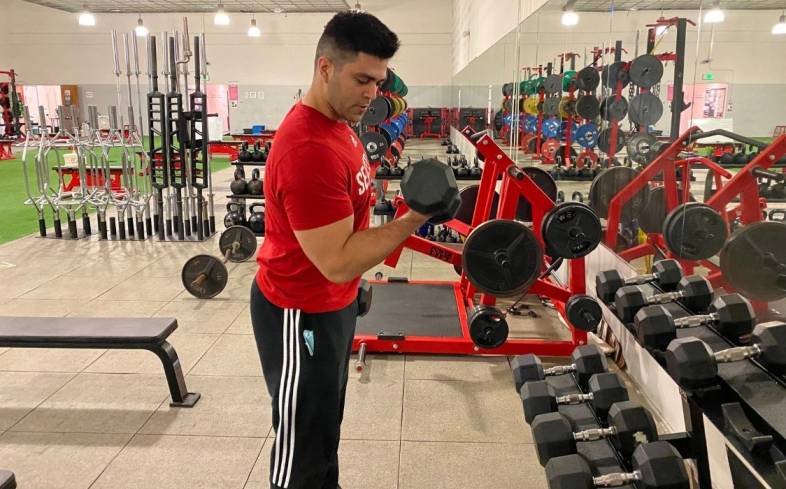
Lucero recommends a steady pace: lift the weight in one to two seconds, pause briefly at the top, and lower it in about three seconds. This approach reduces momentum and keeps tension directly on the biceps, resulting in greater growth and endurance.
What Variations Should I Try?
Changing grip or position can shift the emphasis between different parts of the biceps and supporting muscles. Here are a few variations to include in your routine:
- Underhand (Supinated) Curl: Classic version that targets both heads of the biceps evenly.
- Hammer Curls: Uses a neutral grip to strengthen the long head and brachialis.
- Overhand (Reverse) Curl: Trains the brachioradialis and forearms.
- Incline Dumbbell Curl: Performed on a bench, stretches the long head for maximum contraction.
- Concentration Curl: Seated isolation movement that emphasizes peak contraction.
- Perfect Curl: Leaning back slightly to maintain tension from bottom to top, as taught by Joseph Lucero.
Is It Better to Do Bicep Curls Standing or Sitting?
As discussed in our article on doing bicep curls standing vs. sitting, seated curls are generally better for isolating the biceps and minimizing momentum. Standing curls, however, engage more stabilizer muscles, including the core and shoulders. If your goal is maximum muscle growth, the seated curl allows better isolation. If you want to improve coordination and balance, the standing version offers more functional strength.
Our strength coach often recommends standing curls for lifters who want to train full-body control and seated curls for those focused on hypertrophy. Both variations have a place in a balanced program, and alternating between them can help prevent plateaus and improve overall muscle development.
Bicep curls remain one of the most effective and accessible exercises for building upper-arm strength. When performed with proper form, controlled tempo, and variation, they can improve performance across pressing, pulling, and stabilizing movements. Whether you are a powerlifter, strongman, or recreational lifter, mastering the curl builds a stronger foundation for everything else you do in the gym.