
If you're aiming to build serious quad density without the need to place a barbell on your back, it's time to give the hack squat machine the attention it deserves. This often-overlooked piece of equipment provides an excellent combination of stability and intensity, making it especially beneficial for those who want to target their legs while minimizing strain on the lower back.
For bodybuilders, powerlifters, and recreational lifters, the hack squat is a game-changer for lower body muscles. You just have to do it right.
What Is a Hack Squat and Why Use It?
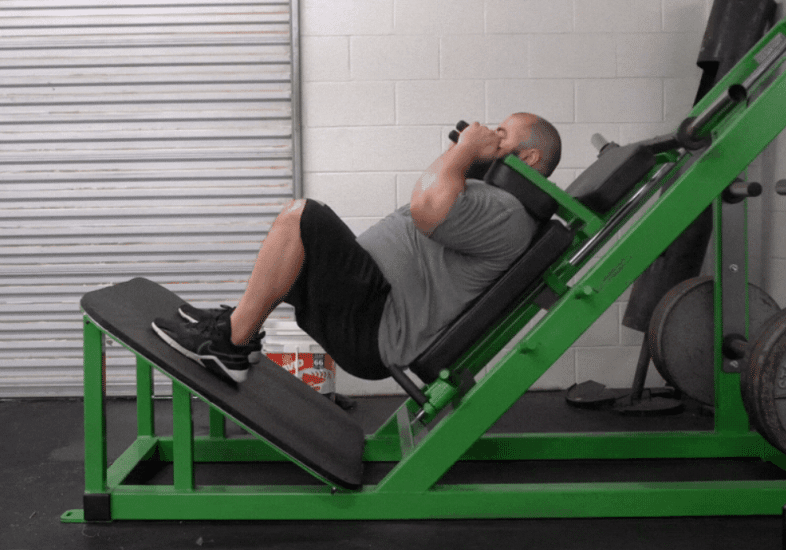
A hack squat is a machine-based squat variation that involves sitting against a sled with your back pressed against a padded surface while you squat. The sled moves along a vertical track, and the machine guides the motion, so your torso remains locked in place.
Here's what it looks like.
Note that I'm adjusting the safety handles at the start, before I begin the exercise. Then my hands go back to the bars over my shoulders at the starting position.
The sled behind me eliminates the need for balance, stabilization, and spine load. That's how the hack squat machine isolates your movement, so you can focus on effort and depth.
It also makes the hack squat particularly well-suited for hypertrophy training, as you can isolate the muscles effectively without being concerned about maintaining balance. That's one reason It's among the more popular squat variations.
When performed correctly, the hack squat places a heavy emphasis on the quadriceps due to its unique setup. The pre-bent hip position and vertical sled path force the knee joint to bear the brunt of the movement. And note that my heels stay down through the whole motion.
As a result, the hack squat isolates the quads far more than free-weight squats, which typically involve a more balanced engagement of the glutes and hamstrings. The reduced involvement of the glutes and hamstrings can make this exercise ideal for individuals focused on developing the quads specifically, or those looking to increase the resilience of the knee joint. You know, the muscles used during squats.
Hack Squat Muscles Worked
The hack squat primarily targets the quadriceps (the muscles at the front of your thighs), but it also engages several other muscle groups. I'm listing them out here so you can choose where to put it in your workout routine.
Here's a breakdown of the muscles worked during the hack squat:
- Quadriceps: The primary muscle worked. The hack squat places maximum tension on the quads because of the knee flexion and the vertical movement path of the sled.
- Glutes: Although less engaged than in traditional squats, the glutes are still involved, particularly at the bottom of the movement where the hips are extended.
- Hamstrings: Similar to the glutes, the hamstrings play a secondary role, assisting in controlling the descent and stabilizing the knee joint.
- Calves: The calves, particularly the soleus, help with stabilizing the lower leg and keeping the foot in place during the squat. And yes, some powerlifters train calves.
- Core: The core muscles are engaged throughout the movement to help maintain posture and stability, as they are responsible for keeping the torso locked against the backrest.
So if you're looking for squat gains, this is an effective exercise to do. The main challenge is access to a specialized machine, but that shouldn't be a problem if you have a gym membership.
Foot Position Matters (A Lot)
One of the most important factors when performing the hack squat is foot placement. As I show in my video demos, where you place your feet on the platform significantly affects the muscles targeted and the overall feel of the exercise.
Our other guide goes into narrow and wide stances. Here, I'm going to give a quick demo of front/higher and back/lower foot placement.
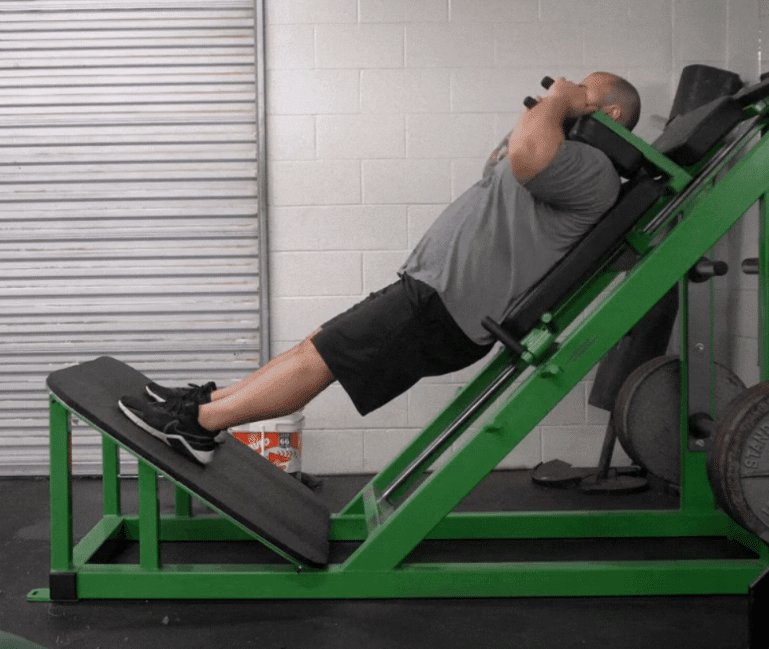
Higher Foot Placement: Placing your feet higher on the sled reduces the forward knee travel and evenly distributes the load across the entire leg. This position is optimal for general leg development and helps maintain a good balance between quadriceps and glute engagement.
Lower Foot Placement: When your feet are placed lower on the sled, it forces the knees to travel further forward, past the toes, which increases quad activation. This foot placement mimics athletic movements where knee-over-toe positioning is common.
While this variation may put more stress on the knees, it can be beneficial for athletes or those looking to increase quad hypertrophy. Remember to choose variations wisely. Hack squats with lower foot positions aren't recommended for lifters with knee issues. It can exacerbate joint strain.
Who Should Use the Hack Squat?
The hack squat can be beneficial for virtually everyone, though its specific advantages vary depending on the goals of the lifter:
- Bodybuilders: The hack squat is ideal for bodybuilders because it isolates the quads and provides the stability needed to focus on hypertrophy. It is an excellent tool for achieving dense quad development, especially when used strategically in a workout.
- Powerlifters & Strongmen: For these athletes, the hack squat can be a great accessory movement in the off-season. It reinforces knee health, joint strength, and leg development without overloading the lower back, which is crucial for maintaining longevity in strength sports.
- General Lifters: Even casual gym-goers can benefit from the hack squat machine. It reduces spinal loading compared to traditional squats and is easier to learn and execute, making it a solid choice for those new to squatting or looking for a safer alternative.
However, it's important to note that the hack squat shouldn't be viewed as a replacement for the traditional back squat or leg press. Each tool serves its unique purpose, and the hack squat excels at building size and strength through focused, quad-dominant isolation.
How to Program the Hack Squat
When integrating the hack squat into your training program, it works best as either a primary or secondary movement on leg day. Here are some key points for structuring a successful hack squat routine:
- Weight: Use moderate weights that allow for control and depth throughout the movement. This machine is not about sheer load but rather precision and quality of movement.
- Reps: Stick with moderate rep ranges that support hypertrophy (muscle growth). 6-10 reps is generally a good target.
- Tempo and Pauses: Hack squats reward precision. Slow down the tempo or add pauses at the bottom of the movement to increase time under tension and muscle engagement.
- Avoid Overloading: While it may be tempting to stack on extra weight, don’t fall into the trap of ego-lifting. Poor technique and excessive loading can lead to injury, and the hack squat works best when done with proper form.
An example of a good hack squat routine could be:
- 2–3 sets of 6, 8, or 10 reps
- Focus on controlled movement, with a deliberate tempo or pause at the bottom
- Avoid using excessive weights unless you’re highly experienced
The key to maximizing the hack squat’s potential is precision. Overloading it with sloppy reps or rushing the movement will undermine the exercise's effectiveness and could even be dangerous.
Note that there are also many hack squat alternatives. These are valuable if you don't have access to a hack squat machine, especially for home workouts.
Frequently Asked Questions About the Hack Squat
1. Is the hack squat better than the back squat?
The hack squat and back squat both have their merits. While the hack squat isolates the quads more effectively, the back squat is a more compound movement that works multiple muscle groups, including the glutes and hamstrings. The hack squat can complement your back squat routine by providing targeted quad training without placing additional strain on the lower back.
2. Can I use the hack squat if I have knee problems?
If you have knee issues, it’s important to be mindful of your foot placement. Lower foot placement that forces your knees past your toes may exacerbate knee discomfort. It’s advisable to use a higher foot placement and prioritize proper form and lighter loads if you have knee concerns.
3. How does the hack squat compare to the leg press?
Both the hack squat and leg press target the legs, but the hack squat is more quad-dominant due to its vertical sled path and the way the hips are positioned. The leg press allows for a more balanced distribution of effort across the quads, hamstrings, and glutes. The hack squat also requires more balance and stability because of the backrest and the fixed sled movement, while the leg press involves a more seated position with the weight on the legs.
Final Thoughts
The hack squat is a simple, effective, and underrated machine for building quad strength and size. While it shouldn’t replace the barbell squat in your routine, it offers a great alternative or complement for those focused on leg development.
By adjusting your foot positioning and using the machine with precision, you can maximize its benefits and minimize potential injuries. Incorporate it wisely, and you’ll see noticeable improvements in both muscle size and strength, particularly in the quadriceps.