If you can't extend your arms after working out, you likely have delayed onset muscle soreness (DOMS). The soreness, tightness, and swelling in your arms result from inflammation in the surrounding tissues and can prevent you from stretching the elbow joint comfortably.
DOMS will peak about 48 hours after a workout and progressively improve in the following days. If it doesn't improve or the pain is severe, you may have a tendon injury in your bicep.
As someone with a Master's degree in Occupational Therapy, a Bachelor of Science in Life Sciences, and a co-host of a lifting podcast, I've seen this concern come up constantly, both in clinical settings and across the strength training community. There's no better feeling than a great gym session, but sometimes a great workout comes with consequences like not being able to straighten your arms the next day.
While getting a little stiff shouldn't immediately sound any alarm bells, there are circumstances where it may not be so harmless.
Read on to learn more about:
- Why you can't straighten your arms after a workout
- How long DOMS lasts in the arms
- How to treat sore arms
- How to prevent getting sore arms in the future
- When arm pain after working out becomes serious
- Frequently asked questions
Why You Can't Straighten Your Arms After Working Out
Delayed Onset Muscle Soreness (DOMS) can significantly affect your ability to straighten your arms after an intense workout, especially if the exercise focuses on the biceps or triceps. This soreness arises from microscopic tears and cellular damage in the muscle fiber during strenuous resistance training or unfamiliar physical activities.
Many people blame lactic acid for the soreness they feel after a tough session, but research tells a different story. Lactic acid clears from the muscles within a few hours of exercise. The real driver of DOMS is the cellular damage caused by eccentric actions, which are the lengthening contractions that occur when you lower a weight under control or resist gravity on the way down from pull-ups. This damage triggers an inflammatory response that irritates nerve endings in the surrounding tissues, which explains the sensitivity and tenderness you feel when trying to extend your arm.
According to a study, eccentric exercises can increase muscle soreness and decrease range of motion, making it hard to extend your arm at the elbow post-exercise. Slowly lowering the dumbbell in a bicep curl is one way to increase your gains, but it can also cause painful soreness.
There are several possible explanations for why your arms are particularly affected. Here are the most common contributing factors:
- New to Resistance Training: Beginners and those returning after a long break are more likely to experience an overreaction to new exercises. The muscles haven't yet adapted, which means the inflammatory response, microtears, and resulting soreness can be more intense than what a seasoned lifter experiences. The long-term solution is to keep at it, respecting your limits along the way.
- Tried a New Exercise or Different Type of Workout: Seasoned lifters can still experience extreme muscle soreness when introducing movements their body hasn't encountered recently, especially when transitioning from compound to isolation movements or switching to a different type of workout altogether.
- Increased Training Volume: Exceeding your usual training volume by adding more bicep exercises or increasing reps, sets, or load pushes muscles closer to their recovery threshold and leads to soreness. Using a heavy load you aren't yet conditioned to handle can amplify this effect significantly.
- Different Tempo During Eccentric Actions: Slowing down the eccentric actions of an exercise, like the downward motion in bicep curls, increases the intensity of the exercise and places greater stress on the tissues. I recently did some very light but very slow Romanian deadlifts, and my hamstrings were so sore the next day it was hard to move my legs, even though deadlifts aren't a new stimulus for me at all.
Wondering which speed is best for doing bicep curls? Check out Is It Better To Do Bicep Curls Fast or Slow?
How Long Until Your Arms Return to Normal
DOMS typically peaks around 48 hours after a workout and progressively improves in the following days. In some cases, you may feel really stiff just a couple of hours after a workout and recover overnight. In others, you feel fine the same day but wake up the next morning barely able to bend your elbow. That is the classic DOMS pattern.
Beginners and those returning after a long training break may experience soreness beyond 2 days, though this generally does not persist past the first 2 weeks of returning to consistent training. Here is what a typical recovery timeline looks like:
| Time After Workout | What to Expect |
|---|---|
| 0 to 6 hours | Little to no soreness; muscles may feel tight or fatigued |
| 12 to 24 hours | Soreness begins; range of motion and mobility start to decrease |
| 24 to 48 hours | Peak soreness and stiffness; most difficult to fully extend arms |
| 48 to 72 hours | Soreness begins to subside with proper recovery strategies |
| 4 to 7 days | Full recovery for most people; see a doctor if pain persists |
If you are still feeling pain after a week, consider seeing a doctor to rule out bicep tendinitis or a more serious tendon injury.
How To Treat Sore Arms After A Workout
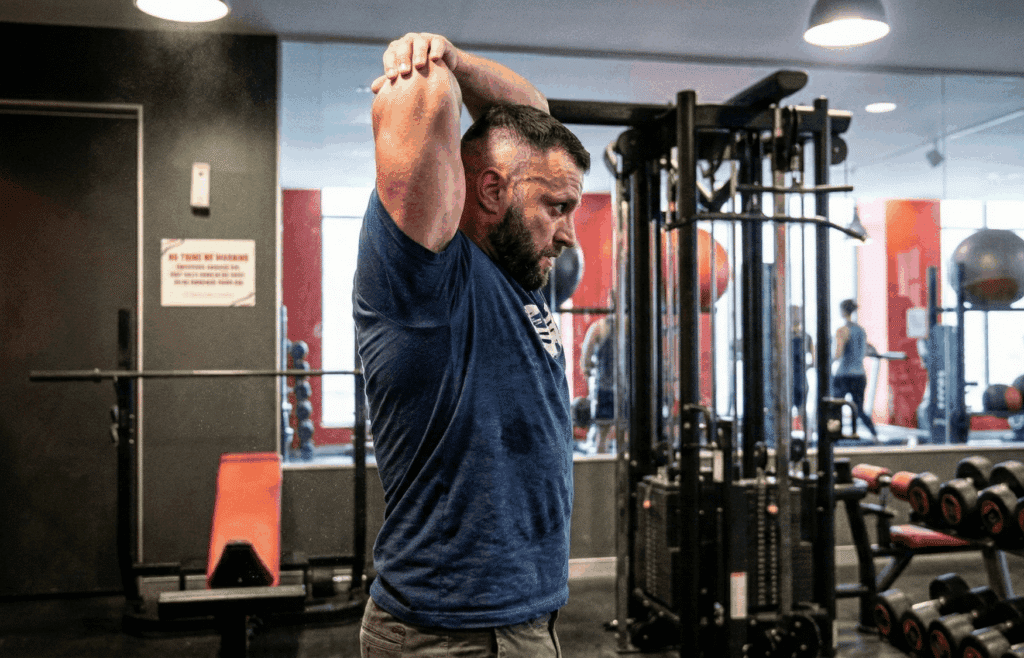
Experiencing sore arms after a workout is common, especially following intense exercise or new routines. To alleviate discomfort and aid recovery, consider these strategies:
- Light, Dynamic Stretching
- Heat or Cold Therapy
- Massage and Percussive Therapy
- Hydration and Electrolytes
- Natural Anti-Inflammatories and NSAIDs
- Refuel With Food and Protein
- Prioritize Sleep
Far an away the most common cause of muscle soreness? Lifting too much during your training session, doing too many sets, or overdoing heavy exercise. And for those, the following help dramatically.
1. Light, Dynamic Stretching
To help your body naturally manage inflammation, promoting blood flow through light activity is one of the most effective things you can do. A gentle stretch through the affected range of motion, paired with dynamic movement throughout the day, can temporarily relieve muscle stiffness and support healing. According to a study, light movement, foam rolling, and yoga-style activity can improve mobility and potentially speed up recovery after DOMS.
Active recovery outperforms complete rest for DOMS because movement circulates blood into damaged tissues, delivering nutrients and clearing metabolic waste. Even a short walk counts toward this goal.
If you're a powerlifter who wants to take up yoga, check out my recommendations for balancing powerlifting training and yoga practice in Should Powerlifters Do Yoga? (Yes, Here's 6 Poses).
2. Apply Heat or Cold Therapy
You can use heat or cold packs to reduce pain and support recovery. Use a heat pack to relax tight muscles or a cold pack to reduce inflammation in excessively sore areas. Cold water immersion and contrast therapy, which involves alternating between hot and cold exposure, have also gained decent research support for reducing DOMS severity and improving recovery speed, particularly after high-intensity training sessions.
3. Massage and Percussive Therapy
Massaging the sore muscles increases blood flow and reduces muscle tightness, offering real relief from discomfort. Percussive therapy devices like massage guns have become one of the most widely used recovery tools in strength sports, and for good reason. Using one on sore arm muscles for a few minutes can reduce sensitivity in the affected area and temporarily improve your range of motion while the tissues heal.
4. Hydration and Electrolytes
Staying well hydrated before and after your workout plays a meaningful role in attenuating inflammation. Water helps flush toxins and move important substances through the bloodstream and into the muscles. Pairing adequate water intake with electrolytes after hard training sessions further supports muscle function and reduces cramping alongside soreness.
5. Natural Anti-Inflammatories and NSAIDs
Drugs like ibuprofen can help if you're struggling to get through your day. They work by decreasing overall inflammation and relieving pain. There have been some findings suggesting that consistent NSAID use may have negative consequences on muscle building, though a single dose after a difficult workout is unlikely to cause concern.
For those who prefer a more natural approach, tart cherry juice and omega-3 fatty acids both carry solid research backing for reducing exercise-induced inflammation. PhD researchers at multiple institutions have documented tart cherry's ability to reduce DOMS severity and shorten recovery time, making it a worthwhile addition to your post-training routine.
6. Refuel With Food and Protein
Ensuring you eat enough food with quality nutrition will be important for your overall recovery. A good diet full of carbohydrates, fats, and adequate calories supports general recovery and protects against prolonged soreness. Protein is especially important because muscle repair depends on amino acid availability. Without sufficient protein intake, your body cannot rebuild the damaged tissues at an efficient rate.
This is also why being in a calorie deficit can make recovery noticeably harder over time.
7. Prioritize Sleep
Sleep is arguably the most underrated recovery tool in strength training. The majority of muscle repair and tissue regeneration happens during deep sleep, when your body releases growth hormone and directs resources toward rebuilding damaged structures. If you consistently sleep fewer than 7 hours per night, you are likely extending your DOMS recovery window regardless of what else you do in the gym or kitchen.
Ensure you're eating enough to support your training while making healthy food choices by following the guidelines in Do Powerlifters Eat Whatever They Want? (No, Here's Why).
How to Prevent Stiff, Sore Arms In Your Next Workout
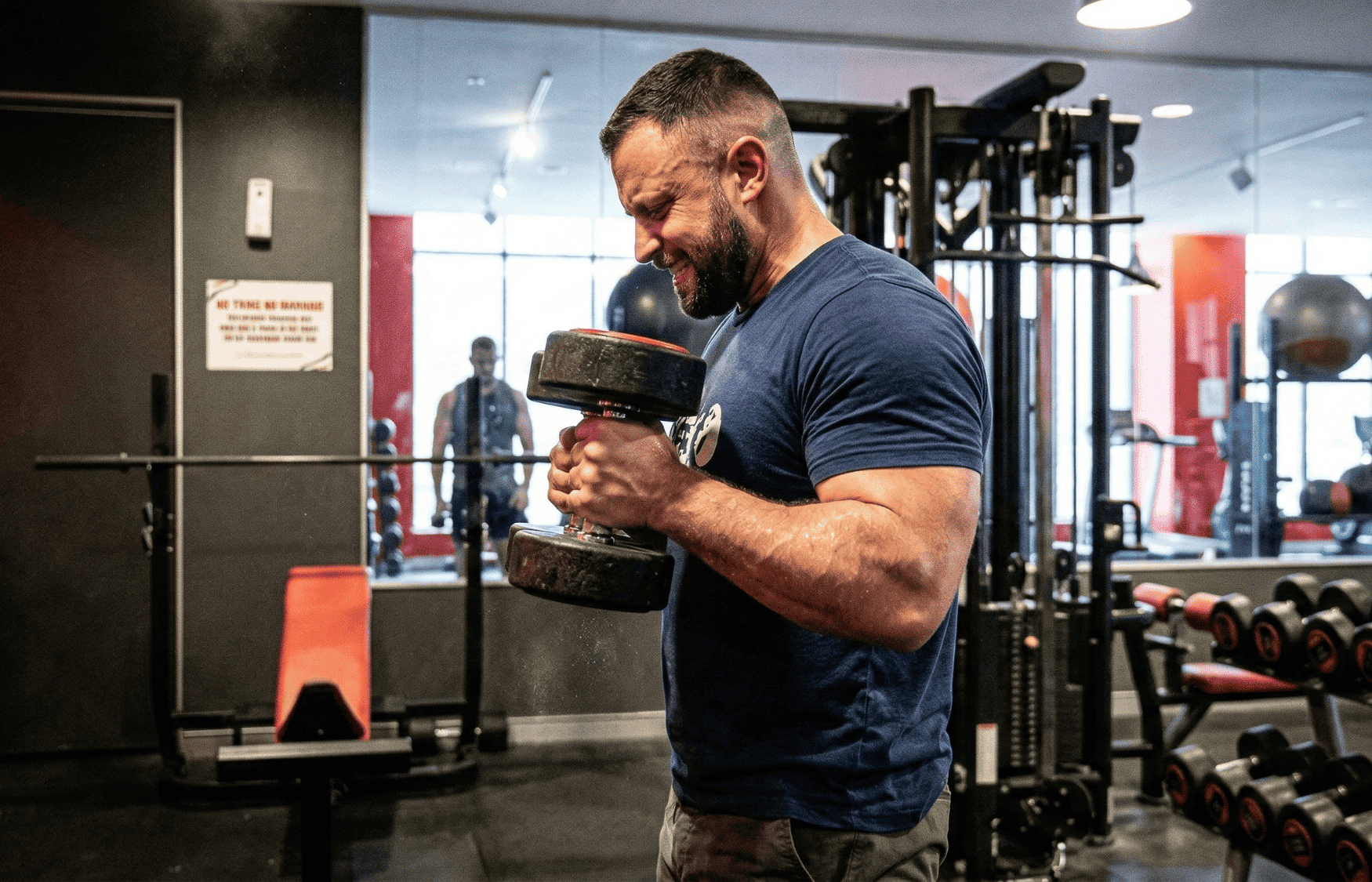
Once the cellular damage is done, recovery is the only path forward. But a few proactive strategies can help you avoid this degree of soreness in the future without simply reducing the intensity of the exercise.
- Prime your muscles for new movements
- Spread out your weekly training volume
1. Prime Your Muscles for New Movements
As a more proactive approach, I strongly recommend priming your muscles before introducing new exercises at full intensity, especially for beginners and those returning after a training hiatus. Spend a week or so moving your body through the intended range of motion using very light weight, without any goal of hitting high intensities. This approach wakes your muscles up in a gentler way so that when you go in the following week and add real load, the recovery systems are already in place and the muscles aren't caught off guard.
This matters especially for movements like pull-ups, where the eccentric phase places a substantial stretch and heavy load on the biceps and connective tissues at the same time. Jumping straight into a set of max-effort pull-ups after a long break is one of the fastest ways to end up unable to straighten your arms for days.
If you're returning to powerlifting after a long hiatus, check out these 7 rules for getting back into powerlifting after a break.
2. Spread Out Weekly Training Volume
For those experiencing soreness because they overdid the training volume for a muscle group, splitting that volume across multiple training days is a more sustainable long-term strategy. Try several bicep exercises across 2 to 3 days rather than doing a monster bicep workout in one session. This approach allows you to hit the same weekly training volume while keeping any single session well within your recovery threshold, which prevents the kind of extreme muscle soreness that limits your mobility for days afterward.
If you want to train the biceps daily, learn how to do it safely and effectively in Is It Okay To Do Bicep Curls Every Day? (Yes, Here's How).
When Stiff Arms After a Workout Become Serious
Typical DOMS feels like widespread tenderness that affects joint movement but doesn't prevent it entirely. It starts hours after a workout and fades within 2 to 3 days without any additional symptoms. There are, however, related medical conditions and warning signs that distinguish ordinary DOMS from something requiring medical attention.
Watch for these warning signs of rhabdomyolysis:
- Severe pain that doesn't improve after 7 to 10 days
- Significant joint swelling or visible deformity
- Muscle weakness that persists well beyond what soreness alone explains
- Sharp pain during or immediately after the workout, which may indicate a tendon injury
- Brown urine or significantly reduced urine output
- Fever, nausea, or signs of heat illness alongside muscle pain
Exertional Rhabdomyolysis: The Serious Version of Extreme Muscle Soreness
One related medical condition that deserves its own callout is exertional rhabdomyolysis. This condition occurs when intense or prolonged exercise causes the rapid breakdown of muscle tissue at a level that overwhelms the body's normal repair processes. The cellular damage releases a protein called myoglobin directly into the bloodstream, which the kidneys must then filter out. In large amounts, myoglobin can cause acute kidney injury if left untreated.
Exertional rhabdomyolysis is more common than most people realize, particularly among beginners who dramatically increase training intensity all at once, athletes returning after a long break, or anyone performing a different type of workout that introduces heavy eccentric loading under a heavy load for the first time. Heat illness is an additional risk factor, making outdoor training in extreme temperatures a situation that warrants extra caution.
The most important warning sign is brown urine. If your urine appears dark brown or cola-colored after a workout, stop training and seek emergency medical care immediately. Brown urine signals that your kidneys are processing myoglobin at a dangerous rate. Accompanying symptoms can include extreme muscle soreness, muscle weakness, and swelling that goes well beyond what normal DOMS produces.
If your pain hasn't resolved after a week and doesn't feel like standard soreness, a visit to your doctor is the right call to rule out bicep tendinitis, a tendon injury, or any other related medical condition that may require treatment.
Frequently Asked Questions
Why can't I straighten my arms after bicep curls?
This is caused by delayed onset muscle soreness (DOMS), which results from microscopic tears and cellular damage in the muscle fibers during eccentric actions like slowly lowering the weight during a bicep curl. Inflammation and fluid buildup around the elbow joint make full extension uncomfortable or temporarily impossible. The sensitivity and tenderness you feel come from irritated nerve endings in and around the muscle belly and surrounding tissues.
How long does it take to be able to straighten your arms again?
Most people recover within 3 to 5 days. DOMS typically peaks around 48 hours after the workout and gradually improves from there. Beginners or those returning after a long break may experience soreness for up to a week, but this should not persist beyond the first couple of weeks of returning to consistent training.
Should I be worried if I can't extend my arm after working out?
Usually no. Arm stiffness from DOMS is normal and resolves on its own. However, if the pain is sharp rather than dull, accompanied by significant joint swelling or muscle weakness, or your urine appears dark brown, seek medical attention immediately. Brown urine is a warning sign of exertional rhabdomyolysis, a serious condition that can lead to acute kidney injury if untreated.
Does not being able to straighten your arms mean you had a good workout?
Not necessarily. Extreme muscle soreness isn't a reliable indicator of an effective workout. It typically means you introduced a new stimulus your muscles weren't prepared for, not that you trained optimally. Consistent progressive overload with manageable soreness is a far better long-term indicator of training quality.
Can I speed up recovery so I can straighten my arms faster?
Yes. The most effective strategies are light dynamic movement and a gentle stretch to increase blood flow, percussive or massage therapy on the sore tissues, heat or cold therapy, staying well hydrated with electrolytes, eating enough protein to support tissue repair, and prioritizing sleep. Sleep is when most of the actual muscle repair occurs, so cutting it short will consistently extend your recovery window regardless of what else you do.
Is it okay to work out when my arms are too sore to straighten?
You don't need to skip the gym entirely. Avoid heavy upper-body exercises that load the already-inflamed tissues, and focus instead on lower body work or very light mobility work for the arms. Warming up dynamically can improve circulation and reduce soreness. Light, low-intensity movement can actually aid recovery by increasing blood flow into the area.
Could not being able to straighten my arm indicate a bicep tear or tendon injury?
If the soreness hasn't improved after 7 to 10 days, or if you felt a sudden pop or experienced sharp pain during the workout itself, a bicep tendon strain or tendon injury is possible. A complete bicep tendon rupture typically produces a visible bulge in the upper arm along with significant muscle weakness. See a doctor or orthopedic specialist for proper evaluation if these signs are present.
What is exertional rhabdomyolysis and should I be worried about it?
Exertional rhabdomyolysis is a serious condition where intense exercise causes rapid muscle breakdown that releases proteins into the bloodstream, straining the kidneys and potentially causing acute kidney injury. It is more common in beginners who dramatically increase training intensity, athletes returning after a long break, or anyone who performed a very high-volume or high-intensity session in extreme heat. The key warning sign is brown urine. If you notice this after a workout, stop training and seek emergency medical care immediately.