If you’re chasing bigger, more defined arms, chances are your routine already includes curls. But if you’ve been sticking to the same underhand dumbbell curls, you may be leaving serious gains on the table. Enter the Zottman curl. It's a classic yet often overlooked exercise that targets your biceps, forearms, and the deep arm muscles that most lifters neglect.
Here, I'll show you why the Zottman curl is a superior variation and how to perform it for maximum results. Let’s break down what makes this move so effective, the muscles it works, and how to integrate it into your training.
Why the Zottman Curl Stands Out
Most lifters perform bicep curls with an underhand grip. This works the long and short heads of the biceps brachii, but it leaves a crucial muscle undertrained. The brachialis. The brachialis sits underneath your bicep and, when developed, can actually push the bicep up to create a better peak.
A lot of the people who go to the gym, they're always doing dumbbell curls with an underhand position, but the problem with that is that when you underhand, you are training the long and the short head.
Note that if you're familiar with the muscles you feel when you do waiter curls, you already know what this will feel like. Zottman curls hit some of those same groups, including the brachialis.
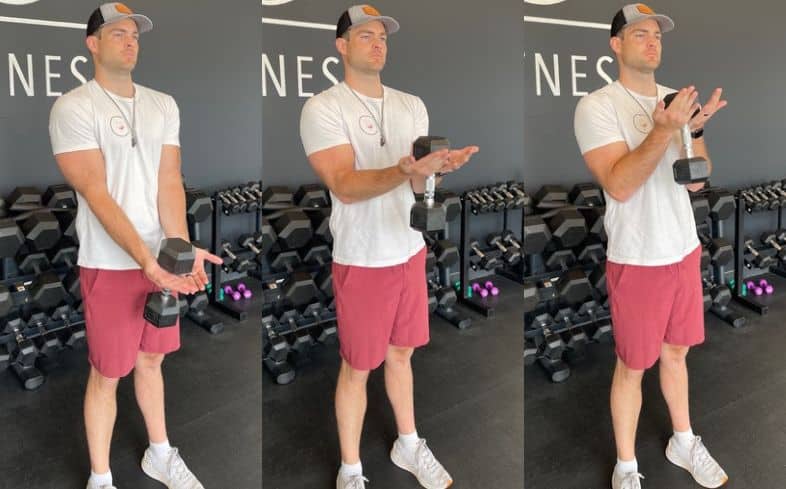
The Zottman curl changes your grip mid-rep, allowing you to work both your biceps and forearms in one movement. On the way up, you use a traditional underhand grip to target the biceps. On the way down, you rotate to an overhand position, engaging the brachialis and brachioradialis.
The brachioradialis, located at the top of your forearm, adds to overall arm thickness and grip strength. This unique combination means the Zottman curl builds size and is part of any workout that seeks complete arm development.
And for powerlifters, there's another benefit. Grip strength helps bench press.
Muscles Worked in the Zottman Curl
The Zottman curl is a hybrid move, blending the benefits of the standard curl and reverse curl. Here’s what it targets:
- Biceps brachii (long and short heads): Activated during the upward curl with an underhand grip.
- Brachialis: Trained on the downward phase when using an overhand grip, helping boost bicep height.
- Brachioradialis: Engaged strongly during the overhand lowering phase, improving forearm size and strength.
By recruiting multiple muscles in both the arm and forearm, the Zottman curl delivers a more balanced and complete look than standard curls alone.
How to Perform the Zottman Curl
First, check out this demo. It's from the full video on our YouTube channel. It shows the lift, raising for about three seconds from the starting position.
Then there's a pause at the top of the lift. That's where you rotate the weights. Then you take about three seconds descending.
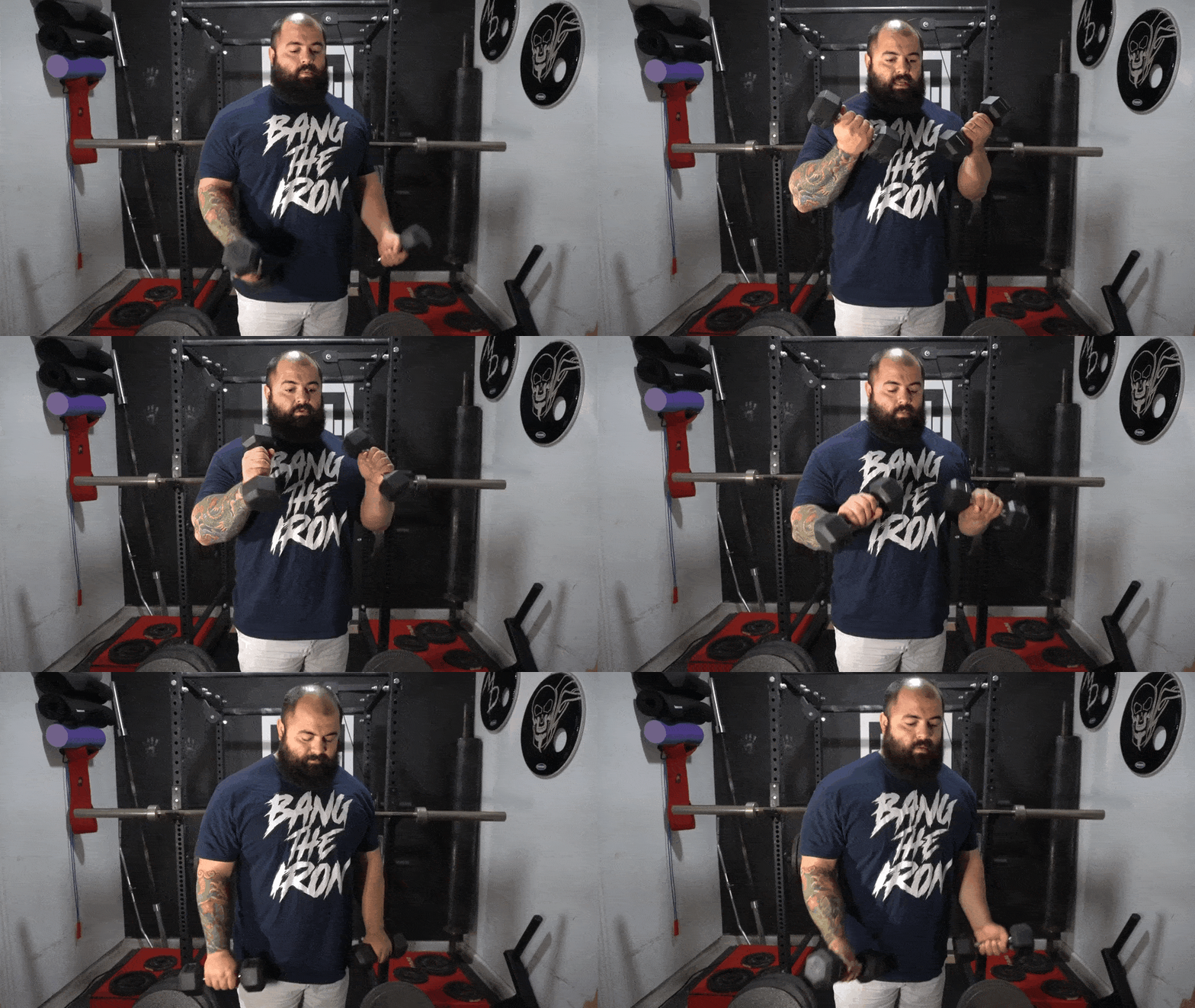
As a strength coach, I usually recommend starting with light to moderate weights. That will help you develop proper form and muscle activation.
Dumbbells in the 10 to 20-pound range are often enough for most people. Once you're confident in your form, and once this becomes easier, you can move up to a heavier weight.
Step-by-step execution:
- Starting position: Stand tall with a dumbbell in each hand, palms facing forward.
- Upward curl: Slowly curl the weights up in an underhand (supinated) grip, focusing on contracting the biceps.
- Rotation at the top: Once the dumbbells reach shoulder height, rotate your wrists so your palms face down (pronated grip).
- Controlled descent: Lower the weights slowly in this overhand position, engaging your forearms and brachialis.
- Reset: Rotate your wrists back to the starting underhand position and repeat.
Pro tip: Use a 3-second cadence for both the upward and downward phases. For example, curl up for a count of 1-2-3, pause briefly, rotate, then lower for another 1-2-3 count.
This slow tempo builds a strong mind-muscle connection and increases time under tension, which is key for muscle growth.
Sets, Reps, and Tempo
For hypertrophy (muscle growth), I'd suggest:
- Sets: 3–5
- Reps: 8–12
- Tempo: 3 seconds up, brief pause, 3 seconds down
Going lighter and slower allows you to feel every part of the movement while maintaining perfect form. This prevents cheating with momentum and ensures the targeted muscles are doing the work.
You can also try Zottman Curl variations to support ancillary muscles. Think minor wrist adjustments, shifting from a standing to a seated position, using an incline bench, or incorporating more height into the lift like a hammer curl.
And remember: Lighter weights are ideal if you're trying a new variation.
Why This Exercise is Unique
What separates the Zottman curl from other arm exercises is its dual-phase muscle engagement. Standard curls primarily target the biceps, while reverse curls focus more on the forearms and brachialis. The Zottman curl combines both into a single rep, making it one of the most efficient arm exercises you can do.
It’s also beginner-friendly since it doesn’t require heavy loads to be effective. Even advanced lifters can benefit by adding it as a finisher after heavier curls or compound pulling movements.
While I have a standalone back and bicep workout, this specific curl variation is worth consideration.
Integrating Zottman Curls Into Your Training
You can use the Zottman curl in a variety of ways:
- Arm day staple: Include it after your main bicep exercise for balanced development.
- Pull day accessory: Add it after pull-ups or rows to hit both biceps and forearms.
- Finisher: Use light weights for high-rep burnouts at the end of your workout.
Because it works multiple muscle groups, it’s also a great option for those short on time who still want a complete arm workout.
And if you want to use this the same way strongman George Zottman did when he developed it, you'll want to do it regularly. Zottman was called a “local Hercules” by a local newspaper of the time.
Final Thoughts
The Zottman curl may not be the flashiest move in the gym, but it’s one of the smartest additions you can make to your arm routine. By combining the strengths of traditional and reverse curls, it ensures you’re not neglecting critical muscles like the brachialis and brachioradialis.
If bigger, fuller arms are your goal, skip the ego lifting and focus on form, tempo, and controlled movement. Grab a pair of light dumbbells, give the Zottman curl a try, and watch your arms grow from all angles.