
If you have ever felt like your deadlift takes forever to leave the floor, you are not alone. Many lifters can lock out heavy weight once it gets moving, but struggle with that first inch. When the bar seems glued to the ground, it usually means your speed off the floor is the weak link. That is where the deficit deadlift comes in.
The deficit deadlift is a variation that makes the movement harder by starting you from a lower position. It forces better leg drive, stronger mechanics, and more explosive power from the very beginning of the lift. For anyone looking to improve their pull, especially in competition, this exercise can be the simple fix you need.
Table of Contents
What Is a Deficit Deadlift?
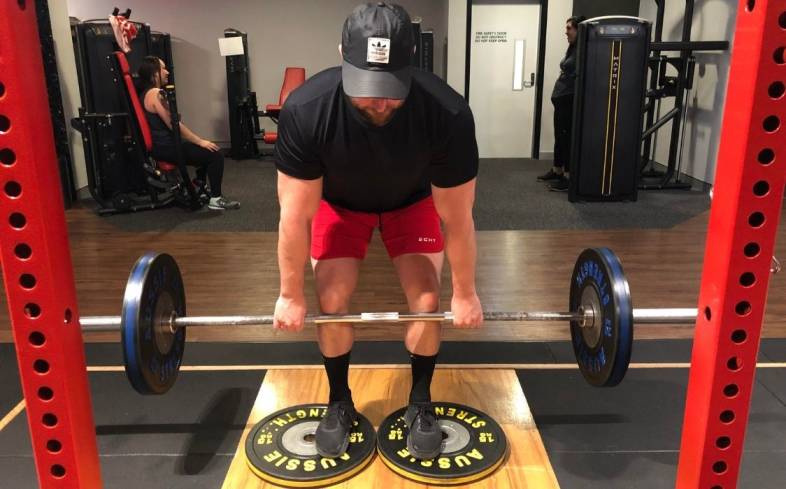
A deficit deadlift is performed just like a normal deadlift, but you stand on a small elevated surface such as a weight plate or low platform. This changes your starting position and increases the range of motion. The bar stays on the ground, but you have to reach lower to grab it.
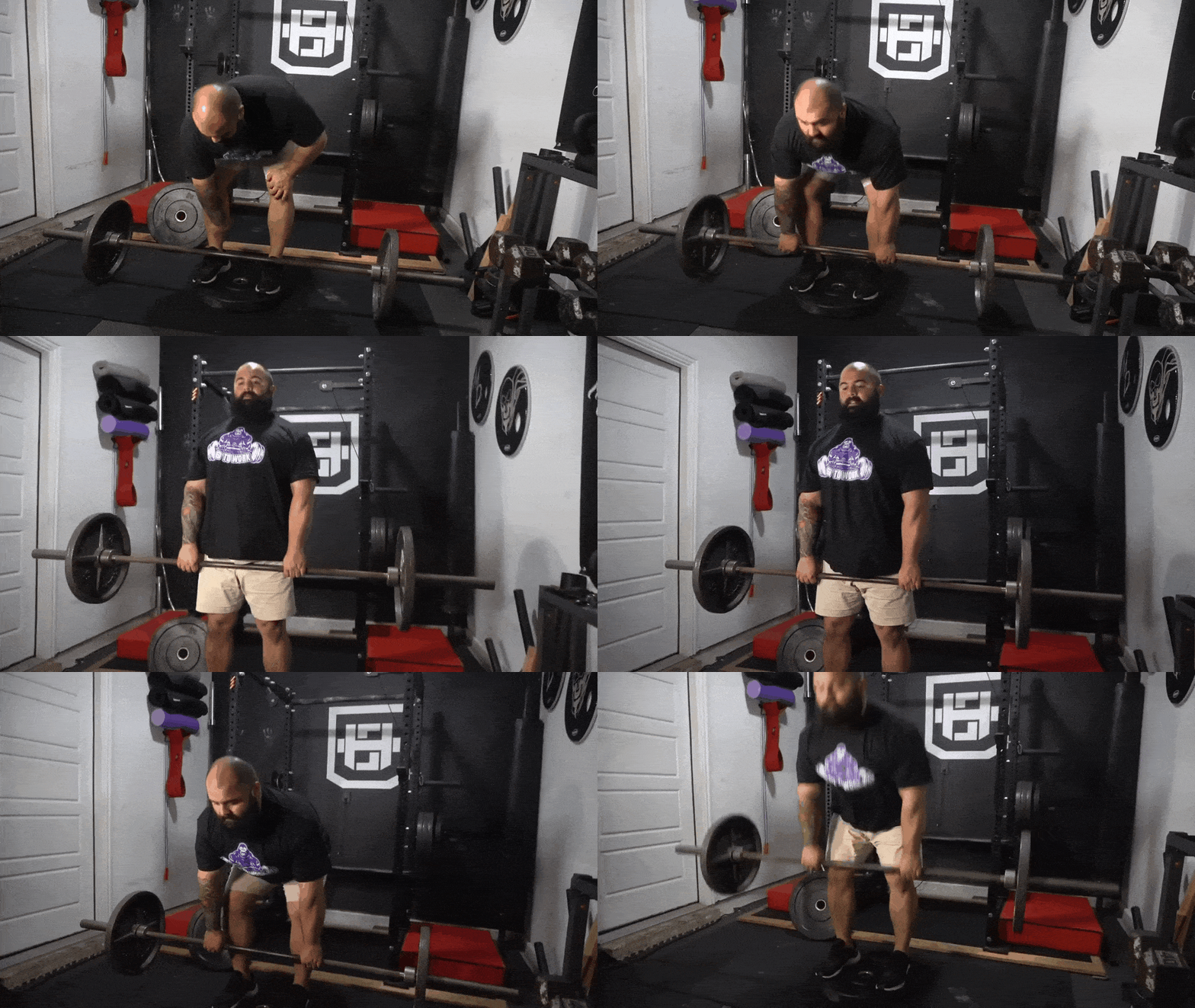
We've talked before about which kind of deadlift is hardest. This ranks at (or very near) the pinnacle of difficulty. If you want that barbell to feel heavier, this is one good option.
By pulling from a deficit, you put yourself in a deeper crouch. That forces your legs and hips to work harder and teaches you to generate more power from the very start of the lift. The movement itself is not complicated.
You use the same setup as a conventional deadlift, grip the bar with either double overhand or mixed grip, and pull to lockout. The difference is in how much harder the bottom of the lift becomes.
Why Deficit Deadlifts Help
Deficit deadlifts work the same muscles as a regular deadlift. You are still targeting the hamstrings, glutes, erectors, traps, and grip. The difference is that your muscles, specifically your posterior chain, stay under tension for longer and your legs have to drive harder because of the deeper position.
For lifters who struggle breaking the bar off the floor, this variation forces them to develop more speed at the start. It also reinforces good mechanics, since you cannot cheat the bar up with poor form. You have to set your back tight, use leg drive, and stay in position all the way through. You'll notice this throughout the posterior chain, even in your calves and lower back.
If you compete in powerlifting and find yourself grinding to get the bar moving, deficit deadlifts can train that weakness directly. By making the start harder in training, the standard pull feels smoother and faster when you return to it.
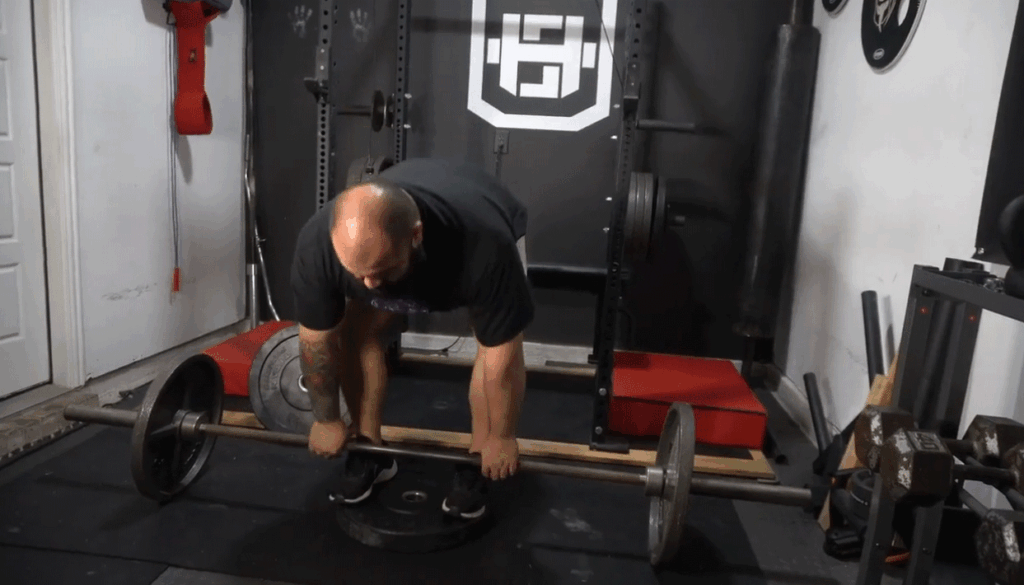
If you're looking for another variation, try the pause deadlift. It's main benefit: When programmed correctly, it improves bottom-end weaknesses and places higher demand on the quads. Like the deficit deadlift, it's an option for building absolute strength and power.
Also check out the Romanian deadlift. It builds stronger hamstrings and glutes while also improving hip hinge mechanics. Like pause and deficit deadlifts, it can increase hypertrophy in addition to boosting your 1RM.
How to Perform the Deficit Deadlift
From starting position to the top of the lift, here's how to do deficit deadlifts the right way.
- Setup: Stand on a low platform or bumper plate, usually one to three inches high. Too much elevation will compromise your form, so keep it modest.
- Grip: Grab the bar just like a normal deadlift. You can use overhand, mixed, or hook grip depending on your preference.
- Positioning: Because of the deficit, you will be crouched deeper. Focus on a flat back, neutral head placement, and tight lats.
- Execution: Drive through your legs, lift the bar to your hips, and lock out just like a regular pull. Lower with control and repeat.
The key is treating it like a regular deadlift. Do not change your mechanics or cut corners. The whole point is to mimic your competition lift, but from a harder starting position.
If you find yourself struggling with deficit deadlift, try reducing your weight. You may need to work on quad strength or even lower back strength to pull this off the right way. And as with all lifts, you'll benefit from focusing on proper technique before adding more weight.
Programming Deficit Deadlifts
Because deficit deadlifts are harder than normal pulls, you should not go heavy right away. Start with 50 to 60 percent of your max deadlift. For example, if your max is 600 pounds, begin around 300 pounds. Focus on clean reps and strong positioning.
Use rep ranges of 3 to 6, with multiple sets. If you normally train six sets of three on deadlift day, you can keep that same format here. The goal is quality work at submaximal weights that build speed and power from the floor.
Keep the deficit deadlift as a short-term training block. Four to six weeks is usually enough. If you run it for too long, your regular deadlift may feel awkward or weak off the floor because of the altered range of motion. Rotate back to your standard deadlift after that block to apply what you have built.
For an in-depth guide, check out our article on Deadlift day programming.
Benefits and Who Should Do Them
- Stronger leg drive: By starting lower, you are forced to push harder with your legs instead of relying only on your back.
- Better mechanics: The deficit punishes sloppy setup. It teaches you to stay tight and consistent in your form.
- Explosive start: Training from a harder bottom position makes breaking the bar from the floor in competition much easier.
- More time under tension: The longer range of motion means your muscles work harder throughout the lift.
Deficit deadlifts are not for everyone. If your weakness is locking out at the top, you may benefit more from rack pulls or block pulls. But if your struggle is breaking the bar off the ground, deficit deadlifts are exactly what you need.
Intermediate and advanced lifters will see the most benefit. Beginners should first focus on mastering regular deadlift technique before adding variations. Once you have the fundamentals, deficit work becomes a powerful tool to shore up weaknesses.
Deficit Deadlift Benefits by Experience Level
| Level | Benefits |
|---|---|
| Beginner | Not recommended until proper deadlift technique is mastered. Focus first on building strength and form with standard deadlifts. |
| Intermediate | Builds faster bar speed off the floor, strengthens leg drive, and improves overall pulling mechanics. Helps address common sticking points in competition. |
| Advanced | Sharpens explosive power in the initial pull, adds more time under tension for strength development, and provides a focused variation for breaking through plateaus. |
Final Thoughts
The deficit deadlift is a simple variation, but it can make a big difference. By forcing more leg drive, improving mechanics, and building speed off the floor, it addresses one of the most common sticking points in the deadlift.
If your pull feels slow at the start, give deficit deadlifts a place in your training. Use moderate weights, keep the reps clean, and run them in short cycles. You will return to your regular deadlift with more confidence, more speed, and a stronger overall lift.