

When you hear the name Arnold Schwarzenegger, you probably think of more than just movies or politics. For anyone who has touched a barbell, Arnold represents an era of training that blended raw strength with legendary aesthetics.
His physique defined bodybuilding for decades, and his approach to training still influences how many lifters structure their routines today. That's why I want to walk you through what we call the Arnold Split, how it came about, and why it remains a valuable tool for anyone trying to build muscle and strength in the modern gym.
Table of Contents
Understanding The Arnold Split
Before becoming a bodybuilding icon, Arnold Schwarzenegger started with a background in powerlifting. That might surprise some people who only know him as Mr. Olympia.

Just like Ronnie Coleman years later, Arnold believed that lifting heavy was essential. Powerlifting gave him a foundation of strength that carried over into his bodybuilding career, helping him move serious weight while shaping one of the most admired physiques in history.
This combination of strength and hypertrophy training is at the heart of the Arnold Split. This style of workout is about building size with heavy compounds, then refining with accessory movements that target specific muscle groups.
The Core Idea
At its simplest, the Arnold workout split calls for training four to six days per week, hitting every muscle group twice within that span. The emphasis is on high volume training and frequency. Instead of waiting an entire week before hitting chest or back again, you are giving your muscles another growth stimulus after just a few days.
Think about it like this. If you only train chest once a week, that is 52 opportunities in a year to stimulate growth. With the Arnold Split, you double that number to more than 100.
Over time, that extra exposure can add up in terms of size and strength, provided you allow for recovery and nutrition to support it. Be that barbell curls, calf raises, or bent-over rows, the fundamental concept is the same.
Keeping It Simple
Arnold never overcomplicated his workouts. He stuck with basic compound lifts: bench press, incline bench press, squats, deadlifts, and barbell rows. These are time-tested movements that recruit multiple muscle groups, let you load progressively, and provide a clear path to overload.
After hitting a big compound, he would move into accessories designed to exhaust the muscle group further. For chest, that might mean following a barbell bench with an incline dumbbell press, chest fly (or chest fly alternatives), and triceps pushdowns. The compounds built the foundation, and the accessories provided the polish.

This approach avoids the trap many lifters fall into today: constantly chasing novelty. Arnold did not swap exercises every week. He built consistency around the big lifts, giving himself time to adapt and progress before moving on. That patience allowed him to overload movements properly and achieve real growth.
Building Muscle Mass with the Arnold Split
The biggest benefit of the Arnold Split is the emphasis on muscle mass. By targeting each muscle group twice per week, you create more growth opportunities and accumulate higher weekly training volume. Volume is one of the primary drivers of hypertrophy, and Arnold’s system put it front and center.
The split also combines mechanical tension from heavy compound lifts with metabolic stress from high-rep accessory work. This dual approach creates an environment where muscle fibers are forced to adapt in size.
Over months of consistent training, that means fuller, denser muscles and a physique that reflects both strength and size. This is something we talk about when discussing time under tension vs. volume.
Intensity and Effort
Arnold trained with intensity. His working sets were heavy, often pushing close to failure. After those top sets, he would drive further with accessory work designed to exhaust a muscle completely. This high level of intensity requires both physical effort and mental focus.
If you follow the Arnold Split today, you need to respect that intensity. You need to match each set with effort, keeping rest periods disciplined, and pushing yourself while maintaining safe form. Without intensity, the program loses much of its value.
Is the Arnold Split Good for Beginners?
This is a question that comes up often, and the answer depends on the lifter’s goals. For a true beginner who has never trained before, the Arnold Split may be too much volume and frequency. Training four to six days per week, with each muscle hit twice, can overwhelm someone who has not built a base of strength or developed solid technique.
Beginners are better served by full-body routines three times a week or simple upper and lower splits. These programs give them the chance to learn the movements, build foundational strength, and adapt to training without burning out.
| Lifter Experience Level | Benefits of Arnold Splits |
|---|---|
| Beginner | Learn consistency and develop training habits, |
| Intermediate | Build muscle mass with higher volume, balance strength and hypertrophy |
| Expert | Refine physique with classic compounds and accessories, maintain size and strength with structured periodization |
That said, once a lifter has six months to a year of consistent training under their belt, the Arnold Split can be a great progression. At that point, they will benefit from the higher frequency and volume, and they will have the recovery habits to handle the workload. For intermediate lifters looking to build serious muscle mass, the Arnold Split is an excellent option.
Rep Ranges and Progression
Arnold’s philosophy balanced strength and hypertrophy. For the main compound lifts, he often worked in the range of eight reps down to as few as three. Sometimes he even went as heavy as singles, though for pure size training most lifters will benefit from keeping it between three and eight reps.
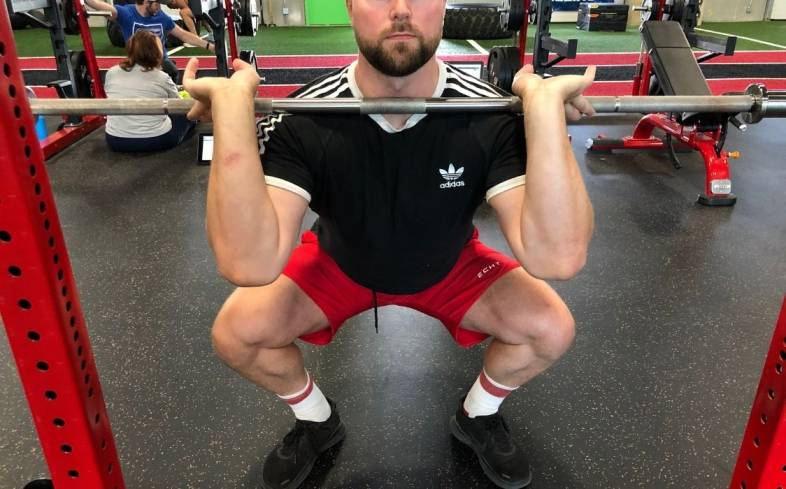
Accessories were a different story. Here, Arnold would push higher rep ranges: 10, 12, 15, sometimes even 20. This combination provided both heavy mechanical tension and the metabolic stress that contributes to muscle growth.
Many lifters today still use this system of blending lower-rep strength work with higher-rep accessory work. It is a model that stands the test of time because it hits multiple pathways to growth.
Even though Arnold’s era did not use all the modern sports science terminology, he still understood progression. The Arnold Split often followed a linear periodization model. That meant gradually adding weight over several weeks, pushing up to a top working set, then cycling back down to build again.
This progression kept him from stagnating and ensured that his body continually adapted. The concept remains relevant. Target the upper body or the lower body. Just maintain consistency.
Why It Still Works Today
You might be wondering if the Arnold Split can stand up against all the modern training programs, apps, and influencer-designed templates we see today.
The answer is yes, absolutely. Its strength lies in its simplicity and its emphasis on frequency.
Hitting each muscle group twice a week works. Balancing heavy compounds with targeted accessories works. Sticking to a consistent plan long enough to overload movements works. Brown University discusses this. And the principles do not change, no matter how flashy or scientific training culture becomes.
That said, the Arnold Split is not for everyone. If your main goal is to improve a specific lift like your squat or bench press, you may need a more specialized program focused on movement mastery. But if your goal is size, overall strength, and a classic physique, the Arnold Split offers a proven structure.
How to Apply It
Here is a simple way to think about using the Arnold Split:
- Train four to six days per week.
- Hit each muscle group twice within that period.
- Choose one or two big compounds per workout routines as your foundation.
- Add accessories that complement those muscles and take them close to failure.
- Use lower reps on the compounds, higher reps on the accessories.
- Progress weight gradually over several weeks, then reset and build again.
This template can be adjusted to your level of experience, equipment, and recovery. The key is sticking to it long enough to let the adaptation happen.
Final Thoughts
Arnold Schwarzenegger’s impact on strength sports goes far beyond his trophies. He left behind a training philosophy that still makes sense today. The Arnold Split is about frequency, simplicity, and progression. If you are looking to build muscle and strength while avoiding the distraction of overly complicated programming, this approach can still serve you well.
It is easy to get caught up in modern trends and forget that sometimes the old-school way still delivers. The Arnold Split is proof that a program built on consistency and hard work remains timeless.