

I get asked about stretching every week. Should you hold a stretch before you lift, or should you move through it. Basically, static vs. dynamic stretching. Which should I do? The answer depends on your goal and your timing. If you want to lift heavy, move fast, or feel strong in your session today, start with dynamic stretching.
If you want to loosen tight tissue, increase range of motion, and help your body calm down after a hard day, use static stretching once you are done. That simple switch in timing protects your power at the start and supports recovery at the end.
Here is how I define each type of stretch. Static means motionless. You hold a position at end range, you breathe, and you let the muscle lengthen. That helps range of motion, but it also reduces elastic potential for a little while. In other words, you can give up some snap if you hold long stretches before you train.
Dynamic stretching is movement based. You move through range, build warmth, and keep your muscles springy, without long holds. That preserves power the the lifts we care most about. So if you only remember one rule, remember this. Start with dynamic. Finish with static. Now let me walk you through a simple plan you can use today.
Table of Contents
Warm up with three dynamic drills
You know we've already covered, in depth, how to warm up for powerlifting. This is more general than that. You can use this before a meet or just as an everyday workout warm up. The key is waking up the hips, core, and upper back, build a little heat, and teach the positions you will use under load. We are chasing control and rhythm so your first work sets feel smooth and reduces the risk of injury (even when we're hitting PRs).
The three drills below cover the big movers, teach balance and bracing, and take only a few minutes. Move with intent, breathe steady, and keep the quality high.
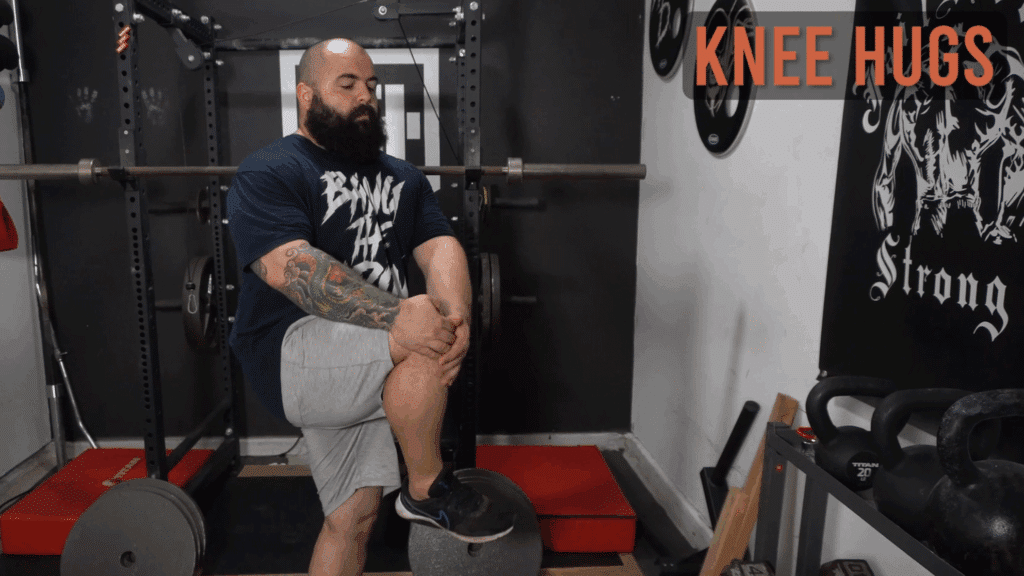
Knee hugs
This is my first pick because it wakes up so many muscle groups at once. Stand tall. Bring one knee to your chest and hug it for a beat, then switch legs. You will feel glutes and hamstrings on the lifting leg. You will also feel upper back and lats as you wrap your arms around the knee and pull tall.
Aim for ten total reps, five per side. Think quality over speed. Keep your ribs down, keep your posture tall, and keep your balance set through the foot that is on the floor. If your balance is shaky, hold a rack with one hand while you hug toward your torso with the other. The goal is to get the hips moving and the upper back working without fatigue.
Inchworms
From standing, reach toward your toes. If your hamstrings are tight, bend at the hips and knees to get your hands to the floor. Walk your hands forward into a pushup position. Brace your core, pause, then walk your feet forward in small steps, or walk your hands back to stand tall. This hits your hamstrings, core, shoulders, chest, and even your wrists.
Do 4 to 6 controlled reps. Keep your breathing steady. If you cannot touch the floor at the start, squat down, plant your hands, and then walk forward. The goal is to build temperature, control the spine, and connect the plank position to your standing posture.
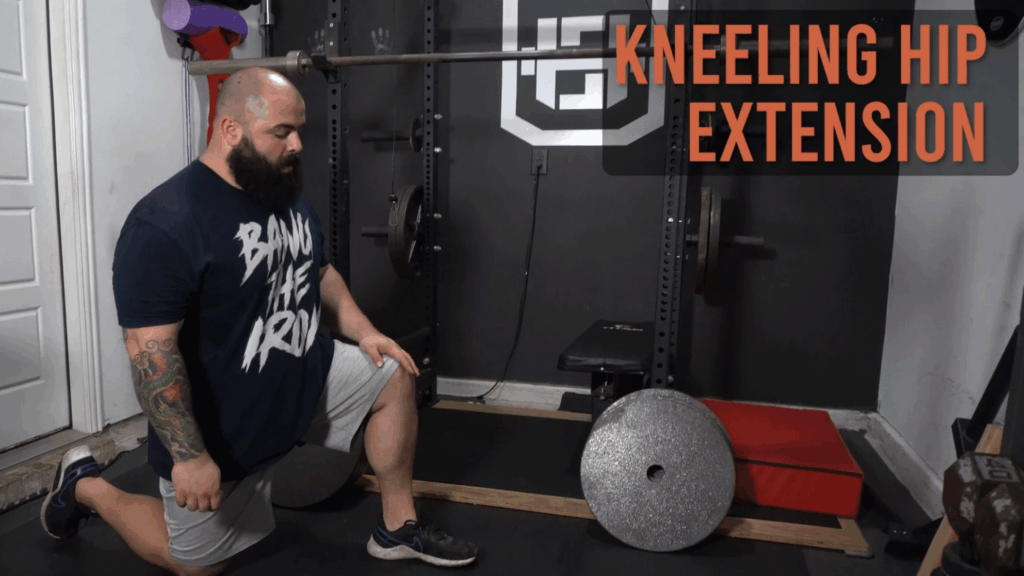
Kneeling hip extensions
Get into a half kneeling stance with both knees at about 90 degrees. Front foot flat, back knee down. Squeeze the glute of the back leg and gently drive your hips forward for one second, then back off for one second. Repeat 5 or 6 pulses on that side, then switch legs. You are teaching the hip to extend while the pelvis stays controlled. Think of it like a walking lunge.
Keep your ribs stacked over your hips, and keep your front foot anchored. This drill prepares you for squats, deadlifts, and lunges by opening the front of the hip without long holds that would relax the tissue too much before you lift.
These three drills take only a few minutes. They bring blood flow to the big movers, turn on the core, and groove positions you need for a strong session. You should feel warmer, more coordinated, and ready to load a bar. If you feel tired, you are doing too much.
Why dynamic first
Dynamic drills keep the muscle tendon unit elastic. That elasticity is your friend for power and speed. Long static holds before a heavy set can reduce force production for a short window, which is not what we want at the start of training. Instead, think of this like active stretching.
Dynamic stretching lets you rehearse patterns you will use under load. Knee hugs look a lot like a controlled hip flexion and tall posture for squats. Inchworms bridge the gap from hinge to plank. Hip extensions teach you to finish a rep with the glutes. You are building a specific runway into your first working sets.
Cool down with three static stretches
Once you finish your main work, take a few minutes to downshift. Heart rate comes down. Breathing slows. Now is the time to loosen what got tight. This is passive stretching. You're cooling down.
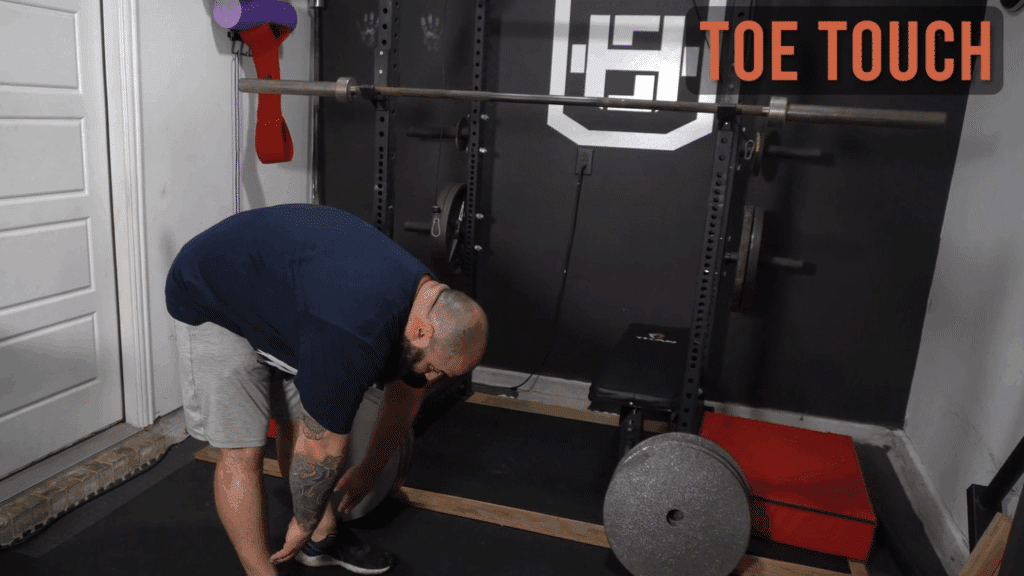
Toe touch hold
Stand tall and hinge forward until you feel a firm pull through your hamstrings. Hold for 20 to 30 seconds. Breathe into your back. If you choose, add a small amount of spinal flexion to give attention to the lower back, but do it with intent and no pain. The goal is a gentle release in the posterior chain. Come up slowly, reset, and repeat for 2 or 3 rounds.
Calf stretch on an edge
Place the balls of your feet on a low step or bumper plate with heels hanging off. Keep your knees straight and let the heels drop until you feel the stretch through the calves. Hold 20 to 30 seconds, then relax.
Better ankle mobility pays off in the squat, because a good dorsiflexion angle lets your feet stay planted and your hips track cleanly to depth. If you cramp, lower the intensity and shorten the hold. Two to three rounds is plenty.
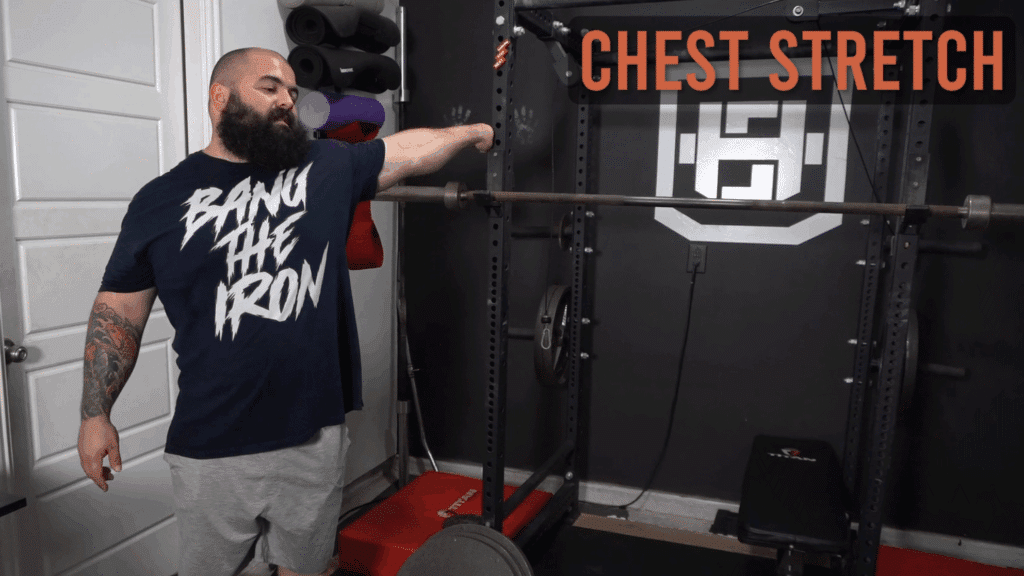
Rack chest and biceps stretch
Super helpful after for loosening up your bench press muscles after workouts. Here's how to do my favorite chest stretch:
Stand beside a rack upright. Place your palm or a light fist on the upright at shoulder height. Gently rotate your chest away from the rack until you feel the stretch through the pec. Hold for 20 to 30 seconds and breathe.
If you have biceps tightness, turn the fist, extend the elbow, and explore small changes in hand height until the line of pull travels down the front of the arm. Switch sides. This helps counter all the pressing and gripping that can tug the shoulders forward over time.
Why static after
Static stretching tells tissue to settle. That can be great for range of motion and recovery once the work is done. You are not guarding your power anymore, so you can spend a few patient minutes lengthening the areas you just taxed. Over weeks, these short post-workout examples of passive stretching will add up to better positions and fewer hot spots.
Putting it together in a simple plan
Before you lift
- Knee hugs, 10 total reps
- Inchworms, 4 to 6 reps
- Kneeling hip extensions, 5 to 6 pulses each side
Take two to five minutes, then move into your ramp up sets.
After you lift
- Toe touch hold, 20 to 30 seconds, 2 to 3 rounds
- Calf stretch on an edge, 20 to 30 seconds, 2 to 3 rounds
- Rack chest and biceps stretch, 20 to 30 seconds each side, 2 rounds
Coaching notes and common questions
What if you lift very early and feel stiff? Use a short general warm up first. Walk a minute, pedal a bike, or do a few bodyweight squats. Then run the dynamic trio. Your first barbell sets should still be part of your warm up. Add load gradually.
And if you need it, here's how to fix when your heels raising during squats.
What if something pinches during a stretch? Back off the range and slow your breathing. Stretches should create tension without sharp pain. If a position is consistently painful, swap it for a neighboring option, or consult a qualified professional.
How hard should I push the stretches? On the dynamic work, move crisp and controlled. On the static holds, find a 6 out of 10 stretch and stay patient. Consistency is the goal.
Do you need more than this? Many lifters do well with three dynamic drills and three static holds done with focus. If you have a clear mobility gap that limits your lift, add one targeted drill for that joint. Otherwise, keep it simple and repeatable. The best routine is the one you will actually do.
Conclusion
Use dynamic stretching to warm up, keep your elastic qualities, and groove the patterns that your lift will demand. Use static stretching after your session to lengthen tissue, restore range, and calm your system. When you place each tool in the right part of your day, you feel better in the warm up, you perform better under the bar, and you recover better once the plates are racked.
Questions or concerns. Drop them here or on our YouTube channel, and I will help you get moving the right way.