

When using cables, you can easily change the angle and weights, and keep constant tension on a muscle. This makes them an incredible tool for back training.
Before you pick exercises, think in three buckets: horizontal pulls for mid-back thickness, vertical pulls for lat width, and scapular control work for posture, rear delts, and shoulder health. A well-rounded cable back day usually includes 2 horizontal pulls, 2 vertical pulls, and 1 smaller accessory.
Quick start: Choose one row exercise, one pulldown, then add one single-arm variation, then finish with face pulls or shrugs. If you want the exact templates, jump to sample cable back workouts.
Best picks by goal
- More width (lats): wide-grip lat pulldown, single-arm lat pulldown, straight-arm cable pulldown
- More thickness (mid-back): wide-grip seated cable row, chest-supported cable row, single-arm cable row
- Posture and shoulder health: cable face pull, chest-supported cable row, prone cable row
How to program cable back training
- Hypertrophy focus: 3 to 5 exercises, 2 to 4 sets each, 8 to 15 repetitions for most movements, 1 to 3 reps in reserve on most sets.
- Strength emphasis: make the first row or pulldown heavier for 4 to 8 reps, then do 2 to 3 accessory movements for 8 to 15 repetitions.
- Rest times: 90 to 150 seconds for heavy rows and pulldowns, 60 to 90 seconds for accessories like face pulls, pullovers, and shrugs.
- Progression: when you hit the top of a rep range on all sets with clean form, increase load next week. If load jumps are large, add reps first, then load.
Here are 10 best cable back exercises. Each includes setup cues and form steps to help prevent injury and maximize gains, plus coaching tips I use with clients.
- Wide-Grip Seated Cable Row
- Single-Arm Cable Row
- Wide-Grip Lat Pulldown
- Single-Arm Lat Pulldown
- Chest-Supported Cable Row
- Straight-Arm Cable Pulldown
- Lying Cable Pullover
- Cable Shrugs
- Cable Face Pull
- Prone Cable Row
Table of Contents
1. Wide-Grip Seated Cable Row
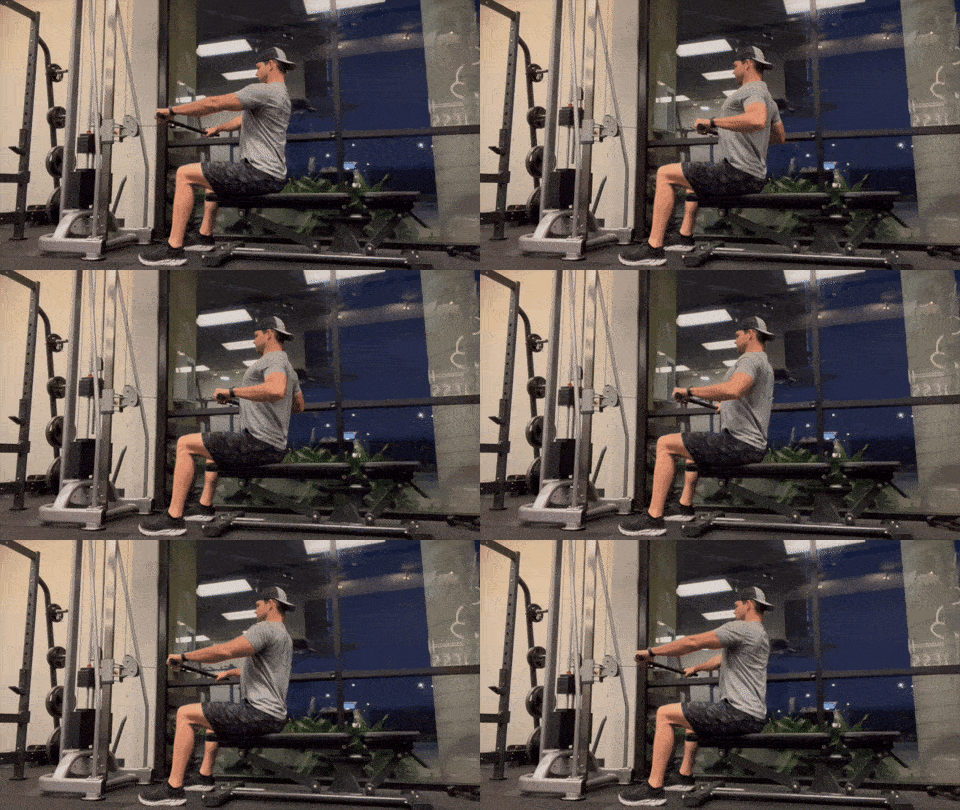
Wide-grip rows are a staple in so many programs, and that should not change just because you are using cables. The wide-grip cable row targets more of the lats than other cable row variations, making it an excellent option for anyone looking to add size or strength to the lats.
How to do it
- Set a wide straight bar attachment to the bottom of a cable stack and sit in front of the stack, holding the bar with a pronated (palms facing down) grip about 1.5x shoulder width. Place your feet against the cable pulley stack to support yourself.
- Lean back so that your torso is 90 degrees to the floor, and allow your arms to remain fully extended in front of you.
- Row the bar towards your lower ribs by driving your elbows back. Aim to keep a 30 to 45-degree angle between your upper arm and torso.
- Once the bar reaches your torso, control the load back to the starting position. Keep your torso position consistent throughout the set.
Pro tip: Keep your shoulders down and back. If you shrug as you row, you will shift work away from the lats.
Not sure which cable attachment you should be using for cable rows? Check out What Attachment To Use For Cable Rows? (5 Options).
Common mistakes
- Letting the shoulders roll forward at the stretch, instead of keeping the shoulder blades controlled.
- Rowing too high toward the chest, which often turns the rep into more upper trap and rear delt.
- Leaning back and forth for momentum instead of staying fixed and letting the back do the work.
2. Single-Arm Cable Row
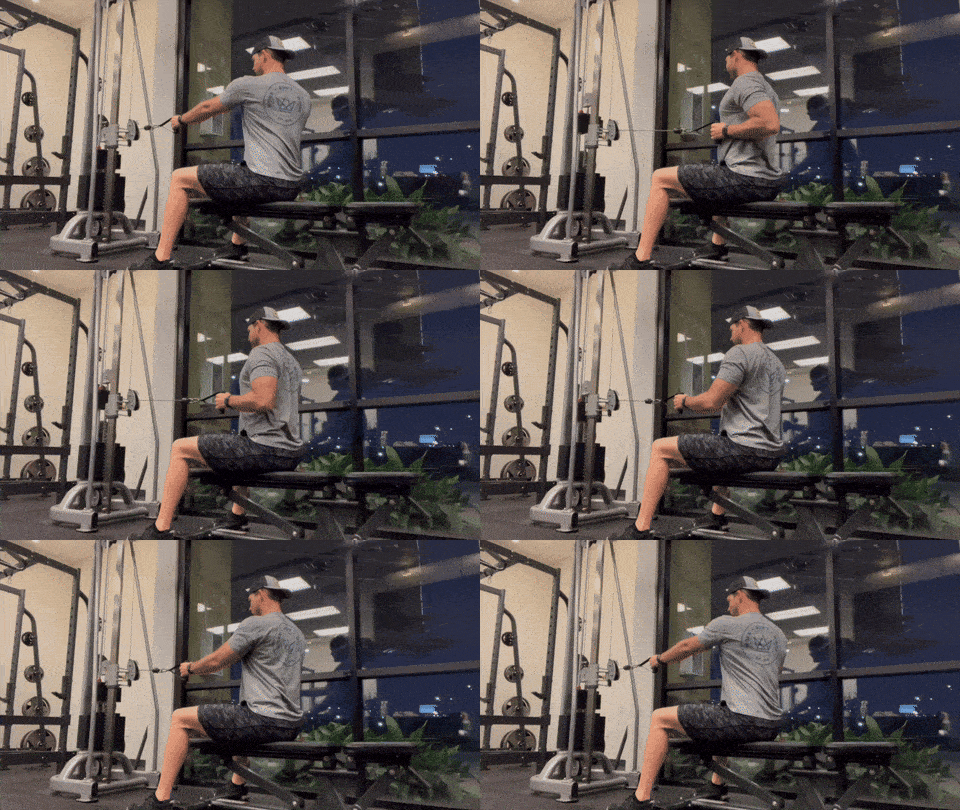
Single-arm cable rows are one of the best cable exercises. The unilateral aspect is hugely beneficial for training each side independently because it helps ensure you’re training each side evenly without your dominant side overcompensating for the weaker one.
The single-arm cable row works the lats, rhomboids, traps, rear delts, and biceps to a small degree.
How to do it
- Set a single-arm attachment to the bottom of a cable stack (a D-handle works well) and sit in front of the stack, holding the handle with a neutral grip. Place your feet against the cable stack to support yourself.
- Lean back so that your torso is 90 degrees to the floor, and allow your arm to remain fully extended.
- Row your elbow back and down while keeping it close to the side of your torso.
- Once your upper arm aligns with your torso, control the load back to the starting position. Keep your torso position consistent throughout the set.
Pro tip: Do your non-dominant side first, then match reps and load on the dominant side.
Read on for more rear delt workouts to work the back of your shoulders.
3. Wide-Grip Lat Pulldown

Vertical pulling is a fundamental part of effective back training, and wide-grip pulldowns are one of my favorites. Like other wide-grip row variations, the wide-grip cable pulldown engages the lats more effectively than close grip pulldowns.
It also works the rhomboids and, to a lesser extent, the biceps.
How to do it
- Set a wide, straight bar attachment to the top of a cable stack. Grip the bar about 1.5x shoulder width with a pronated (palms facing down) grip.
- Sit on the floor, place your feet against the cable stack to support yourself, and lean forward slightly.
- Pull the bar towards your chin as vertically as possible, tracking your elbows down in line with your torso.
- Once the bar reaches your chin, control the load back to the starting position. Keep your torso position consistent throughout the set.
Pro tip: Pull the bar to the front of your body and avoid pulling lower than your chest if that causes shoulder discomfort. Behind-the-neck lat pulldowns have been shown to be less effective than pulling in front, and they can stress the shoulder joint.
Looking for an alternative option to lat pulldowns? Check out my favorite lat pulldown alternatives you can do with dumbbells, cables, and resistance bands.
Common mistakes
- Turning it into an arm exercise by curling the bar down, instead of driving elbows down and in line with your torso.
- Leaning back too far, which changes the line of pull and usually reduces lat tension.
- Stopping short at the top and skipping the lat stretch and controlled return.
4. Single-Arm Lat Pulldown
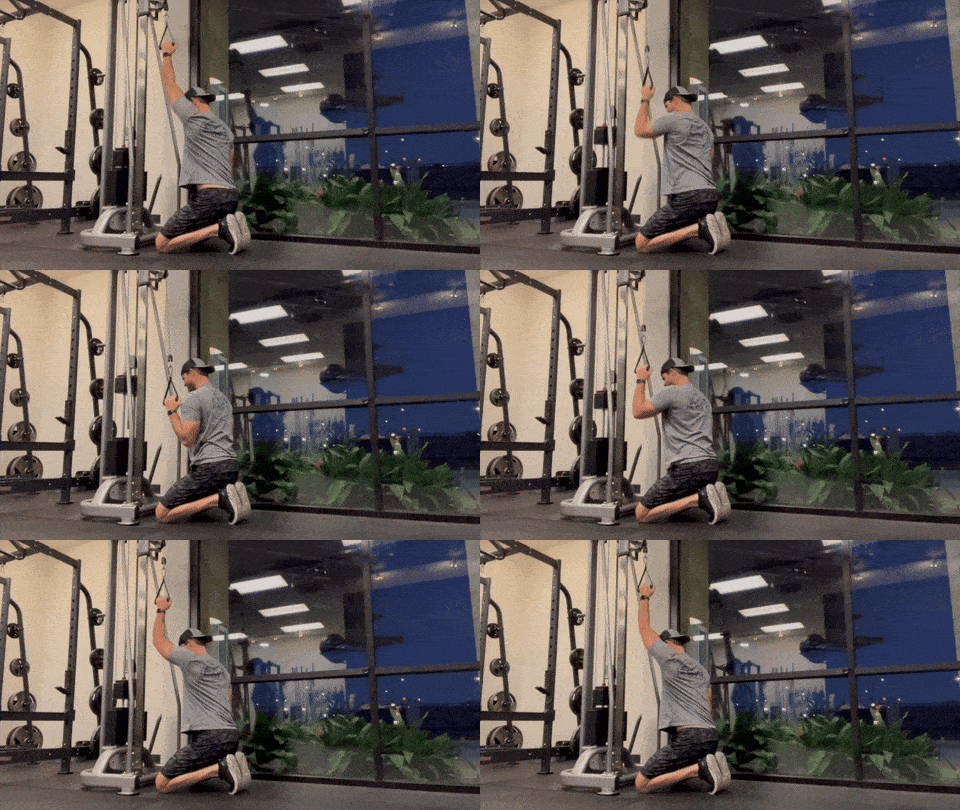
Another staple exercise in my programs is the single-arm pulldown. Many lifters stay more consistent and vertical in their range of motion compared to bilateral movements because they are not working around a fixed bar.
The single-arm cable pulldown works the lats, trapezius muscles, rhomboids, rear delts, and biceps.
How to do it
- Set a D-handle attachment to the top of a cable stack. Hold this with a neutral or supinated (palm facing upwards) grip, use whichever allows you to feel your lats more during each rep.
- Sit down on the floor and place your feet against the cable stack to support yourself. Lean forward slightly.
- Pull your elbow down in line with your torso until your elbow reaches your side.
- Control the load back to the starting position, fully extending your arm and allowing a stretch of your lats. Keep your torso position consistent throughout the set.
Pro tip: Unilateral work can still be time-efficient because one side rests while the other works. You can often complete 3 to 4 sets per side in about the same time as bilateral pulldowns when you keep transitions tight.
Still not quite feeling your lats in your vertical pulls? How To Activate Your Lats More During Pull-Ups (5 Tips) can help.
5. Chest-Supported Cable Row
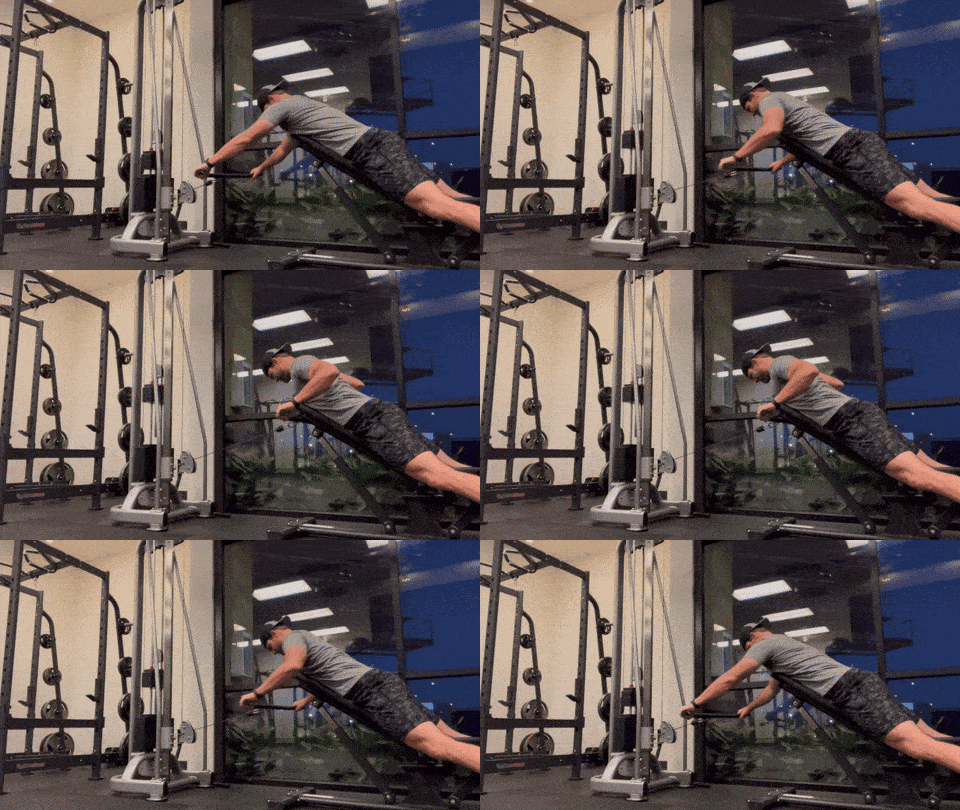
Chest-supported rows are a great option for after deadlifts where you may not want to load your lower back further.
They are also useful for those with tendencies to cheat their rowing movements by using a lot of upper body momentum, as the chest support makes these harder to cheat.
The chest-supported cable row works the lats, traps, rhomboids, and biceps.
How to do it
- Set a straight bar to the bottom of the cable stack and place an adjustable bench 2 to 3 feet away from the stack. Set the bench to a 45-degree incline.
- Grip the bar with a pronated grip (palms facing down) around 1 to 1.5x shoulder-width apart, walk around the bench, and sit on it facing it.
- Starting with your arms fully extended, row the bar towards your sternum, keeping your upper arm at a 30 to 45-degree angle to your torso.
- Row until you contact the underside of the bench and control the load back to the start position.
Pro tip: Add an isometric hold at the underside of the bench. A simple option is a 12-rep set with a 12-second hold at the end.
Back feeling a little tight? Here are some exercises that can potentially help strengthen your low back: 9 Best Exercises for Lower Back Workouts
6. Straight-Arm Cable Pulldown
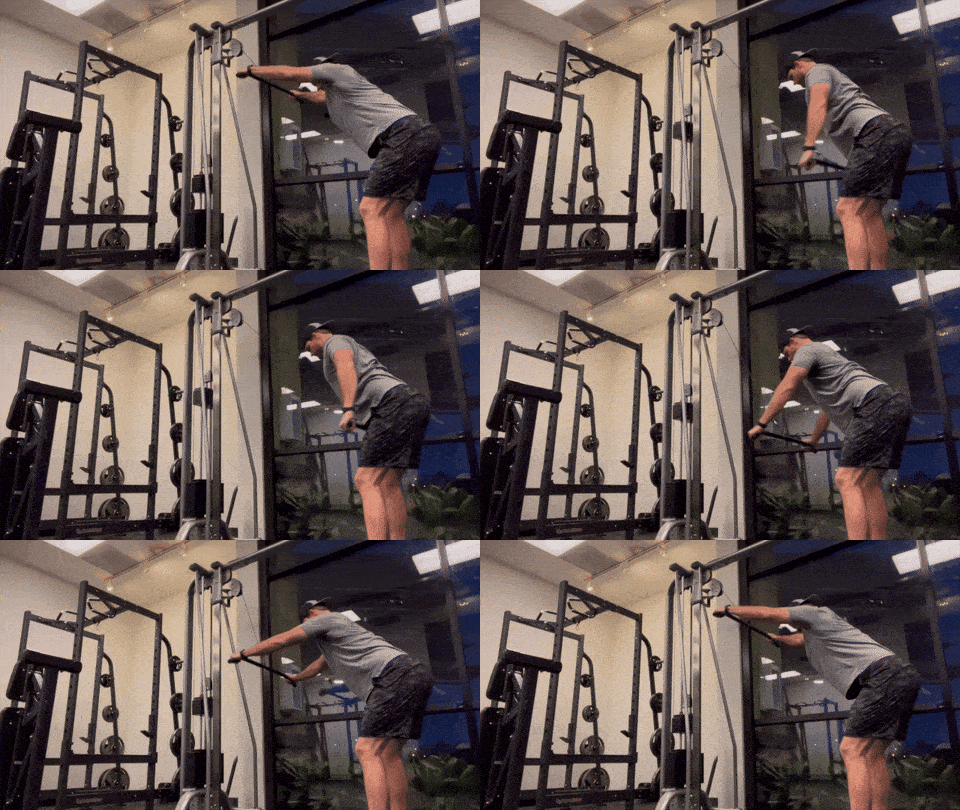
This is one of my favorite exercises for training the lats, and it is a useful tool for lifters who have trouble engaging their lats in other exercises like pull-ups. Note the overhand grip and the lean.
How to do it
- Set a rope attachment or straight bar attachment to the top of a cable stack and take a pronated grip.
- Step back 2 to 3 steps and lean to a 45-degree torso angle, extending your arms overhead.
- Keeping your arms straight, pull the rope or bar down towards your hips. Think about driving your wrists to your pockets.
- Once you reach your hips, control the load until your arms are extended overhead again.
Pro tip: You can do this with two rope attachments (one in each hand) to increase range of motion.
Common mistakes
- Bending the elbows and turning it into a triceps-heavy movement.
- Letting the shoulders shrug up, which often reduces lat tension.
- Stopping short at the top and skipping the stretch and controlled return.
Like this exercise? Here are 14 exercises that will also help with pull-ups: 14 Best Pull Up Alternatives
7. Lying Cable Pullover
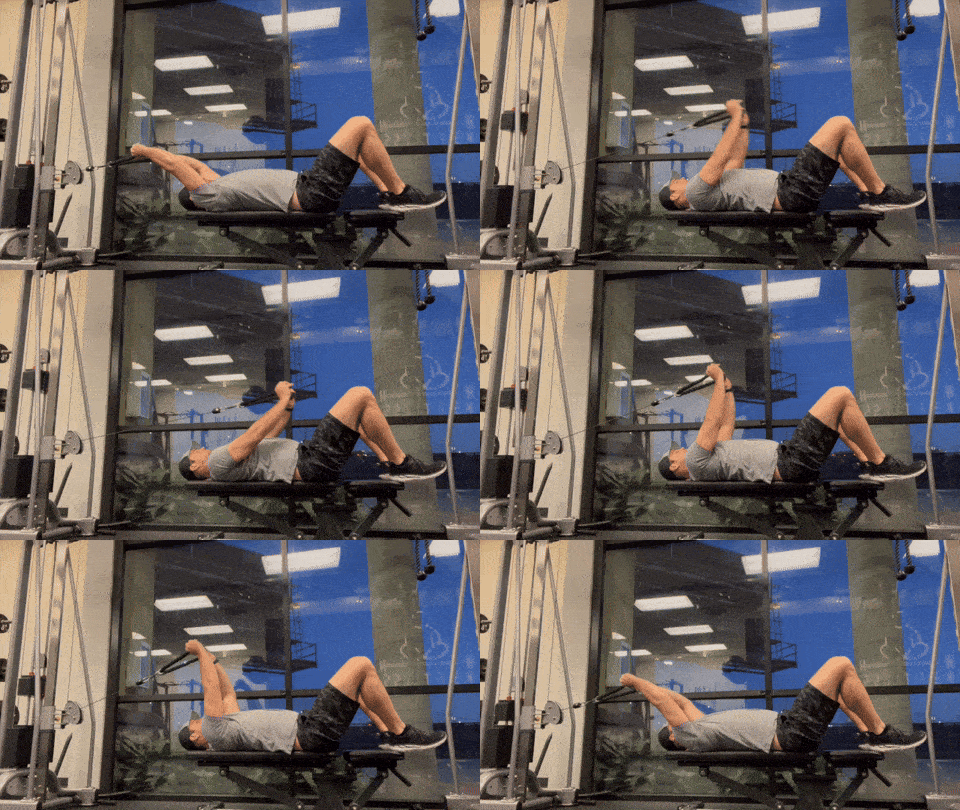
Like the straight-arm pulldown, the cable pullover is another great option for isolating the lats. It is often more effective than a dumbbell pullover because it keeps the lats under constant tension.
How to do it
- Set a rope at the bottom of a cable stack, with a flat bench 2 to 3 feet away from the stack.
- Lie with your back on the bench with your head closest to the cable machine and grip the rope with a neutral grip. It may be easier to have someone pass you the rope.
- Start with your arms overhead so your biceps are close to your ears or as far back as your shoulder mobility allows. While still feeling tension in your lats, pull the rope towards your eye line while keeping your arms straight.
- Pull until you reach your eye line and potentially until your arms are over your chest. Stop pulling if you feel the load shift from your lats to other muscle groups.
- Lower the load back overhead while keeping control of the movement.
Pro tip: Keep your arms straight (not locked) so the movement stays lat-focused instead of becoming a triceps exercise.
If you have limited shoulder mobility, check out Front Squat Mobility: 17 Must-Do Exercises. Many drills in that guide can help improve shoulder mobility.
8. Cable Shrugs

Shrugs are useful for strengthening the upper traps, which are often overlooked. Shrugs with cables keep the muscles under constant tension, which can be helpful for muscle building.
How to do it
- Set a straight bar attachment at the bottom of a cable stack, and take a grip outside shoulder-width apart.
- Stand straight up, holding the bar in front of you against your legs.
- Shrug the bar upwards by elevating your shoulders up and back. Keep your arms fully extended throughout the movement.
- Hold a pause at the top of the movement and control the load back down.
Pro tip: Cable shrugs build upper traps well, but they do not target mid traps as effectively. Keep shoulder blades controlled and avoid rolling the shoulders forward.
9. Cable Face Pull
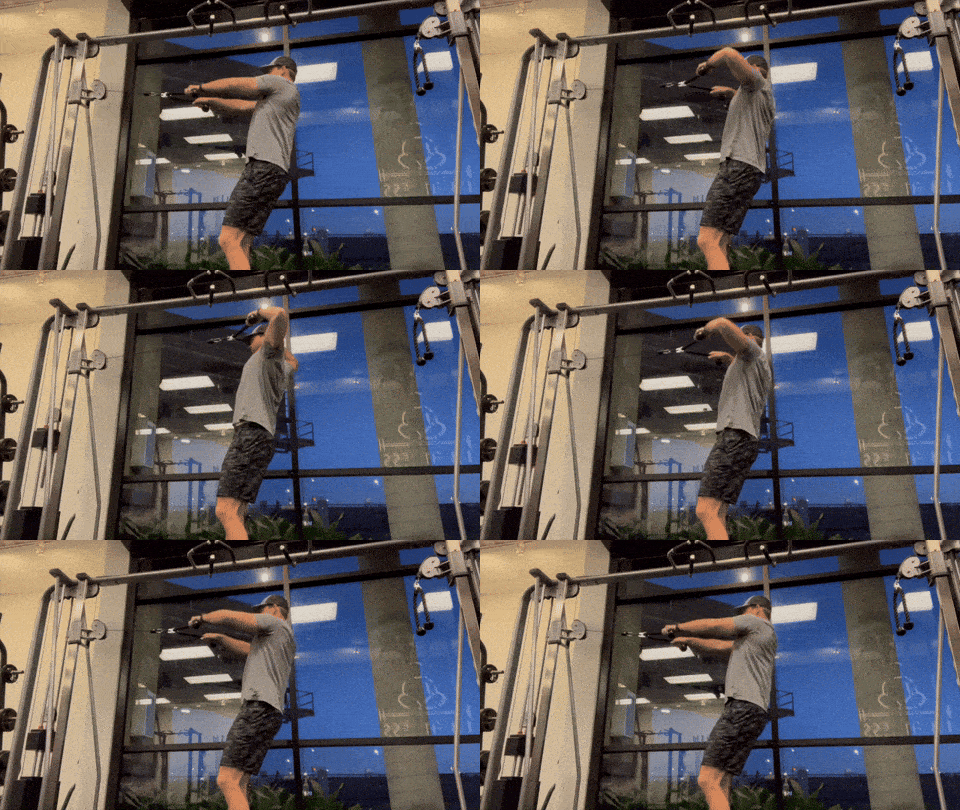
Cable face pulls are one of my favorites for training the upper back and rear delts. They are an excellent movement for overall shoulder health because they help increase muscular stability in the upper body. They can also help improve posture.
How to do it
- Set a rope at the top of a cable stack and take a pronated grip (palms facing downwards). Take a couple of steps back from the cable machine and extend your arms fully in front of your face.
- Pull the rope towards your eye line by driving your elbows out at a nearly 90-degree angle. This keeps the loading in the target muscles (rear delts and traps) rather than turning it into a row.
- Hold a brief pause at end range, then control the load until your arms are fully extended.
Pro tip: If you tend to use momentum, try a half-kneeling setup to reduce rocking and keep the rep strict.
10. Prone Cable Row
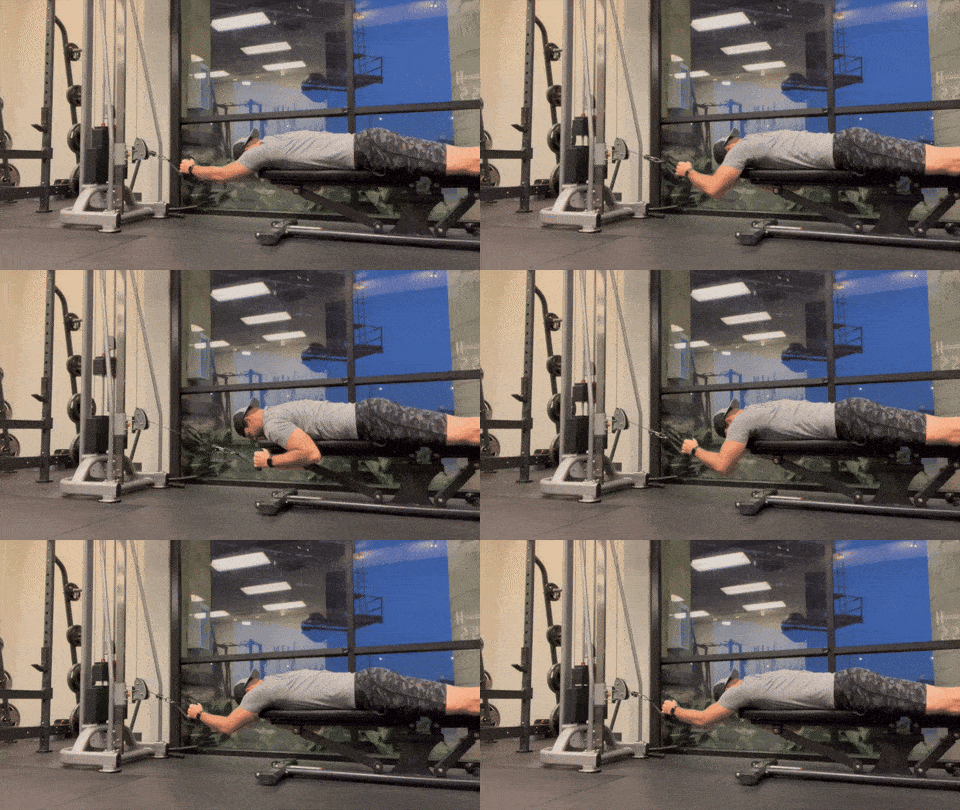
Prone cable rows are similar to a chest-supported row, but you can do them without a bench. The prone position makes it harder to cheat with momentum, which helps you target the upper back more effectively.
How to do it
- Set a D-handle at the bottom of a cable stack and get on your hands and knees in front of it.
- Grip the D-handle with one hand while supporting yourself with the other. Make sure the hand on the floor is directly below your shoulder.
- Pull the load towards you by driving your elbow down and back towards your hip until your elbow reaches your torso.
- Control the load back to the start position, allowing a full lat stretch.
Pro tip: If it is hard to overload, add tempo. Use a 3-second pull, 1-second pause, then a 3-second controlled return.
Best Cable Back Workouts For Muscle Mass
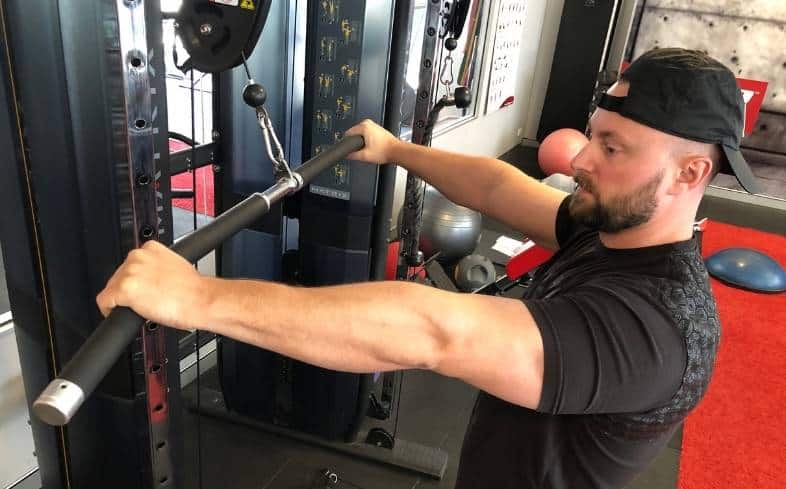
These routines show how you can set up exercises from this list to train your back with cables effectively. Prioritize progressions in load, reps, or sets over time, and include a balance of vertical and horizontal pulls.
Cable Back Workout #1 (strength-leaning hypertrophy)
- Wide-Grip Cable Row: 4 sets of 6 to 8 reps. Leave 1 to 2 reps in reserve each set and increase load when you hit 8 reps on each set.
- Cable Shrugs: 3 sets of 10 to 12 reps. Hold a pause at the top of each rep.
- Single-Arm Cable Pulldown: 2 sets of 8 to 10 reps. Leave 2 to 3 reps in reserve on each set and progress load when you can own 10 reps.
- Cable Pullover: 2 sets of 12 to 15 reps. Aim to progress reps first, then load.
- Cable Face Pull: 3 sets of 10 to 12 reps + 1 drop set. After the third set, do a drop set to technical failure with about 70% of the load.
Cable Back Workout #2 (hypertrophy volume)
- Wide-Grip Cable Pulldown: 1 set of 10 reps + 3 repeat sets. Do a set of 10 with 1 to 2 reps in reserve, then do three more sets with the same load, leaving 1 to 2 reps in reserve each set regardless of rep count. Aim to progress load weekly for 4 to 6 weeks.
- Chest-Supported Cable Row: 3 sets of 8 to 10 reps. Stay 1 to 2 reps from failure. Progress load when you hit 10 reps across all 3 sets.
- Single-Arm Cable Row: 2 sets of 10 to 12 reps. Stay 2 to 3 reps from failure and prioritize symmetry.
- Prone Cable Row: 3 sets of 12 to 15 reps. Push each set to 0 to 1 rep from failure.
- Straight-Arm Cable Pulldown: 1 set of 20 reps + 2 drop sets to technical failure. Use about 75% and 50% of the initial load.
Beginner cable back workout (simple and repeatable)
- Chest-Supported Cable Row: 3 sets of 10 to 12 reps (stop 2 reps before form breaks)
- Wide-Grip Lat Pulldown: 3 sets of 10 to 12 reps
- Straight-Arm Cable Pulldown: 2 sets of 12 to 15 reps
- Cable Face Pull: 2 to 3 sets of 12 to 15 reps
Short on time cable back workout (25 minutes)
- Wide-Grip Seated Cable Row: 3 sets of 8 to 10 reps
- Single-Arm Lat Pulldown: 2 sets of 10 reps per side
- Cable Face Pull: 2 sets of 12 to 15 reps
Muscles Worked During Cable Back Workouts
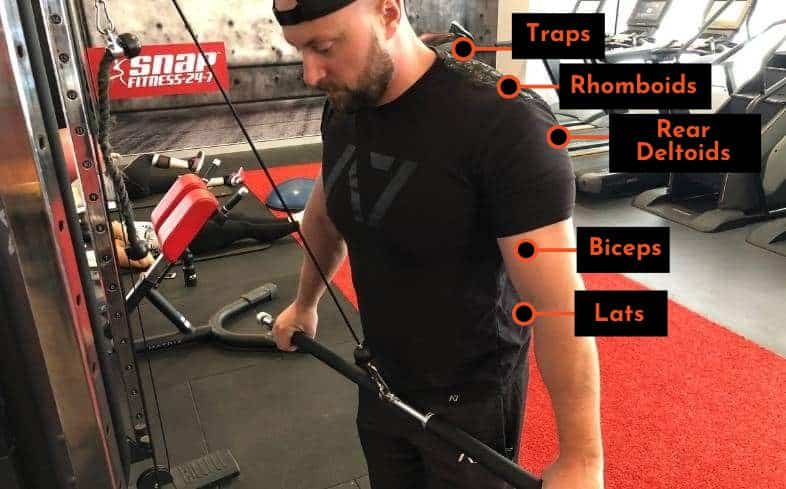
The goal of back workouts with cables should be to target the entirety of your back, including muscles that drive the pull and muscles that control the shoulder blades and torso position.
- Latissimus dorsi (lats): primary shoulder adductors and extensors, key for width and pulling strength.
- Teres major: assists lat-driven pulling, often feels like the upper lat area near the armpit.
- Trapezius (upper, mid, lower) and rhomboids: scapular control, posture, and upper-back thickness.
- Rear deltoids: shoulder extension and external rotation support, especially with face pulls and rows.
- Erector spinae: stabilizes the spine and helps maintain torso position during many pulling variations.
- Biceps and forearms: assist elbow flexion and grip, often the limiting factor if grip fatigues early.
Wondering how much training you actually need for your back? Check out Are Rows And Pull Ups Enough For Back And Biceps?
Frequently Asked Questions
What are the best cable back workouts for building thickness versus width?
For thickness, prioritize 2 row variations (wide-grip row, chest-supported row, single-arm row) plus a smaller upper-back accessory. For width, prioritize 2 pulldown patterns (wide-grip pulldown, single-arm pulldown) plus straight-arm pulldowns, then add one row to keep balance.
Which cable back exercises hit the lats the most?
Single-arm lat pulldowns, wide-grip lat pulldowns, and straight-arm cable pulldowns tend to be the most lat-dominant when you keep your shoulders down and drive elbows toward your hips.
Which cable back exercises best target the mid-back (rhomboids and mid traps)?
Wide-grip seated cable rows, chest-supported cable rows, and prone cable rows are strong options because they encourage scapular retraction and limit momentum.
What are the best cable exercises for lower back support and spinal stability?
Chest-supported rows reduce low-back loading, while strict seated rows and half-kneeling face pulls challenge trunk stiffness without heavy spinal shear. If your low back is sensitive, bias chest-supported work and avoid torso rocking.
Can you build a strong back using only cables, no free weights?
Yes. You can cover vertical pulls, horizontal pulls, and scapular control with cables. The keys are progressive overload, controlled reps through full range, and enough weekly volume.
What is a complete cable back workout for beginners?
Use 3 to 4 moves: chest-supported cable row (3×10 to 12), wide-grip lat pulldown (3×10 to 12), straight-arm cable pulldown (2×12 to 15), and face pulls (2 to 3×12 to 15). Repeat weekly and add reps before load.
What is an advanced cable back workout for strength and hypertrophy?
Start with a heavier row or pulldown for 4 to 8 reps, then add 3 to 4 accessories in the 8 to 15 range, including at least one unilateral movement and one scapular-focused movement like face pulls. Use 0 to 2 reps in reserve on the final sets.
How do I structure a cable back workout (exercise order, sets, reps)?
Do your biggest compound pattern first (row or pulldown), then the second big pattern, then single-arm work, then isolation or posture work. Most people do best with 12 to 20 total working sets for back per week across sessions.
How many cable back exercises should I do in one session?
Most sessions work well with 4 to 6 exercises. If you go past 6, quality usually drops unless you reduce sets per movement.
How often should I train back with cables each week?
Two sessions per week is a practical baseline for growth. If you recover well, a third lighter, technique-focused session can work.
What cable attachments are best for back training (rope, straight bar, V-handle, D-handles)?
D-handles are excellent for single-arm rows and pulldowns. A straight bar works well for wide-grip rows and pulldowns. A rope is great for face pulls and straight-arm pulldowns because it allows more freedom at end range.
How do I do a cable row correctly without using momentum?
Brace your torso, keep your ribcage stacked, and pull with a controlled tempo. If you have to rock, the load is too heavy or the setup is too far from the stack.
How do I feel cable pulldowns in my lats instead of my arms?
Start by depressing the shoulder blades, then drive elbows down toward your hips. Use a grip that feels strong and stable, and keep wrists neutral. Reduce load until you can control the stretch at the top.
What’s the difference between a wide-grip and close-grip cable pulldown for back development?
Wide-grip often biases upper lats and upper back, while close-grip tends to allow longer range and more elbow flexion, which can increase biceps contribution. Use both over time and choose what you can feel best in the lats with clean reps.
Are single-arm cable rows better than bilateral rows for fixing imbalances?
They are usually better for imbalances because each side has to produce force independently. Start with your weaker side and match the work on the stronger side.
What are the best unilateral cable back exercises to correct left-right strength differences?
Single-arm cable rows and single-arm lat pulldowns are the most direct. Keep torso position identical on both sides and avoid twisting to fake range.
What cable back workouts are best if I have shoulder pain or limited shoulder mobility?
Bias chest-supported rows, neutral-grip single-arm pulldowns, and face pulls with a range that feels smooth. Avoid behind-the-neck pulldown patterns and avoid forcing end-range overhead positions.
What cable back exercises are safest if I have lower back pain?
Chest-supported cable rows, seated rows with strict posture, and face pulls tend to be the most back-friendly. Reduce loads that make you rock, and keep bracing consistent.
What cable back exercises help improve posture and reduce rounded shoulders?
Face pulls, prone cable rows, and chest-supported rows help build upper-back strength and scapular control. Pair them with strict form and full controlled returns.
How do I train rear delts with cables without turning it into a shoulder workout?
Use face pulls and keep elbows high and out, then pause briefly at the end range. Choose a load that lets you control the last part of the rep instead of heaving the rope.
What are the best cable back exercises for improving pull-ups?
Single-arm pulldowns and straight-arm pulldowns help teach lat engagement, while rows build the mid-back strength that supports stable pulling. Keep reps controlled and focus on the stretch and contraction.
What are common mistakes in cable back workouts that limit growth?
The big ones are using momentum, cutting range short, letting shoulders shrug up, and picking loads that turn every set into sloppy reps. Clean reps that you can progress beat heavier, messier reps long term.
What tempo should I use on cable back exercises for better muscle activation?
A practical default is 1 to 2 seconds on the pull and 2 to 3 seconds on the return, plus a brief squeeze. If a movement is hard to overload, add tempo or pauses.
Should I use straps for cable back workouts to reduce grip limitation?
If grip is the limiting factor, straps can help you keep the set focused on back muscles. A good compromise is to do your first sets without straps, then use straps on heavier sets or higher-rep finishers.
How do I progressively overload cable back workouts (weight, reps, range, tempo, pauses)?
Pick a rep range and earn the top end with clean form across all sets, then add load. If the machine jumps are large, progress reps, then add a pause or slower return, then increase load. You can also add a set only after you have progressed load or reps for several weeks.
Additional Cable Machine Workouts
- 12 Best Cable Crossover Alternatives (With Pictures)
- 11 Best Cable Crunch Alternatives (With Pictures)
- 3 Cable Glute Workouts For Mass (Complete Guide)
- 3 Cable Shoulder Workouts For Mass (Complete Guide)
- 15 Best Seated Row Alternatives (With Pictures)
- 18 Best Upper Body Pull Exercises
References
- Sperandei S, Barros MA, Silveira-Júnior PC, Oliveira CG. Electromyographic analysis of three different types of lat pull-down. J Strength Cond Res. 2009;23(7):2033-2038. doi:10.1519/JSC.0b013e3181b8d30a.
- Burd NA, Andrews RJ, West DW, et al. Muscle time under tension during resistance exercise stimulates differential muscle protein sub-fractional synthetic responses in men. J Physiol. 2012;590(2):351-362. doi:10.1113/jphysiol.2011.221200.
- Signorile JF, Rendos NK, Heredia Vargas HH, et al. Differences in Muscle Activation and Kinematics Between Cable-Based and Selectorized Weight Training. J Strength Cond Res. 2017;31(2):313-322. doi:10.1519/JSC.0000000000001493.
- Goldberg AL, Etlinger JD, Goldspink DF, Jablecki C. Mechanism of work-induced hypertrophy of skeletal muscle. Med Sci Sports. 1975;7(3):185-198.