The Cossack squat is a single-leg exercise used to build strength in the glute medius and quads. It also works well as a warm-up for squats, improving hip and ankle mobility, and helping your joints tolerate lateral positions with better control.
That said, you may need a Cossack squat alternative if you want to isolate one part of your lower body more than another, the movement feels awkward, you get hip or knee pain, or you simply want more variety on leg days.
Here are the 9 best Cossack squat alternatives:
- TRX-assisted Cossack squat
- Lateral side lunge
- Lateral box step-up
- Bulgarian split squat
- Single-legged leg press
- Sumo deadlift
- X-band walks
- Side-lying dumbbell clamshell
- Cable hip abduction
These Cossack squat alternatives include barbell, dumbbell, machine, banded, and bodyweight squat variations. I’ll break down each option and explain when to use one over another based on your goal, your available equipment, and your comfort at depth.
Interested in learning more about the difference between the Cossack squat and lateral lunge? Read my article on Cossack squat vs lateral lunge: pros, cons, differences.
Table of Contents
Quick picks, choose the right alternative fast
- If you want the closest pattern match, use the TRX-assisted Cossack squat, then progress toward the full movement.
- If mobility limits your depth, use the lateral side lunge, you can control range while still training the glute medius.
- If you want to load heavier, use the sumo deadlift, then pair it with a unilateral movement afterward.
- If balance is the issue, use a counterbalance, hold a light plate or dumbbell in front of your chest to stay stable while you learn the pattern.
- If you want glute medius isolation with minimal joint stress, use cable hip abduction or clamshells.
Cossack squat alternatives comparison
| Alternative | Best for | Equipment | Mobility demand | Load potential |
|---|---|---|---|---|
| TRX-assisted Cossack squat | Beginners learning the pattern | TRX or straps | High | Low |
| Lateral side lunge | Limited mobility, controlled depth | Bodyweight, DBs optional | Medium | Medium |
| Lateral box step-up | Glute medius plus stability | Box | Low to medium | Medium |
| Bulgarian split squat | Unilateral strength without lateral motion | Bench | Medium | High |
| Single-legged leg press | Quad loading with less balance demand | Leg press | Low | High |
| Sumo deadlift | Max strength in a wide stance | Barbell | Medium | Very high |
| X-band walks | At-home glute medius activation | Band | Low | Low |
| Side-lying clamshell | Isolation, low joint stress | DB optional | Low | Low |
| Cable hip abduction | Isolation with consistent tension | Cable | Low | Medium |
How to program these alternatives
How you use these depends on whether you’re training mobility, hypertrophy, or strength. Athletes often benefit from keeping at least one lateral option in the plan year-round, even if it’s lighterload work, because it helps with lateral force control and hip stability.
- Warm-up or prep, 2 to 3 sets of 6 to 10 reps per side, controlled tempo, stop short of discomfort.
- Accessory hypertrophy, 3 to 4 sets of 8 to 15 reps per side, add dumbbells, bands, or cables for tension.
- Strength focus, use sumo deadlift or Bulgarian split squat as the main load, then add a lateral drill after.
If you want an extra challenge later, pistol squats can be a useful single-leg squat variation for balance and control, but they are not a direct lateral substitute. I treat them as a separate tool, not a replacement for lateral work.
What makes an effective Cossack squat alternative
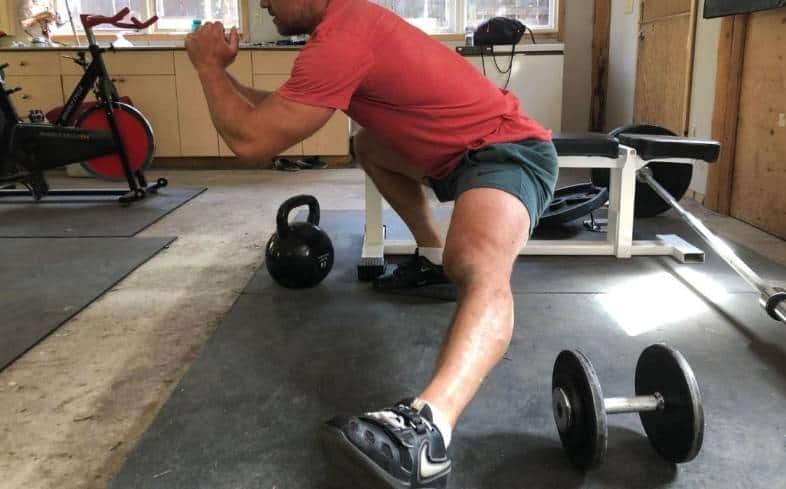
An effective Cossack squat substitute should (1) target similar muscle groups to the Cossack squat, and (2) include unilateral control or a wide-stance demand that you can pair with unilateral work.
Muscles used in the Cossack squat
The muscles used in the Cossack squat include quads, glutes, hamstrings, adductor magnus (inner thigh), obliques, and calves.
The glute medius and quads are the prime movers in the Cossack squat. The other muscle groups act as stabilizers to prevent your torso from twisting, maintain an upright posture, and keep your balance.
Takeaway, an effective Cossack squat alternative should primarily target the glute medius and quads, while keeping you stable and comfortable through the hips, knees, and ankles.
If you can't feel your glutes while lunging, check out Can't feel your glutes in the lunge, try these 6 tips.
Cossack squat and unilateral control
The Cossack squat is unilateral, meaning it targets your right and left leg independently. That’s useful for building strength evenly, improving balance, and reinforcing motor control.
Takeaway, most effective Cossack squat alternatives should either be unilateral, or be paired with a unilateral drill so you still train stability and control.
9 Cossack squat alternatives
The list below details the best Cossack squat alternatives, including when each one makes the most sense.
1. TRX-assisted Cossack squat
The TRX-assisted Cossack squat uses the same movement pattern as the standard Cossack squat, but the straps let you stabilize with your arms. This is one of the most efficient way to teach the pattern to beginners who struggle with balance or confidence at depth.
How to do it
- Hold the TRX handles with arms extended in front of you.
- Take a wider than shoulder-width stance.
- Shift to one side and squat down, using the straps to stay balanced.
- Stand up by driving through the working leg, use the straps as needed.
- Perform equal reps on both sides.
Pro tip
Use this as a progression toward the unassisted Cossack squat. Over time, reduce how much you pull on the straps, and aim for the same foot position and squat depth without assistance.
If you don’t have access to TRX straps, check out my top 5 TRX alternatives.
2. Lateral side lunge
The lateral side lunge targets the glute medius in a very similar way to the Cossack squat. The main difference is that you step out and back between reps, instead of staying in a wide stance.
This is also a strong choice if you cannot comfortably reach Cossack depth yet. You can cap the range of motion to keep your joints happy, then gradually work lower as mobility improves. A counterbalance can help here too.
How to do it
- Stand with feet together.
- Step one foot out to the side and sit into the hip.
- Bend the knee and hip until the working thigh is near parallel, or stop higher if needed.
- Keep your back neutral, a slight torso lean is fine.
- Drive through the working foot to return to standing, repeat both sides.
Pro tip
To progress, hold dumbbells at your sides, or add a front-loaded counterbalance to stay upright while increasing depth. This also works well as a warm-up before squatting.
3. Lateral box step-up
The lateral box step-up is a variation of the step-up that adds a lateral swing, which makes it a strong substitute for the Cossack squat. It trains unilateral stability and lets you load the movement without needing extreme hip mobility.
Use a box around mid-shin height, and only go higher if you can keep clean mechanics without collapsing through the hip or knee.
How to do it
- Stand next to a box, the box is to your right or left side.
- Drive your knee up, then swing the leg laterally to place the foot on the box.
- Drive through the working leg to stand tall on the box.
- Step down under control, perform equal reps on both sides.
Pro tip
Keep the box close to your shin as you start. You do not need a huge lateral reach to get the glute medius benefit.
4. Bulgarian split squat
If lateral motion feels uncomfortable, the Bulgarian split squat is a strong alternative. It is still unilateral, but the legs split forward and back instead of side-to-side, which many lifters find easier on the hips.
You will generally get less glute medius emphasis than a true lateral pattern, but you will get more glute maximus loading. This can be a good tradeoff if your goal is strength or hypertrophy.
Learn progressions here: Bulgarian split squat progression.
How to do it
- Take a split stance, back foot elevated on a bench.
- Descend by bending both knees, keep the front foot planted.
- Stay tall through the torso, keep control at the bottom.
- Drive through the front foot to stand, repeat both sides.
Pro tip
If you feel off-balance, use the squat cue of clawing the ground with your feet. Curl your toes lightly, then lock in big toe, pinky toe, and heel contact.
Related: 9 best Bulgarian split squat alternatives.
5. Single-legged leg press
The leg press can substitute for the Cossack squat if you perform it as a unilateral movement. It can be useful for quad loading with less balance demand, especially if you want to avoid feeling unstable while still training hard.
Because it is machine-based, you will not get the same stability and motor control requirements you get from free-weight movements, but it can still be useful in a well-rounded program.
How to do it
- Set up on any leg press machine.
- Place one foot on the platform, keep the other leg passive.
- Use a controlled tempo, work through a comfortable range of motion.
- Perform equal reps on both sides.
Pro tip
Use this as a short-term tool. Run it for 4 to 6 weeks, then rotate back to a free-weight unilateral option to keep your stability training sharp.
6. Sumo deadlift
The sumo deadlift is the best deadlift-style alternative here because it uses a wide stance and lets you lift substantially more weight. If your goal is max strength, this can build it faster than most lateral drills.
The drawback is that it is bilateral. Both legs work at the same time, so I like to follow it with a unilateral drill, such as a lateral lunge or box step-up, to keep the unilateral control that makes the Cossack squat valuable.
How to do it
- Take a wider than shoulder-width stance.
- Hinge at the hips and grab the bar under your shoulders.
- Bring hips down, keep shins close to vertical.
- Initiate by pushing the floor away.
- Lock hips and knees together, then return under control.
Pro tip
This is the only deadlift variation I’d recommend as a Cossack squat alternative because the wide stance keeps the muscle overlap higher. Pair it with a unilateral movement to stay balanced.
7. X-band walks
X-band walks are the best banded option on this list. If you train at home or you want a quick glute medius primer before squats, this is an easy, repeatable option.
Keep your toes pointed forward as you step sideways. If you rotate the feet outward, you shift effort away from the glutes and toward the front of the hip.
Choose a band that matches your goal. I like the bands from WOD Nation.
How to do it
- Place a band under your feet and cross it in front of you to form an X.
- Point toes forward, take a slight knee bend.
- Step laterally under control, maintain constant tension.
- Repeat for reps, then switch direction.
Pro tip
X-band walks hit the glute medius well, but they do not load the quads much. To make them more specific, take the steps in a deeper half-squat position to increase quad involvement.
8. Side-lying dumbbell clamshell
The side-lying dumbbell clamshell is one of the best isolation drills for the glute medius. It is a great option when you want targeted work without loading the lower body heavily.
The downside is that quad activation is minimal, so pair it with a quad-focused exercise such as goblet squats, front squats, or leg press.
How to do it
- Lie on your side with knees bent and legs stacked.
- Brace your core to stabilize your pelvis.
- Keep feet together while you open the knees apart.
- Perform equal reps on both sides.
Pro tip
Try banded variations, a side plank clamshell, or straight-leg versions to find the best contraction for your build and mobility.
9. Cable hip abduction
Cable hip abduction is a reliable way to isolate the glute medius with consistent tension. It is a good choice if you want targeted work and you have access to a cable station.
To bias the glute medius, keep the toe slightly internally rotated as you lift the leg. Like clamshells, it lacks quad emphasis, so pair it with a quad-focused exercise if needed.
How to do it
- Stand sideways to the cable machine.
- Attach an ankle strap to the leg farthest from the cable.
- Lift the leg laterally as high as you can without twisting the pelvis.
- Pause, then return under control, repeat both sides.
Pro tip
For a more squat-specific option, step out laterally, tap the foot down, then sit into a shallow squat before returning to start. This adds a quad component while keeping the glute medius goal.
Common mistakes, and how to fix them
- If your knee collapses inward, slow the tempo and reduce depth until you can keep the knee tracking over the toes.
- If you feel hip pinching, shorten the range, adjust foot angle slightly, and choose a variation with less extreme hip rotation, such as the lateral side lunge.
- If balance is the limiter, use a counterbalance or light support, then remove assistance over time.
- If you feel these drills only in the front of the hip, keep toes more forward and avoid spinning the foot outward.
Final thoughts
A good Cossack squat alternative either mimics the movement pattern or trains the same key tissues, especially the glute medius and quads. In practice, you can rotate these based on equipment, comfort, and training phase, then keep at least one lateral option in your plan so your hips and joints stay prepared for lateral demands.
Frequently asked questions
What is the best Cossack squat alternative for beginners
The TRX-assisted Cossack squat is usually the best starting point. It keeps the same pattern while giving you stability so you can learn positions, balance, and depth without rushing.
Which alternative is easiest on the joints if I feel discomfort
Start with lateral side lunges, X-band walks, or cable hip abduction. They let you control range and load. Reduce depth, use a lighterload, and rebuild tolerance gradually.
Which alternative is closest to the real Cossack squat
The TRX-assisted Cossack squat is the closest match because it keeps the same foot position and lateral squat pattern. The lateral side lunge is also close, but the stepping changes the feel.
Do I need a single-leg option, or can I just do sumo deadlifts
Sumo deadlifts are great for strength in a wide stance, but they are bilateral. For best results, pair them with a unilateral drill afterward so you still train the unilateral control that Cossack work builds.
Can I use these as a warm-up before squats
Yes. Use 1 to 2 lighter sets per side, focus on control and range. Lateral side lunges and X-band walks are especially useful before squat sessions.
Are pistol squats a good replacement for Cossack squats
Pistol squats are a challenging single-leg squat variation that builds balance and control, but they do not train the lateral pattern. They can be useful on leg days, but keep at least one lateral option in your plan if that is your goal.
What to read next:
- 10 best hyperextension alternatives (with pictures)
- 17 best leg curl alternatives (dumbbell, at home, cable)
- 5 best box squat alternatives (with pictures)
- 17 sissy squat alternatives (with pictures)
- 7 wall ball alternatives (dumbbell, kettlebell, bodyweight)
- 10 best box jump alternatives (with pictures)